Nimesulide ban: Govt bars sale of oral painkiller doses above 100 mg
The government has barred the manufacture and sale of oral nimesulide formulations above 100 mg, saying higher doses carry health risks and safer options are available.
Statesman News Service | Mumbai | December 31, 2025 3:10 pm
Tablets of the painkiller nimesulide. The Centre has banned the manufacture and sale of oral formulations containing more than 100 mg, citing safety concerns.
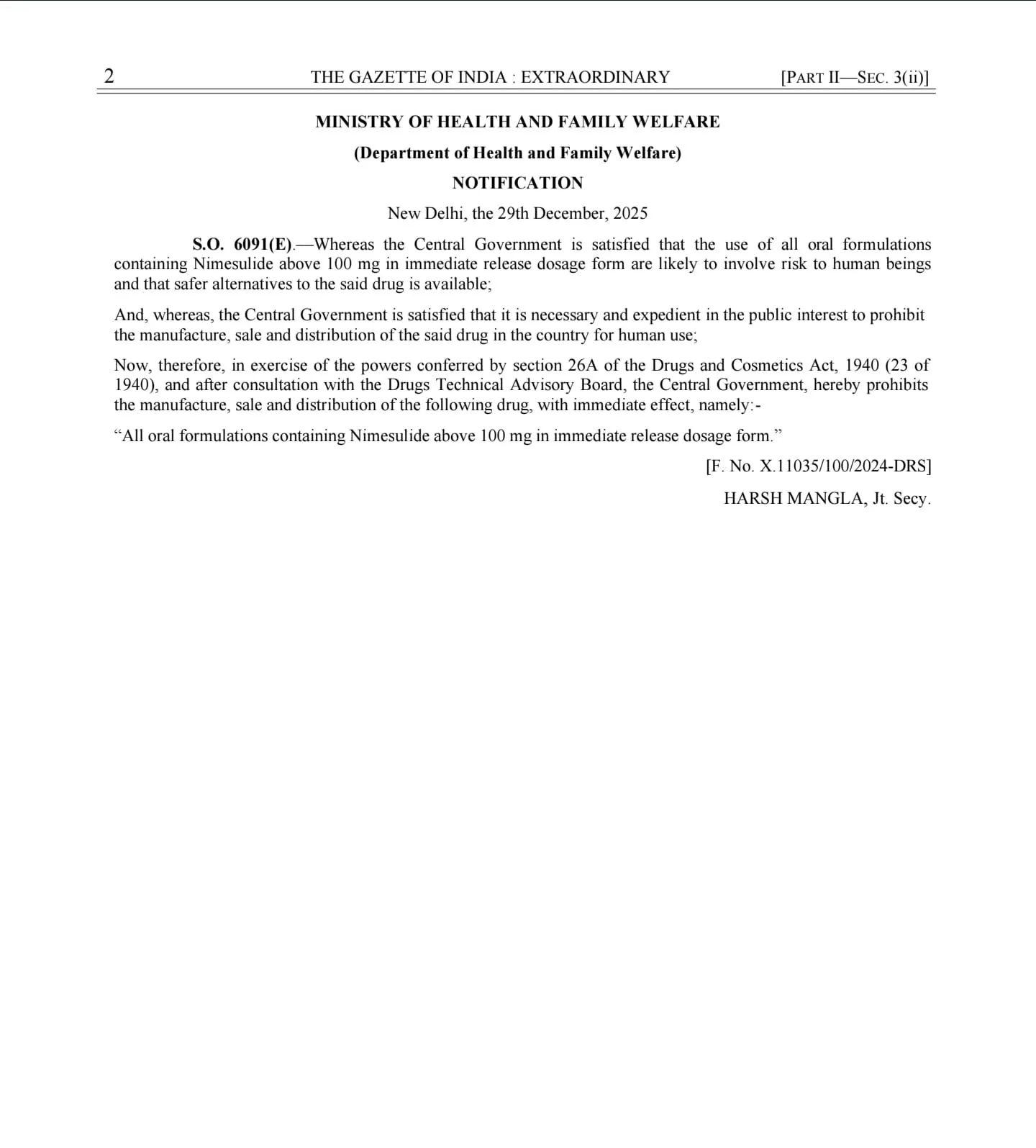
The Union government has banned the manufacture and sale of all oral medicines containing more than 100 mg of the painkiller nimesulide, saying higher doses pose a risk to patients.
The order, issued by the Ministry of Health and Family Welfare, applies to immediate-release oral formulations and comes into effect immediately. Officials said the move was taken after assessing safety concerns and noting that other pain-relief options are available.
Advertisement
Nimesulide ban notification
The government said the decision on nimesulide was taken under provisions of the Drugs and Cosmetics Act, 1940, following consultations with the Drugs Technical Advisory Board. It described the restriction as necessary in the public interest.
Advertisement
Nimesulide has been the subject of regulatory scrutiny for years, particularly over its use at higher strengths. While some formulations of the drug remain permitted, the latest notification removes stronger oral doses from the market.
In a separate notification, the Centre has also proposed amendments to the Drugs Rules, 1945. The proposed changes pertain to Schedule K, which lists medicines that are exempt from certain licensing conditions. Public comments and objections have been invited and will be accepted for 30 days.
The Union Health Ministry, in partnership with the World Health Organisation, rolled out a month-long Delhi Metro campaign on women’s and girls’ health and well-being at the Sultanpur Metro Station here on Wednesday.
The facilities will be open to the public from November 14 until the close of the 44th India International Trade Fair (IITF) in New Delhi on November 27.
During the meeting, participants deliberated on policy priorities such as equitable workforce distribution, quality assurance in education and training institutions, leadership development, and career progression opportunities for nursing professionals.