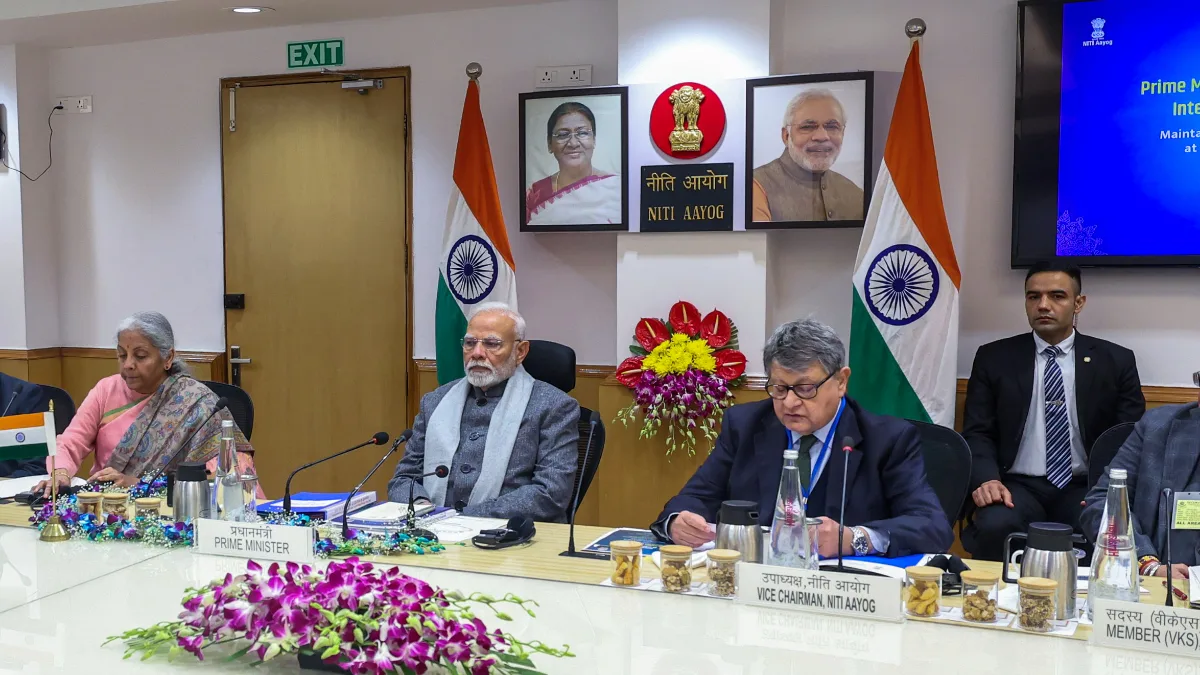
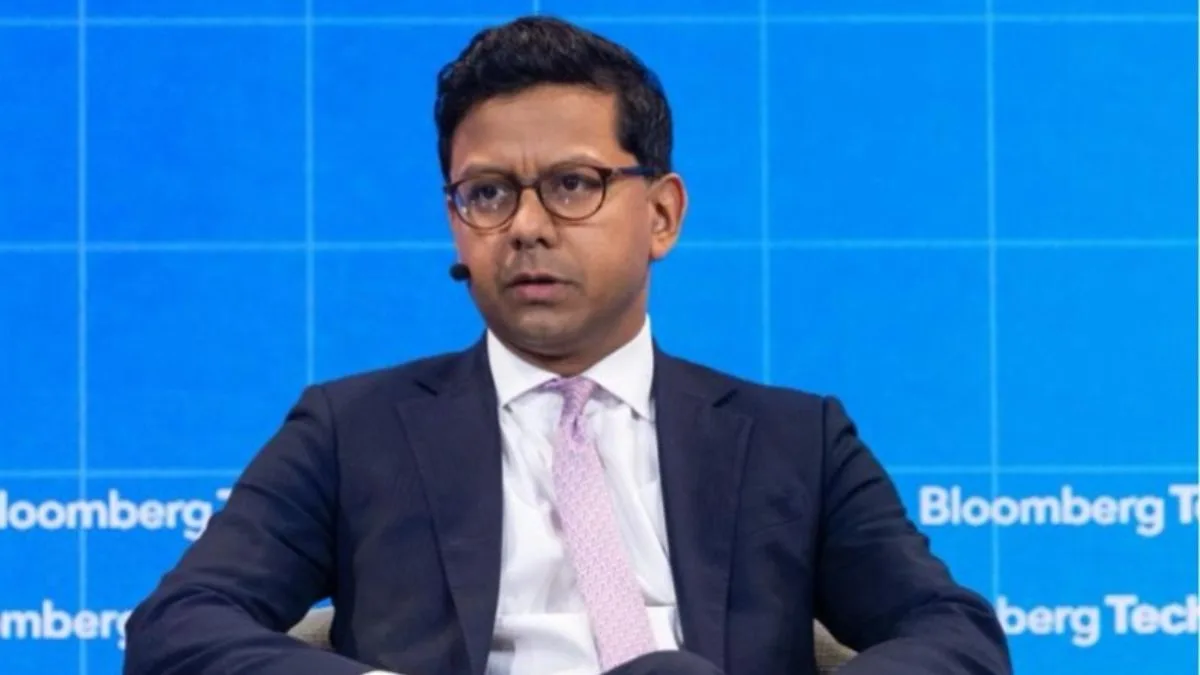
Ahead of the Union Budget 2026–27, Prime Minister Narendra Modi today met some of the leading economists and sectoral experts to seek inputs on the country’s economic priorities. Finance Minister Nirmala Sitharaman was also present at the meeting.
The meeting is part of the government’s ongoing pre-Budget consultation process aimed at gathering expert views before finalising major fiscal and economic decisions.
Advertisement
NITI Aayog leadership participate
Senior officials from NITI Aayog, including Vice Chairman Suman Bery, CEO BVR Subrahmanyam and other members, also participated in the discussions alongside economists and domain experts.
The interaction aims to provide a platform for participants to share assessments of the current economic situation and suggest measures to address emerging challenges.
Budget likely on 01 February
Finance Minister Nirmala Sitharaman is expected to present the Union Budget on 01 February.
In the run-up to the Union Budget, the Finance Minister has already held multiple consultations with economists, trade unions and labour organisations as part of the annual stakeholder engagement process.
Pre-Budget discussions have also been conducted with representatives from sectors such as banking, hospitality, IT and start-ups. Officials said intensive deliberations have focused on boosting growth and generating employment and incomes, particularly in agriculture, MSMEs and manufacturing.
CII suggests four-pronged fiscal strategy
Alongside, CII (Confederation of Indian Industry) has proposed a four-point fiscal roadmap for the Union Budget 2026–27, centred on debt stability, fiscal transparency, revenue mobilisation and expenditure efficiency.
According to CII, adherence to the government’s debt glide path targeting 50 per cent (±1 per cent) of GDP by FY31 is critical for maintaining macroeconomic stability.
The chamber noted that keeping central government debt at around 54.5 per cent of GDP and the fiscal deficit at 4.2 per cent of GDP in FY27 will help preserve macro credibility while supporting economic growth.
You may read: India is fourth largest automobile producer globally: NITI Aayog report