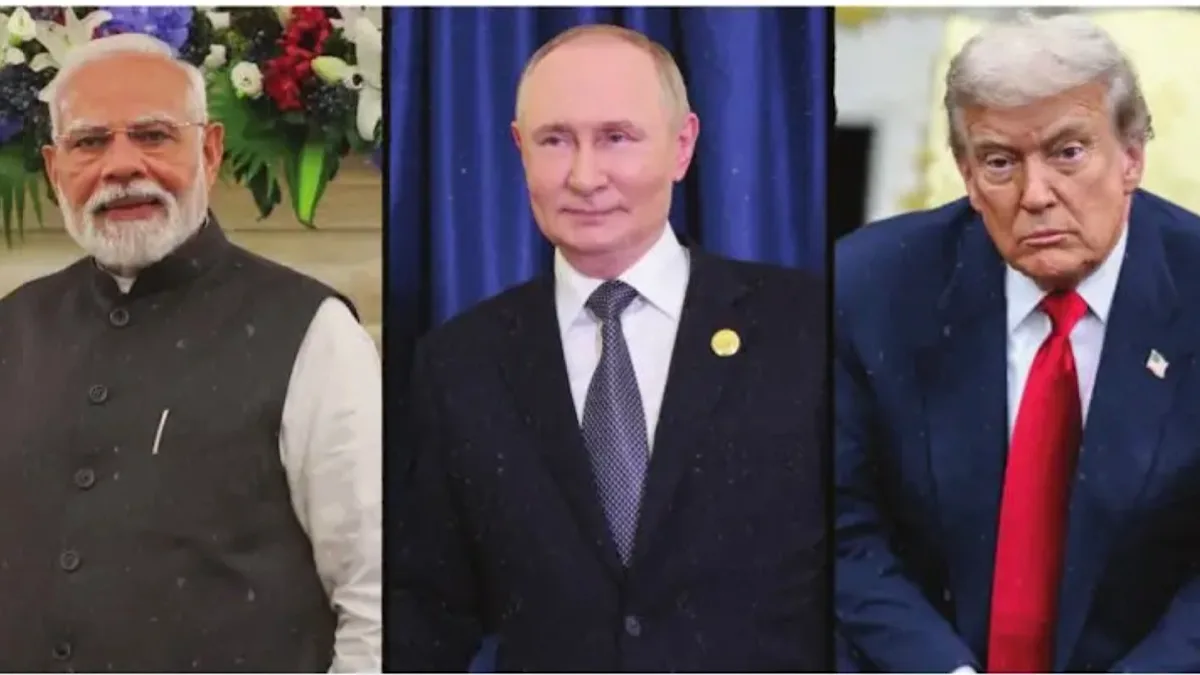
Prime Minister Narendra Modi’s post -2014 growing proximity to the United States is considered by some analysts to have created a sense of mistrust with Russia. Yet, despite Modi going to the extent of literally campaigning for Donald Trump on the slogan “Abki Bar Trump Sarkar” and hugging him like a soulmate did not prevent Trump from slapping him with a 25 per cent tariff and penalty. From the Indian perspective, this was not diplomacy; it was a national embarrassment of one man’s friendship costing India dearly.
It was a foreign policy disaster of epic scale. Over the last decade, India has drawn closer to the United States, tentatively aligning itself with Washington as it continues to eschew formal alliances. The Indian leadership welcomed Trump’s return to the White House because of the apparent chemistry between Trump and Modi. India soon realised its miscalculation and opted to reassess its American gamble as Trump flipped from friend to not-such-a-friend and began to ramp up the pressure on India, his increased tariff ostensibly meant to penalise New Delhi for its ongoing purchase of Russian oil. It was over the course of Modi’s tilt towards the US that the India-Russia partnership first faced its bumps.
Advertisement
It was also the first time that India and Russia did not sign an arms sale deal for such a long time ~ since 2021. Modi also has not publicly supported Russia’s war on Ukraine. In fact, he cancelled or suspended several arms agreements, including for 49 new MI-17 helicopters and the modernisation of SU-30 MK1 fighters. There is no denying that this was a period that created a distance, for the first time, in Indo-Russian relations also prompted the Russian move to improve its relationship with Pakistan. Trump also agreed to a raft of deals with India’s neighbour and rival Pakistan, irking the Indian administration. In an apparent response, Modi attended the Shanghai Cooperation Organisation Summit in Tianjin in November 2025, where he met Russian President Vladimir Putin and Chinese leader Xi Jinping. India’s most striking response to American pressure came when Modi visited China. The images of Modi alongside Xi and Putin were powerful.
What a difference a few months make! The last time Modi and Trump met at the White House, the two countries were riding high. “We missed you,” Trump said after receiving one of Modi’s “signature full body bear hug”. In just seven months, this partnership has plunged to its lowest point. There is no simple explanation but, publicly at least, the US is pointing fingers at Russia. US Trade Advisor, Peter Navarro, openly accused New Delhi of financing the Kremlin’s war machine, even calling the Russia-Ukraine conflict “Modi’s war”.
The $5.43 billion deal for the S-400 Triumf long-range surface-to-air missile system was signed in 2018, despite the threat of secondary sanctions under the Countering America’s Adversaries Through Sanctions Act (CAATSA) to assuage the hurt Russian leadership and mend the Indo-Russian relationship to some extent. This time round, both Putin and Modi had their own agenda when they met in New Delhi. Putin wanted to show that he was not a pariah and that there were countries that would not only accept but welcome him, despite pressure from the Western nations over Russia’s full-scale invasion of Ukraine. Modi wanted to signal that he would not give in to the pressure from Trump.
Even before arriving, Putin questioned the logic behind Washington’s sanctions, “The United States itself still buys nuclear fuel from us for its nuclear power plants,” he said adding that “if the US has the right to buy Russian fuel, India should enjoy the same privilege”. It was a clear rebuff to Trump. What are the key takeaways from Putin’s India visit? The visit was very significant for various reasons. It was Putin’s first visit after the Ukraine war and after a gap of four years, instead of annual summits. It also came after the United States imposed a total 50 per cent tariff burden on Indian government, leaving New Delhi feeling very vulnerable. India’s big challenge was to balance Putin’s expectations and US red lines. Putin probably pushed Modi privately to increase Russian oil purchases.
Although India relies on Russian crude for about one or two per cent of its needs and could technically revert to traditional suppliers in the Arab and Islamic world, if necessary, New Delhi needed to weigh how far it wanted to “cock a snook” at the US President and not to bother about US sanctions. Obviously, India will use Russia as a leverage, to send a message to Washington that it needed to “look at us afresh” and that it could not “really do whatever” it wanted in terms of outreach to Pakistan and China. Putin has declared unequivocally that Moscow would remain a steady, uninterrupted supplier for the country’s fast-emerging economy.
Russia is a reliable trade partner and a long-time trustworthy friend. Both Putin and Modi have agreed to take the Indo-Russia economic partnership to new heights by 2030. India’s political non-monogamy underscores the principle that steers India’s relationship with any foreign power. India’s belief in strategic autonomy and multi-alignment is a sacrosanct to India’s foreign policy of not being dependent on any one power. Regardless of its historical defence ties to Russia or its economic reliance on the US, India has never chosen to join one partner. It has been navigating between them and is likely to pursue the same wise policy in the current geopolitical environment.
(The writer specialises in foreign affairs, diplomacy, defence and strategic affairs and has written more than 10 books on the United Nations and international issues)