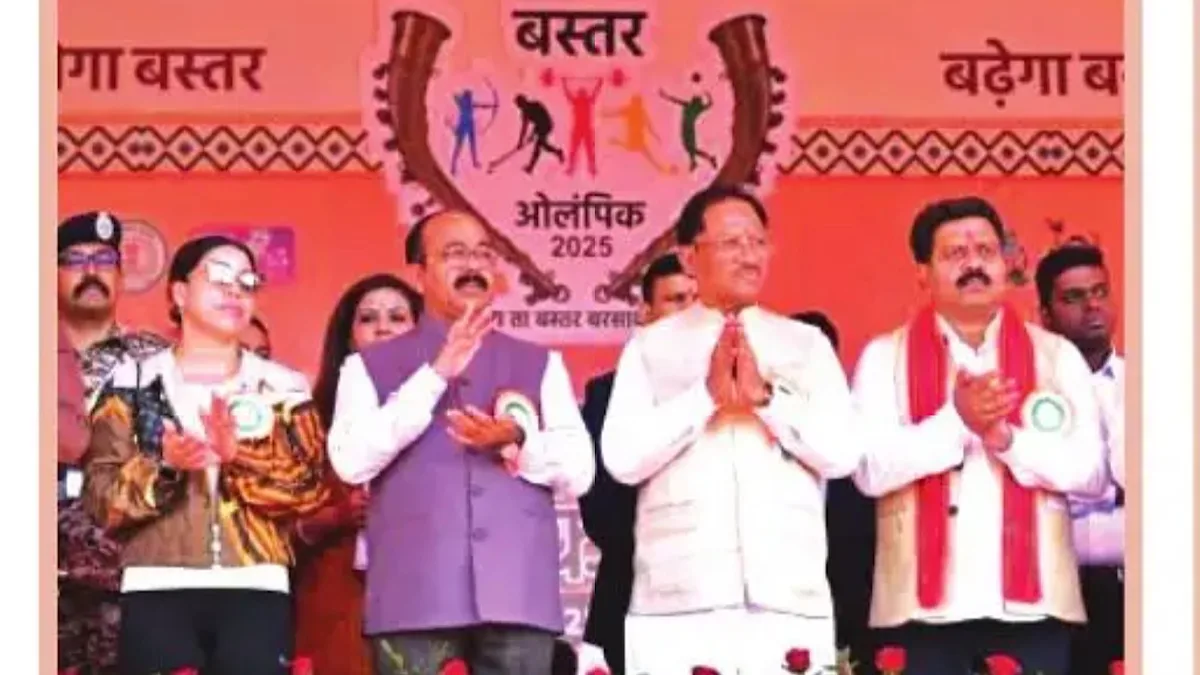
In the dense forests of Chhattisgarh’s Bastar region, where the air once carried the ominous chants of “Lal Salaam” amid gunfire and fear, a profound metamorphosis has taken place. Earlier this month, from December 11 to 13, 2025, the Bastar Olympics emerged as a beacon of hope and unity in Jagdalpur, the heart of what was once India’s most notorious hotbed of Maoist violence. This division-level mega event brought together seven teams from Bastar’s districts, along with a special contingent of surrendered Naxals, competing in traditional tribal sports like archery, javelin, and wrestling. Thousands gathered under the clear winter skies, not in dread of ambushes, but in celebration of athletic spirit and cultural heritage. The event, echoing with cheers and the rhythmic beats of tribal drums, symbolized a stark departure from the region’s blood-soaked past—a past riddled with extortion, kidnappings, and brutal encounters that claimed thousands of lives over decades.
Bastar, spanning seven districts and home to indigenous tribes like the Gond, Maria, and Halba, had long been the epicentre of Naxal insurgency. Maoists, drawing on grievances of exploitation and neglect, turned this mineral-rich land into a war zone, enforcing their red ideology through violence. Villages lived in perpetual terror, with schools bombed, roads mined, and development stalled. Yet, now, as athletes proudly waved the tricolour and chanted “Bharat Mata ki Jai,” it is evident that peace has reclaimed the narrative. This transformation didn’t happen by chance; it is the result of resolute leadership and strategic vision from Prime Minister Narendra Modi and Home Minister Amit Shah, who have vowed to eradicate Naxalism from India by March 31, 2026.
Advertisement
Prime Minister Modi’s determination to rid the nation of this Maoist scourge has been unwavering since he assumed office in 2014. Complementing PM Modi’s vision is Home Minister Amit Shah’s tactical acumen and iron will. HM Shah, often dubbed the architect of India’s internal security renaissance, has spearheaded a zero-tolerance policy against extremism. Since taking charge, he has overseen the deployment of additional Central Reserve Police Force (CRPF) battalions, equipped with advanced weaponry and training, to dominate the red corridors. HM Shah’s decisive actions include establishing forward operating bases in remote areas, cutting off Maoist supply lines, disrupting their financial networks and targeted seizures. At the Bastar Olympics’ closing ceremony on December 13, 2025, HM Shah delivered a stirring speech, likening Naxalism to a “poisonous snake” that must be crushed to safeguard innocent lives. He reiterated the 2026 deadline, declaring that no Indian should fall victim to this ideology post that date. His hands-on approach is evident in his frequent reviews of operations, where he pushes for inter-agency coordination between state police, paramilitary forces, and intelligence bureaus. Under his watch, the number of Naxal-affected districts has shrunk dramatically, from over 100 to fewer than 10, with Bastar serving as the flagship success story.
The duo’s political willpower is perhaps best illustrated by their response to major setbacks. In 2021, when Maoists ambushed security forces in Sukma, killing 22 jawans, PM Modi and HM Shah didn’t waver. Instead, they escalated operations, leading to the arrest of key leaders and the dismantling of urban Naxal networks. This resilience has inspired ground-level forces, boosting morale and effectiveness. Bastar’s turnaround exemplifies this synergy: once a no-go zone where even elections were boycotted, it now boasts voter turnouts exceeding 70%, with tribals actively participating in democratic processes. The inclusion of surrendered Naxals in the Olympics underscores the government’s rehabilitation focus, turning former rebels into symbols of redemption. PM Modi’s emphasis on “Atmanirbhar Bharat” has extended to these areas, promoting self-reliance through local initiatives, while HM Shah’s security blanket has ensured that development projects proceed unhindered.
Moving beyond security, the second pillar of Bastar’s revival is the Modi government’s aggressive developmental thrust, which promises a luminous future for its inhabitants. Schools, long shuttered by Naxal diktats that viewed education as a threat to their recruitment, have been reopened in droves. Over 265 new institutions now educate thousands of children, equipped with modern facilities, digital classrooms, and mid-day meals to combat malnutrition. Teachers, once fleeing the region, are returning under enhanced protection, fostering a generation free from indoctrination. This educational renaissance is breaking the vicious cycle of poverty and extremism, empowering youth with knowledge and skills for mainstream integration.
Economic opportunities are surging, transforming Bastar from a conflict economy to a hub of growth. The Bastar ‘Investor Connect’ initiative has attracted proposals worth Rs 52,000 crore, spanning agro-processing, mining, and eco-tourism. Local tribes are benefiting from value addition to their forest produce—like tamarind, mahua, and sal seeds—through cooperatives and processing units that ensure fair prices and employment. Mining operations, once halted by violence, are resuming responsibly, with revenues plowed back into community welfare. Tourism is booming, with the Bastar Pandum festival showcasing indigenous arts, crafts, and dances to global audiences, generating livelihoods for artisans and guides.
Infrastructure development is the backbone of this resurgence. Paved roads now connect remote villages, reducing isolation and enabling market access. Digital connectivity via BharatNet brings online education, e-governance, and telemedicine to doorsteps, bridging the urban-rural divide. Skill development centers, under schemes like Pradhan Mantri Kaushal Vikas Yojana, train locals in trades from hospitality to IT, preparing them for jobs in emerging industries. The Chhattisgarh government’s master plan for Bastar’s districts aligns seamlessly with the Centre’s vision, rolling out welfare schemes that provide housing, sanitation, and electricity to the most vulnerable.
As Naxalism recedes, Bastar is on the cusp of unprecedented prosperity. Amit Shah’s pledge to make it India’s most developed tribal region within five years is no rhetoric; it’s backed by actionable blueprints. Youth, once vulnerable to Maoist propaganda, now aspire to careers in sports, business, or civil services. Women-led self-help groups are driving micro-enterprises, fostering gender empowerment. The region’s biodiversity is being harnessed sustainably, with conservation projects that balance ecology and economy. The Bastar Olympics exemplifies the region’s journey from “Lal Salaam” to “Bharat Mata ki Jai”. It marks a decisive triumph for the locals of Bastar over adversity and fear, a triumph scripted by PM Modi and HM Shah’s indomitable will. It serves as a model for conflict resolution worldwide, proving that with security, development, and empathy, even the deepest scars can heal. As the sun sets over Bastar’s verdant hills, it rises on a future brimming with promise—a testament to India’s resilient spirit.
The writer is a national spokesperson of BJP and an acclaimed author.