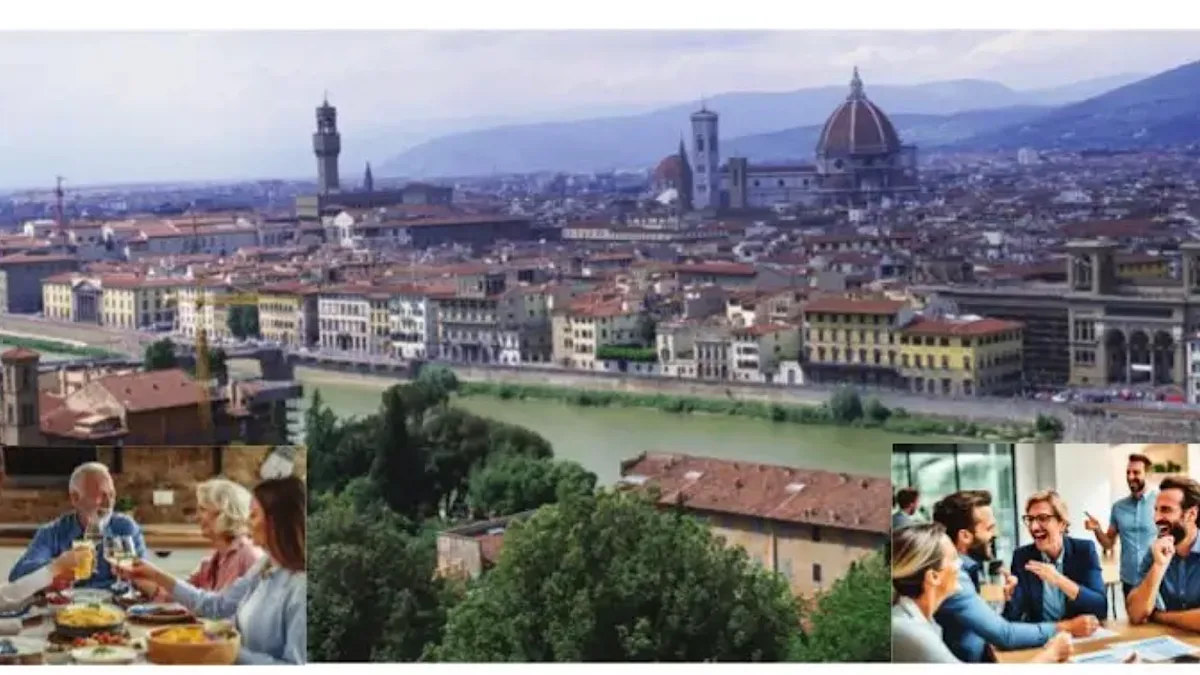
For the past three years in a row ~ 2023, 2024, and now 2025 ~ my travels across Italy, from the sun-washed lanes of Puglia to the Renaissance splendor of Florence and even the hurried streets of Rome, have taught me a lesson far deeper than art, architecture, or cuisine. I have slowly discovered the Italian secret to living longer, healthier, and happier lives despite their seemingly indulgent habits: daily pasta, generous servings of bread, gelato under warm skies, and wine at lunch and dinner. At first glance, the equation does not add up. How can a culture devoted to carbohydrates, sweets, and leisurely living consistently rank among the healthiest in the world?
The answer lies in three timeless pillars: eating well, staying active, and nurturing human connection. These are held together by a distinct philosophy of life ~ dolce vita and the deeper dolce far niente, the sweetness of doing nothing ~ which reshapes how time should be lived rather than spent.
Advertisement
* Eating well is the Mediterranean secret: Even though pasta and pizza dominate the global imagination, Italian eating habits are far more balanced than outsiders assume. Meals are rooted in freshness, seasonality, and moderation. Even the humblest trattoria serves vegetables that taste as though they were harvested at dawn ~ tomatoes bursting with sweetness, zucchini firm and fragrant, basil as aromatic as perfume. All of this is cooked in high-quality extra virgin olive oil, the quiet heart-protective hero of the Mediterranean diet. Wine accompanies meals but rarely in excess. Italians savor a glass, not a bottle. And although they enjoy sweets, desserts appear in modest portions ~ a small slice of cake, a single scoop of gelato, sometimes just a biscotto dipped into espresso. What struck me most was not what Italians eat, but how they eat. Meals are slow, intentional, and communal. Even a simple lunch can feel like a small celebration of life. Eating is not a hurried task squeezed between obligations; it is a ritual that anchors the day. Food, in Italy, is not treated as an adversary or a source of guilt. It is nourishment, pleasure, and companionship. This healthy emotional relationship with food may be as important as the food itself.
* An Active daily lifestyle: The second pillar of Italian well-being reveals itself the moment you walk through any town: Italians move constantly. Their cities ~ from Florence and Bologna to Rome, Perugia, and Naples – are designed for foot traffic. Narrow medieval streets, pedestrian-only zones, limited parking, and efficient public transport naturally encourage people to walk. They walk to the café in the morning, to the grocery store, to the market, to school, to meet friends, and to catch buses and trams. Even small tasks involve walking. Without thinking about exercise, many Italians easily reach the amount of daily movement considered healthy by medical experts. In the evenings, families and couples stroll leisurely ~ the traditional passeggiata. It is not just movement for the body but also a ritual for the spirit. It helps digestion, lowers stress, and fosters a sense of belonging. This type of gentle, consistent movement is far more sustainable than the intense but inconsistent exercise routines many people in modern societies attempt to maintain. In Italy, physical activity is not a scheduled obligation ~ it is seamlessly woven into the rhythm of daily life. Even the elderly participate. In Florence and Monopoli, I often saw older couples walking slowly but steadily, supporting each other with quiet tenderness. Their gait may be slower, but their determination is inspiring. Movement, for them, is not optional ~ it is life.
* Human Connection: The heartbeat of Italian living: If there is one pillar that stands above all others ~ one that truly explains Italian happiness ~ it is their commitment to human connection. Every evening, as the sun dissolves over the Adriatic or behind Florence’s terracotta rooftops, Italy comes alive with a spirit of ogetherness. Friends meet after work for an espresso, a glass of wine, or an aperitivo. Cafés ring with laughter. Outdoor terraces buzz with conversations. Streets become informal meeting places.
There is no rush to go home to solitude or screens. People gather in piazzas, in bars, at street corners, and in neighbourhood cafés where the barista knows everyone’s name and preferred drink. They linger, talk, debate, tease, and share stories from the day. This spontaneous culture of gathering ~ without agendas, reservations, or elaborate planning ~ keeps loneliness at bay. And loneliness, as research consistently shows, is one of the most dangerous conditions of modern life. Italians prioritize social interaction. They make time for each other as naturally as they breathe. The warmth of their friendships is palpable. Even strangers exchange a smile or a brief greeting. There is a sense of being part of something larger ~ a community, a shared life. Connection is not an occasional luxury; it is a daily necessity. And nothing embodies this more than the everyday ritual of coffee. A simple espresso at the bar becomes an opportunity for conversation, laughter, and human warmth. These small social rituals ~ brief yet meaningful ~ add up to a life that feels full, supported, and emotionally alive.
* Dolce Far Niente: The art of sweet idleness: Binding these pillars together is a uniquely Italian philosophy: dolce far niente – the sweetness of doing nothing. To outsiders, it may appear indulgent, but to Italians, it is essential. Dolce far niente is not laziness; it is a deliberate pause, an invitation to savour the moment. It is sitting by the sea with no agenda. It is strolling after dinner with no destination. It is savoring a cappuccino without checking the clock. It is allowing time to stretch, breathe, and soften. In an age when productivity is worshipped and rest is often seen as weakness, dolce far niente is a quiet rebellion ~ a reminder that life is to be experienced, not merely accomplished. It is an art: the art of being present.
* Slow Food and Slow Cities: Italy’s gift to the world: This philosophy of unhurried, intentional living has inspired two international movements. The Slow Food Movement, born in Italy, champions food that is good, clean, and fair ~ food that honours culture, community, and the environment. It stands as an antidote to fast food and the erosion of local culinary traditions. From this grew the Slow Cities Movement (Città Slow), promoting towns where quality of life is prioritized over speed, efficiency, and commercial noise.
These towns value walkability, local artisans, clean environments, and the preservation of historical identity. In places like Polignano a Mare, Greve in Chianti, Orvieto, and Ostuni, you feel time itself expand. Life moves at a gentler tempo. People have time – for themselves, for each other, and for the small pleasures that make life beautiful. Italy teaches us that slowing down is not backward. It is restorative. After visiting Italy for three years in a row ~ in 2023, 2024, and now 2025 ~ I have come to understand that Italy’s greatest gift is not its museums or its cuisine, magnificent as they are, but its philosophy of living. Eat well, and savour what you eat. Move often, without rushing. Connect deeply, laugh freely, and gather often. And create moments of stillness to experience the sweetness of simply being alive. In a world that moves too quickly, Italy stands as a gentle reminder: Life is not a race. Sometimes, the most meaningful moments arise when we allow ourselves to do nothing at all
(The writer is professor emeritus at Loyola Marymount University, Los Anglies)