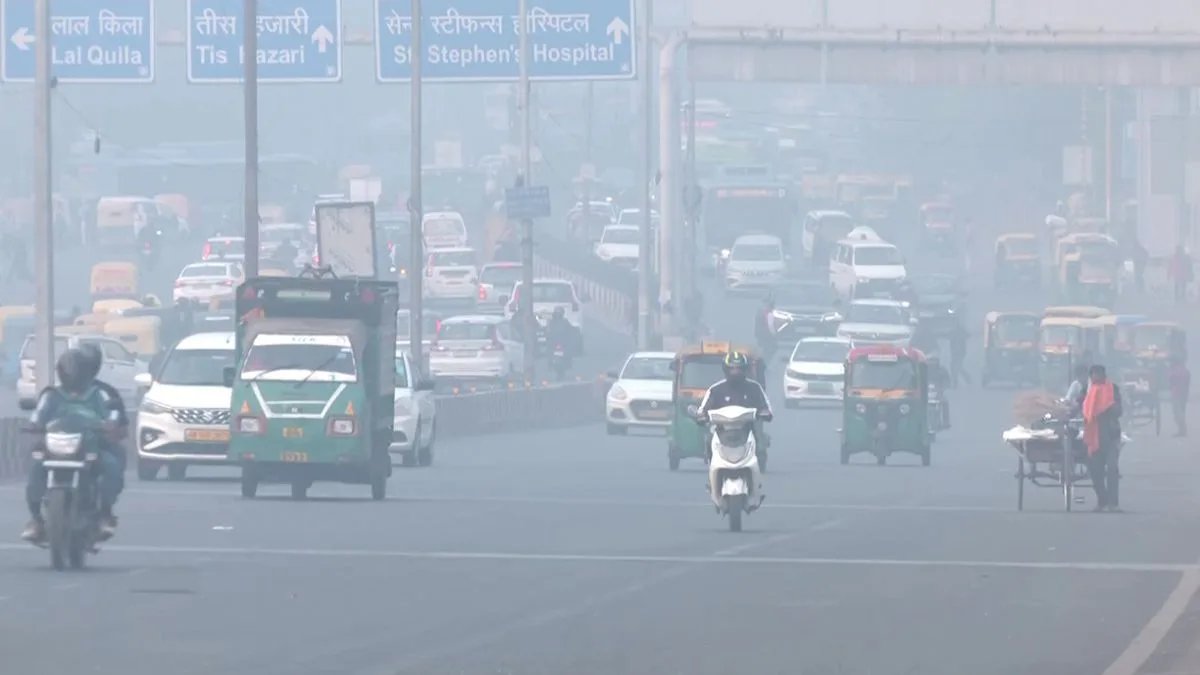
Delhi’s annual descent into a grey, choking winter is no longer an environmental anomaly; it is a predictable civic failure. Each year, the city feigns reacting with urgency once the air turns visibly toxic ~ closing schools, halting construction, and restricting vehicles ~ yet the predictability of the crisis exposes the hollowness of these responses. When emergency measures become seasonal routine, they cease to be emergencies and start resembling an admission of defeat.
The most troubling aspect of Delhi’s pollution crisis is not the severity of the air, but the normalisation of it. Residents have learned to read air quality numbers like weather forecasts, adjusting daily life around danger rather than demanding its removal. Children attend school online not because of floods or earthquakes, but because the air outside is unsafe to breathe. Courts shift to virtual hearings, flights are delayed, and visibility collapses – yet the city continues to function as if this is merely an inconvenience, not a public health emergency unfolding in slow motion.
Advertisement
The science is well understood. Fine particulate matter penetrates deep into the lungs and bloodstream, increasing the risk of respiratory disease, heart conditions, and long-term cognitive harm. Hospitals report surges in respiratory illness, including among otherwise healthy adults. And yet, policy remains trapped in a cycle of attribution rather than accountability. Weather patterns, crop burning, and wind direction are cited as causes, but these explanations quietly absolve governance of responsibility. Climate and geography may shape the crisis, but they do not create it.
What Delhi faces is not just an air pollution problem but a coordination failure across states, sectors, and political timelines. Agricultural practices beyond city borders, unchecked vehicular growth, construction dust, industrial emissions, and poor urban planning all converge over the capital each winter. Addressing one source temporarily while ignoring others only guarantees relapse. The result is a fragmented approach where no single authority bears full responsibility, and therefore none delivers lasting solutions. Emergency restrictions, though necessary in moments of crisis, are ultimately palliative. They protect the vulnerable briefly but do little to alter the underlying trajectory. Worse, they shift the burden onto citizens, asking them to stay indoors, wear masks, and adapt, while systemic reforms move at a glacial pace. Clean air becomes a personal coping exercise rather than a collective right.
If Delhi is to break this cycle, it must move from crisis management to prevention. This requires year-round enforcement of emissions standards, credible incentives for cleaner farming practices, sustained investment in public transport, and regional coordination that survives election cycles. Most importantly, it demands political honesty: acknowledging that air pollution is not a seasonal inconvenience but a chronic public health threat. Until then, each winter will arrive with the same warnings, the same restrictions, and the same exhausted hope that next year might be different. Delhi is not running out of data or expertise. While the city prides itself on being the beating heart of a proud nation, its lungs tell a different story.