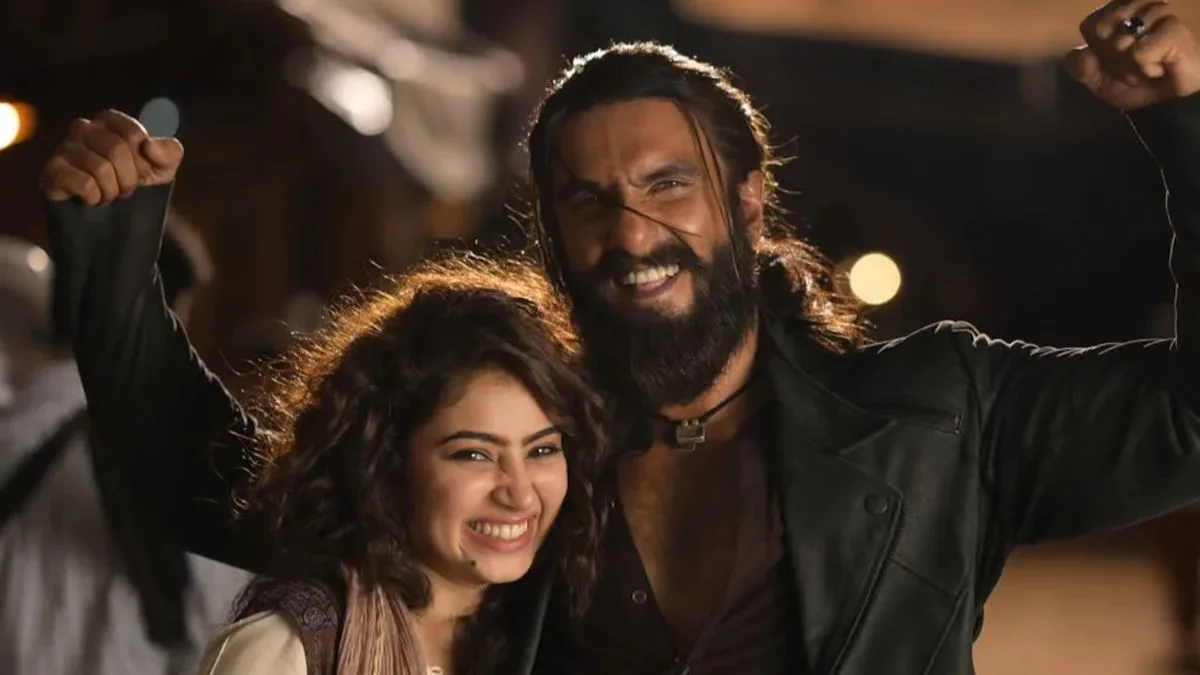
When the first posters of ‘Dhurandhar’ came out, the film did not start with applause but with questions. At the centre of the storm was its lead pair Ranveer Singh, who turned 40 this year, and Sara Arjun, who is just 20.
The 20-year age gap between them quickly became the main talking point on social media. Many people were uncomfortable. Some were confused.
Advertisement
Others openly criticised the casting choice and asked why such pairings still exist in mainstream cinema.
Now, casting director Mukesh Chhabra has shared details about how Sara Arjun landed the role, and why she was chosen over hundreds of others.
A casting process that raised eyebrows
In a recent interview, Mukesh Chhabra revealed that around 1,300 girls auditioned for the role opposite Ranveer Singh. According to him, the makers were clear that they wanted someone who looked young and fresh, someone who had not been seen too often in adult roles.
Sara Arjun, who has worked as a child actor in the past, fit that requirement. Mukesh said he had known her for years and had seen her audition multiple times. When she finally read for ‘Dhurandhar’, he noticed what he called “hidden talent” behind her soft appearance.
He described her as hardworking and talented. He also hinted that her performance will be explored further in the second part of the film.
The age gap question
Mukesh also addressed the biggest concern: the age difference between the lead actors. He said the casting was done based on the story’s demand and that the script required a very young female character.
According to him, the male lead’s character is meant to “trap” the girl, which is why her age was written as 20-21 in the story.
He added that the makers were not unaware of the discussions online but chose to stick to the brief from the director. He also claimed that audiences will “get all the answers” when the second part releases.
Why the debate still matters
While explanations are being offered now, many viewers feel the concern was never about acting ability or talent. The discomfort comes from a long-standing pattern in films. Much older male stars repeatedly pair with very young women without even questioning power imbalance or how it looks on screen.
Today conversations around consent, representation, equality are louder than ever. For many, ‘story demand’ no longer feels like a strong enough reason.