Digital hundi: Jagannath devotees worldwide can now donate from Re 1
Chief Minister Mohan Charan Majhi inaugurated the platform at the office of the Shree Jagannath Temple Administration (SJTA) in Puri on the eve of the annual Rath Yatra.
The Odisha government has set an ambitious target to establish cold storage units in 58 sub-divisions by 2029–30 fiscal, with a proposed budget outlay of Rs 252 crore to create an enabling environment for sustainable cold storage growth, Deputy Chief Minister Kanak Vardhan Singh Deo said here on Saturday.




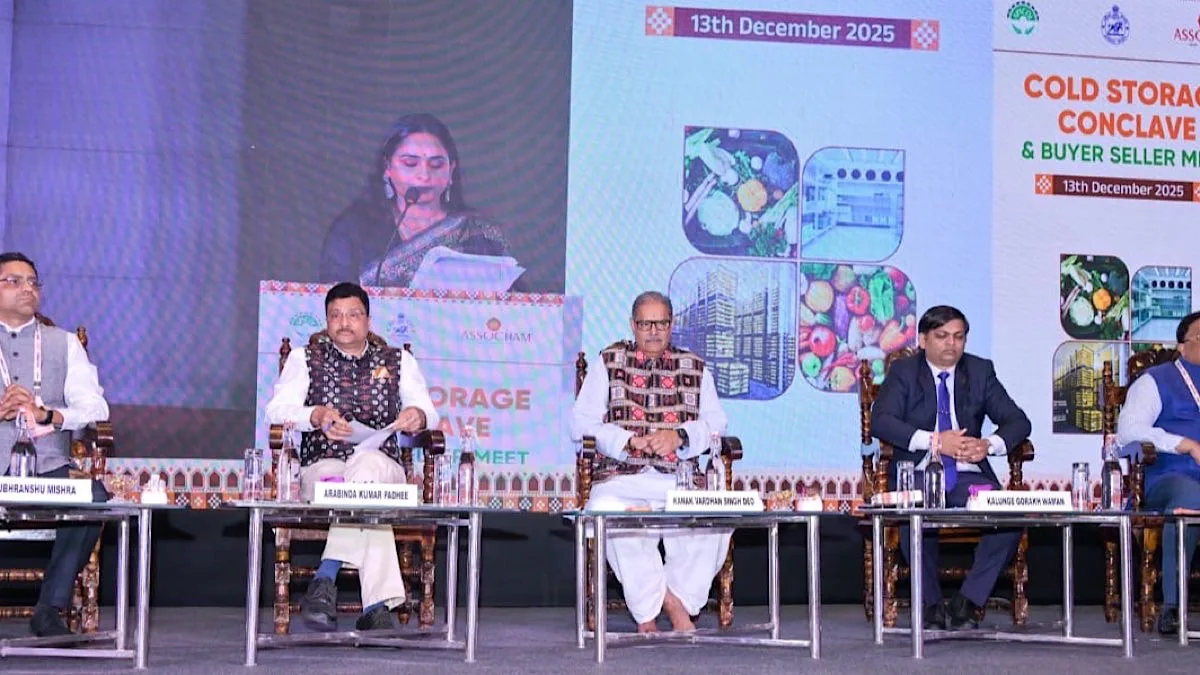
Photo:SNS
The Odisha government has set an ambitious target to establish cold storage units in 58 sub-divisions by 2029–30 fiscal, with a proposed budget outlay of Rs 252 crore to create an enabling environment for sustainable cold storage growth, Deputy Chief Minister Kanak Vardhan Singh Deo said here on Saturday.
It may be noted here that Odisha, a state largely regulated by an agrarian economy, does not have a functional cold store facility to preserve the perishable agro produce in as many as 14 districts out of 30 revenue districts. Odisha has 26 cold stores, of which four are in a dysfunctional state, while 14 out of 30 revenue districts do not even have a functional cold store.
Advertisement
Deputy Chief Minister Singh Deo, who inaugurated the cold storage conclave and buyer–seller Meet 2025 organised by the government-run Agricultural Promotion and Investment Corporation of Odisha Limited (APICOL) in association with the Associated Chambers of Commerce & Industry of India (ASSOCHAM), said, “The state government is committed to creating an enabling ecosystem for investment, innovation and inclusive growth in agriculture and allied sectors.”
Advertisement
The conclave brought together policymakers, industry leaders, agri-entrepreneurs, farmer groups, financial institutions, and technology providers to accelerate the growth of Odisha’s cold storage and post-harvest infrastructure.
Highlighting key policy interventions, such as capital investment subsidy and interest reimbursement, aimed at revitalising defunct cold storage units and ensuring long-term viability of new projects, DCM Singh Deo urged banks, industry associations, technology providers, and large buyers to partner closely with Odisha’s farmers and entrepreneurs.
Strong collaboration across the value chain is essential to unlock the full potential of the sector, he further said.
Arabinda Kumar Padhee, Principal Secretary, Department of Agriculture and Farmers’ Empowerment, underlined the state’s transition towards market-led agriculture.
Odisha has been a rice-surplus state for the last 16–17 years, supplying rice to over 12 states, and produced nearly 15 million tonnes of food grains along with an equal volume of horticultural produce in the last agricultural year, Padhee stated.
He also stressed the need for ancillary industries, energy efficiency, and integration of agri-marketing with production to reduce post-harvest losses and enhance farmer incomes.
Speaking from an industry perspective, Dr Prabodh Mohanty, Chairman, ASSOCHAM Odisha (Mining, Steel and Agri Council) and MD, SNM Group, said that as Odisha expands production, the next growth leap will come from modernising post-harvest logistics and processing.
In his inaugural address, Shubhranshu Mishra, Managing Director, APICOL, said the state government envisions a robust and sustainable cold storage ecosystem. With new schemes under the Agriculture and Farmers’ Empowerment Department, the focus is on reviving defunct units, ensuring sustainability beyond the scheme period, and reducing post-harvest losses to ultimately enhance farmers’ income.
Advertisement