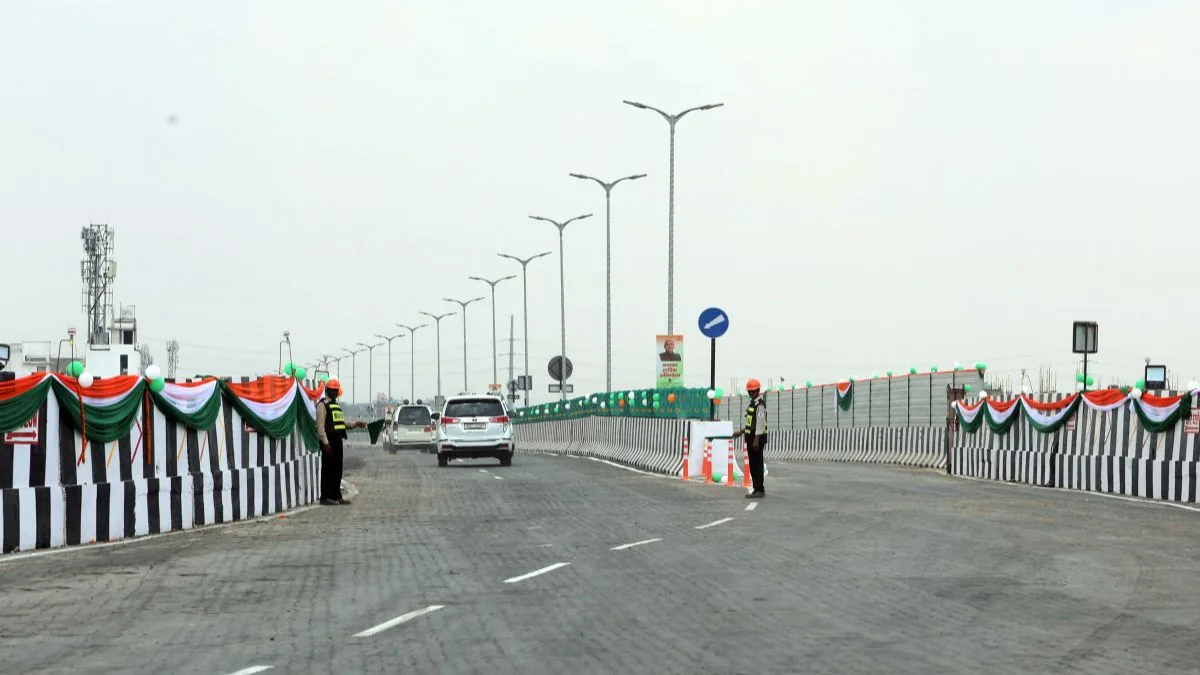
Despite major advancements in the road infratech sector, road congestion, safety concerns, climate resilience, and technological integration remain key challenges. India needs to work on finding and developing innovative solutions, best practices, and policies to transform its roads for the future. Despite major advances in the road infratech sector, the country still stands at the crossroads of safety, sustainability, and innovation.
We must therefore reaffirm our commitment to building safe, efficient, and sustainable roads. Every year, over 1.7 lakh lives are lost on Indian roads, a crisis that demands urgent intervention. While global road fatalities have declined by 5 per cent, India has seen a 10 per cent rise, underscoring the need for technology-driven, policy-backed, and infrastructure-led interventions. As India progresses towards becoming a $5 trillion economy, infrastructure plays a pivotal role in enabling economic growth, connectivity, and road safety. For smar t and sustainable infrastructure development, green highways and resilient road designs are ne e de d with help of climate-adaptive materials and low-carbon technologies. Circular economy principles include promotion of Reduce, Recycle, and Reuse in road construction for sustainability.
Advertisement
For technology- driven road infrastructure, Intelligent Transport Systems (ITS) are needed to enhance efficiency with AI-based traffic management, IoT-enabled road monitoring, and digital twins. Integration of EV-ready corridors and charging infrastructure to support sustainable mobility is also necessary. For ensuring safety infrastructure, implementation of automated enforcement systems, smart road markings, and connected vehicles is vital. Safe Driving Scores (SDS) and behavioral monitoring, as well as leveraging data-driven insights to improve driver safety are also important. India needs stronger collaborations between policymakers, industry, and academia to develop a sustainable and safe roads ecosystem. Public-Private Partnerships (PPPs) and policy incentives must be leveraged for large-scale infrastructure modernization.
Global best practices, emerging technologies, and data-driven insights must guide future infrastructure planning. The country needs a holistic approach to road safety, combining the latest technological advancements with innovative practices to create safer roads for everyone. By prioritizing safety in every aspect of road design, construction, and management, this theme seeks to move towards a future where road accidents become a rarity, ultimately aiming for zero fatalities. Road safety experts have stressed on the need of embedding road safety features at the stage of planning and designing of roads and ensuring its implementation by road infrastructure companies for making safer and better roads in the country. Globally, road accidents account for 1.3 million deaths and 50 million injuries, with many living their lives with permanent disabilities. Of this, India’s contribution to the fatalities is about 12 per cent.
To reduce fatal road accidents in India, engineers need to design roads that address the needs of all and guide driver behaviour. Steps need to be taken to improve safety of roads infrastructure for both new and existing roads, both in residential areas and on highways. With 90 per cent of casualties occurring in developing countries, road crashes are the leading cause of death around the world for children and young people between 15 and 29 years of age. The best solution to reduce fatal road accidents is to develop safer roads with at least 3-5 star safety rating, as research has shown that a person’s risk of death or serious injury is approximately halved for each incremental star rating. What India needs is a Road safety vaccine similar to the Covid-19 vaccine. This road accident vaccine should include tougher licensing norms, star rating for drivers and stricter electronic enforcement. The country needs infrastructure safety star ratings to be published, so that the community better understands the safety of our roads.
Just like the safety ratings of cars, India needs to know the safety ratings of the roads the public drives on. The International Road Federation (IRF) as part of its effort to reduce fatal road accidents in the country has taken up safe road construction projects in seven states including Tamil Nadu, Kerala, Madhya Pradesh, Rajasthan, Uttar Pradesh and Karnataka. These roads will be the safest roads in the country with minimum accidents and almost no road fatality; the most desirable design standards are being selected and implemented. The 5E’s of safe road operation including Engineering, Enforcement, Encouragement, Education and Emergency care are b eing fully carrie d out while construction of the highways is in full swing.
(The writer is President Emeritus, International Road Federation (IRF), a global road safety body.)