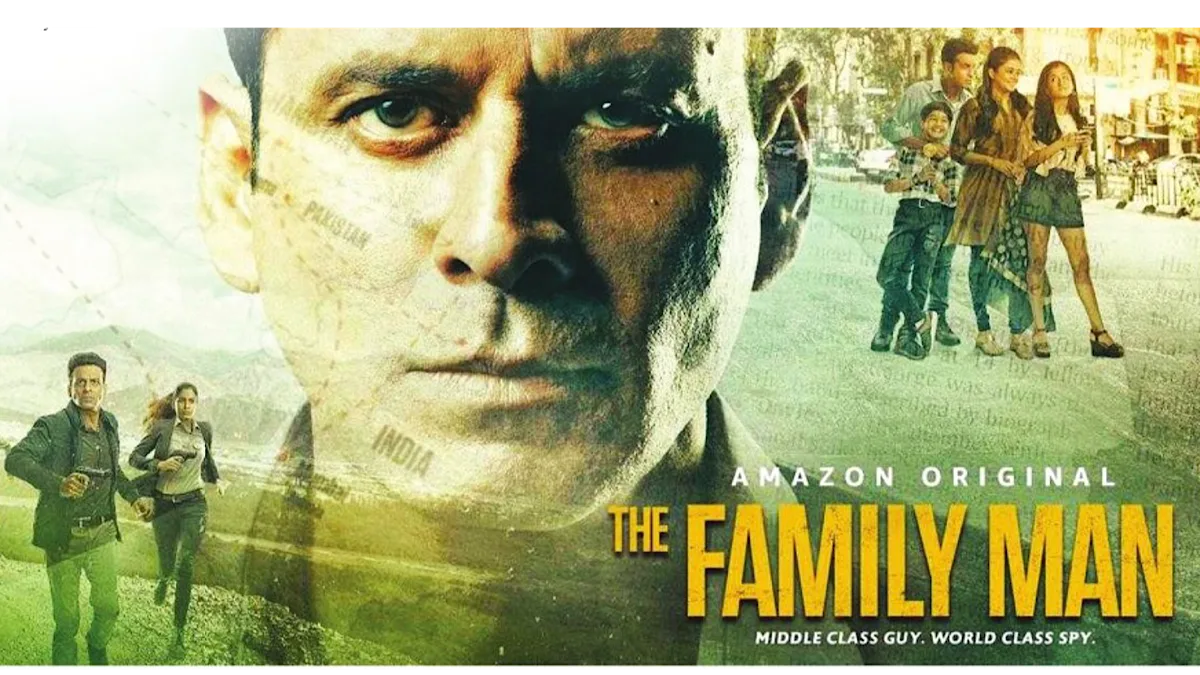
The Northeast has always existed in our national imagination as both a presence and an absence—visible in political rhetoric yet eccentrically missing from our cultural narratives. So, when The Family Man tv series returned with its third season, and the camera turned toward the Northeast, it felt like a moment of long-awaited recognition. The series promised a new kind of visibility for the region that has historically remained on the fringes of Hindi-language storytelling.
But storytelling is never just about what we see or hear. It is also about who is allowed to speak, and from what vantage point. Indeed, The Family Man-3 widens the frame by integrating folk tradition of the Northeast, such as the Apong (alcohol) ritual, and the picturesque landscapes of Arunachal Pradesh and Nagaland. Yet the frame ultimately retains familiar structure: a national security gaze, a mainland subjectivity, and a narrative that looks at the Northeast rather than from it.
Advertisement
As a scholar of me dia and communication who studies how images construct political meaning, I am compelled to ask whether the series genuinely engages with the region or merely pass through it without meaningful encounter. The Northeast almost always appeared in the mainstream television and newspaper when the nation senses threat. In Hindi cinema, insurgency has been the dominant narrative through which the region is made legible. From Tango Charlie (2005) to Anek (2022), the through-line of story always has a covert Indian officer tasked with defending national security and brokering peace between the Union of India and the insurgent groups in the Northeast.
Even the OTT platforms and alternative media are no exception to this dominant discourse. However, The Family Man-3 tries to course-correct. Its visuals are grounded, its casting diverse, its landscapes neither exoticized nor flattened. Local languages fill the screen. The region is not treated as a cultural spectacle. And yet, what finally brings the Northeast into narrative focus is not its socio-cultural texture but its strategic significance. If one walks through the writings on Northeast India—its political marginality, extractive economies, borderland identities, migration, and re c urring ethnic and religious conflicts—offer a critical insight that the region must account for the centrality of the land, kinship structures, migratory histories, ethnic formations, climate vulnerability and the enduring shadow of AFSPA.
These dynamics do not appear as plotlines in The Family Man-3. Instead, insurgency becomes the heartbeat of the storytelling. The plot is propelled by threat, as the series open with the visual of bomb blast during a cultural fest in Kohima, Nagaland. In this framing, the Northeast becomes a landscape of perpetual crisis, not a habitat of stories. Although the series offers a stunningly beautiful landscape of the Northeast, but the visual richness alone doesn’t constitute meaningful representation. In the absence of narrative depth, these picturesque images merely form spectatorship rather than understanding. The show gives us windows, but not rooms. The most significant limitation of The Family Man-3 is not its depiction of insurgency or border tension, but its narrative point of view. Like any other Hindi cinema on the Northeast, Season 3 also firmly revolves around the covert intelligence officer—the protagonist of the series, and the protagonist’s dilemmas become the emotional map for the viewer.
Although there’s significant presence of the people of the Northeast within the storyline, but they do not animate its spine. This is the difference between representation and authorship. The Northeast is represented here, but not authored. In contrast, local filmmakers from the Northeast, such as Rima Das and Haobam Paban Kumar, offer a narrative frame that departs from prejudicial or tr uncate d p or trayals. Films like LoktakLairembee (2016) or Village Rockstars (2017) don’t hinge on crisis; they arise from lived encounter with state violence, everyday resilience, ecological fragility, and the texture of hope. They tell stories that national narratives rarely make room for: stories of aspiration, survival, humour, dignity, ordinary negotiations, and cultural regeneration.
The Family Man-3 is not a failure but as a turning point. It widens the frame, yet the gaze remains the same. It acknowledges the Northeast, but it does not yet let the region speak for itself. For OTT storytelling to evolve, it must embrace a shift that film scholars have urged for years: the decentralisation of narrative authority. Representation without structural context repeats old hierarchies. It is time for the Northeast not merely to appear, but to author. Time for the camera not only to look at the region, but to look from within it. For scripts to grow beyond tropes of crisis, and make a room for the texture of everyday life.
(The writer is an Assistant Professor in Visual Communication, SRM University, Tamil Nadu)