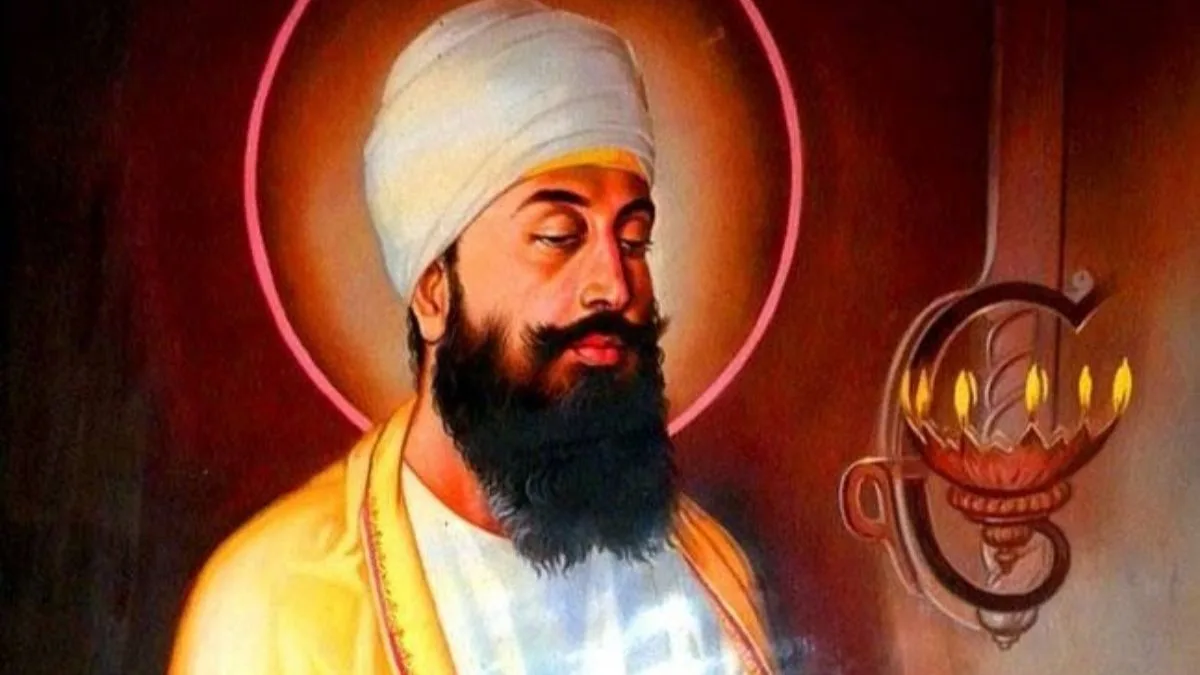
November 2025, brings people together to commemorate the sacrifice of Guru Tegh Bahadur, the ninth Sikh Guru, on his 350th Martyrdom Day. In remembrance of Guru Tegh Bahadur, a brave protector of religious freedom, let us reflect on his courage, spiritual wisdom, and selfless devotion to justice. His life and teachings continue to inspire millions throughout the world, reminding us that standing up for the rights of others is one of the highest forms of service.
Let’s take a closer look at this extraordinary Sikh warrior, the history of his martyrdom, and the celebrations marking his legacy.
Advertisement
Who was Guru Tegh Bahadur?
Guru Tegh Bahadur was the ninth Sikh guru. He was born in 1621. All his life he devoted himself to spiritual teachings. He defended the rights of people to practice their faith freely. Revered for his sacrifice and bravery, people also call him “Hind ki Chadar”. It literally means the protector of Hindus.
He composed 116 hymns in 15 different musical measures, which later found their place in the Guru Granth Sahib. His writings reflect deep spiritual insight into such basic human concerns as attachments, service, dignity, sorrow, the mind, the body, death, and liberation.
Apart from his spiritual contributions, Guru Tegh Bahadur Ji also established Anandpur Sahib and had deep involvement in safeguarding the Kashmiri Pandits against persecution.
The History Behind Guru Tegh Bahadur Martyrdom Day
Guru Tegh Bahadur Martyrdom Day is observed on November 24, according to the Nanakshahi calendar, a solar calendar devised by the Sikh tradition. The day commemorates the execution of Guru Tegh Bahadur in the year 1675.
It was not a mere individual sacrifice that he undertook. It was one that became symbolic of humanity’s struggle against subjugation. He stood up for the rights of others. His stand created a precedence for interfaith harmony and protection of human rights.
His martyrdom further strengthened the Sikh community and helped mold the formation of the Khalsa-the distinct Sikh identity that his son, Guru Gobind Singh, founded.
Sacred sites and memorials
Many Gurdwaras in India serve as eternal memorials to the sacrifices of Guru Tegh Bahadur and also his companions.
– Gurdwara Sis Ganj Sahib in Delhi is built on the site where Guru Tegh Bahadur was beheaded.
– Rakab Ganj Sahib Gurdwara, in Delhi, commemorates the place where a devoted disciple had his body cremated.
– Gurdwara Sisganj Sahib in Punjab identifies the place where the head of the Guru was finally consigned to the pyre by Bhai Jiwan Singh, a devotee who ensured the last rites of the martyr were given poignantly.
Thousands of devotees visit these places every year, offering prayers and remembering the courage and teachings of the Guru.
Celebrating the 350th Martyrdom anniversary
This year is the 350th anniversary of the sacrifice of Guru Tegh Bahadur Ji, and all these celebrations are going to be bigger than ever. A mega event is organised in Jyotisar, Haryana, by the Haryana Government in association with the Sikh Gurdwara Management Committee. Prime Minister Narendra Modi will take part in the celebrations. He will also visit the Mahabharata Experience Centre, one of the main attractions that opens to visitors.
Special prayers take place in Gurdwaras throughout the country, besides processions and spiritual congregations. The followers would sing hymns and read out passages from Guru Granth Sahib. They also contemplate upon the Guru’s message of bravery, equality, and religious freedom.
Many countries declare this day a public holiday so that people can join events celebrating the occasion or participate in education on the life of Guru.