Extraction of minerals from the Indian offshore: Opportunities and challenges
The mineral economy of India is at a crucial moment of structural transition.
Road safety has become a pressing concern globally, particularly in low- and middle-income countries where rapid motorization has not been matched by proportionate investments in infrastructure and enforcement.




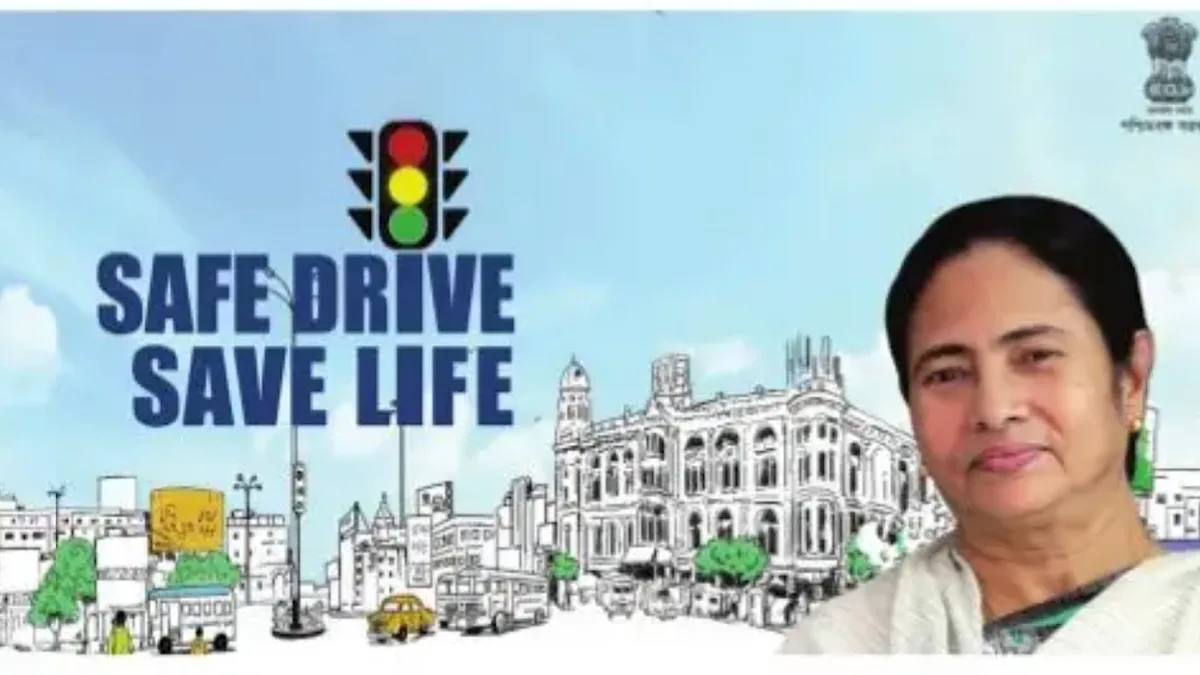
Photo:SNS
Road safety has become a pressing concern globally, particularly in low- and middle-income countries where rapid motorization has not been matched by proportionate investments in infrastructure and enforcement. Globally, the World Health Organization (WHO) estimates that 1.3 million people die every year in road crashes, with tens of millions suffering minor-to-grievous injuries.
The United Nations declared the Decade of Action for Road Safety (2011–2020), renewed for 2021–2030, aiming to halve global deaths and injuries. WHO advocates the “Safe Systems” approach, emphasizing that human error is inevitable and systems must, therefore, be designed to absorb mistakes without catastrophic consequences. Road safety has emerged as one of the foremost governance and developmental concerns in India. With only 1 per cent of the world’s vehicles, but almost 11 per cent of global fatalities, India epitomizes the severity of the problem. Young people (18-45 years) make up more than 70 per cent of those killed, striking at the heart of demographic productivity, thereby also weakening our drive for reaping demographic dividends.
Advertisement
Projections suggest that if current trends continue, road crashes could become the fifth leading cause of death worldwide by 2030. India is at the epicentre of this crisis. With more than 4.6 lakh accidents reported in 2022 and over 1.68 lakh fatalities, India remains among the countries with the highest number of road traffic accident-related deaths. In India, the road accident crisis is both a mobility challenge and a developmental concern, draining between 3-5 per cent of the GDP annually. Beyond the statistics lies the devastating social impact: most victims are young adults in their most productive years, leading to not just personal tragedy, but also loss of human capital and social disruptions. The discourse on road safety in India has historically been fragmented, with limited institutional focus until the last two decades.
Advertisement
The National Road Safety Policy (2010) was among the first comprehensive efforts to articulate India’s vision, emphasizing stricter enforcement, infrastructure audits, and public awareness. The Motor Vehicles (Amendment) Act of 2019 further strengthened this framework, introducing higher penalties, mandatory insurance, and provisions for technology-enabled monitoring. Observers identify heterogeneous traffic – where motor vehicles, bicycles, rickshaws, and pedestrians share the same road space ~ as a primary risk factor. Weak enforcement and the lack of pedestrian-friendly infrastructure are also deemed major contributors. West Bengal, one of India’s most densely populous and culturally vibrant states, mirrors these national concerns, but also offers unique insights into what targeted governance interventions can achieve.
West Bengal, a state with a population exceeding 100 million, encapsulates many of the challenges and contradictions of road safety in India. Initially viewed by sceptics as merely a slogan, the ‘Safe Drive, Save Life’ (SDSL) campaign has evolved into a multi-pronged policy framework encompassing coordinated enforcement, education, engineering, and emergency responses – the “four Es” of road safety. SDSL has grown into a movement, combining policy, enforcement, engineering, education, and emergency responses. Studies on West Bengal suggest that the state performs better than several others in terms of fatalities per lakh population.
There are many reasons due to which the road safety situation warrants a coordinated execution strategy. Some of these reasons include rising vehicle numbers and motorisation, mixed traffic patterns, urban-rural divide, and economic and human cost. West Bengal has seen rapid motorisation in the past decade. Districts like Murshidabad (+19.3 per cent), Paschim Medinipur (+14.5 per cent), and North 24 Parganas (+11.5 per cent) recorded more than a 10 per cent increase in vehicle registration, thereby reinforcing the challenges. Rising private vehicle ownership adds pressure on roads and creates urban bottlenecks, thereby complicating the road safety challenges.
The state’s roads carry everything from buses, cars, and auto-rickshaws to bicycles, e-rickshaws, and pedestrians. Unlike Western highways, traffic here is non-homogeneous, raising collision risks. Kolkata, with its robust police presence and modernised enforcement, has seen a decline in road crashes. However, the rural districts continue to remain vulnerable. Enforcement fatigue, stressed infrastructure, and limited public awareness are the areas which need continued engagement of different stakeholders. Both road accident fatalities and injuries create long-term economic strain for the local economy and individual families.
Productivity losses, trauma care expenses, and rehabilitation burdens underline why road safety must remain a priority. Loss of productive human resources due to road crashes always impacts the local economy negatively. Nationally, West Bengal fares much better in per capita fatality rates than high-motorisation states like Uttar Pradesh and Tamil Nadu. But the state’s foremost challenge remains, like other parts of India, reducing rural and pedestrian fatalities and two-wheeler-related deaths. Launched in 2016, Safe Drive, Save Life (SDSL) Campaign quickly moved beyond slogans into sustained programmes.
Early measures included “No Helmet, No Petrol” rule for bikers, leveraging electronic surveillance, better enforcement, restrictions on two-wheelers at night on major flyovers, regular engagement with different stakeholders, rectification of identified blackspots, specific guidelines for bus movement including those for drivers, conductors and owners, specific guidelines for school buses and pool cars, suitable changes in school curriculum for better awareness, timely medical assistance to road accident victims during the golden hours, specific guidelines for the movement of hazardous goods, regular training and capacity building of identified segments, regular health check-ups of bridges and flyovers, multi-media publicity campaign including theatre screenings, folk campaigns, street plays, and rallies to engage citizens.
All this not only raised awareness, but also ensured public involvement at different levels. The State Road Safety Council (SRSC) coordinates road safety at the top level, while district, sub-divisional, and block-level committees ensure ground-level execution. The lower-level (Block-level) meetings provide suitable inputs and feedback for the DRSCs and SRSC for preparing a customised road map for road safety initiatives in the State. With sustained monitoring and supervision, West Bengal has emerged the top state in the country, holding such multi-level consultations translating into an actionable road map on road safety. Transport, Police, PWD, Education, Urban Development and Municipal Affairs, National Highway Authority of India (NHAI), Panchayat and Rural Development, Health and Family Welfare, Technical Education, and Information & Culture departments of the State Government collaborate under a ‘whole-of-government approach’.
For instance, driver training is managed through technical education, linking employability with road safety awareness. Reputed institutions like IIT Kharagpur, IIEST, Shibpur and Jadavpur University have also been onboarded for different capacity-building programmes on road safety. Speed cameras have been installed at important junctions, particularly high-risk corridors like the Eastern Metropolitan Bypass. Red-light/automatic number plate-reading cameras and body-held cameras have also been installed at important traffic points. E-challan system has been introduced across the state including Kolkata for better enforcement, thereby enhancing compliance.
Interceptor vehicles equipped with sophisticated equipment and remote sensing devices have been introduced for effective enforcement of different protocols including those relating to vehicle fitness and pollution. All Auto Emission Testing Centres (AETCs) have been geo-fenced, thereby making it difficult to obtain a Pollution Under Control Certificate (PUCC) without visiting the AETCs. West Bengal and Kolkata Police along with the Transport Department have stepped up enforcement over the years. Increased challaning for over-speeding, drunken driving, and helmet/seatbelt violations has been visible. Better enforcement has resulted in better compliance of the road safety norms, thereby reducing the number of accidents and fatalities over the years.
Annual fitness checks, installation of VLTDs (Vehicle Location Tracking Device), and speed limit enforcement in school zones ensure passenger and child safety. This has also resulted in better sensitization and awareness among the stakeholders. Regular consultations with the stakeholders and monitoring of their compliance with the relevant state guidelines have ensured better road safety outcomes.
(The writer is an IAS officer of the 2002 batch and Secretary, Transport Department, Government of West Bengal. The views expressed here are personal and do not reflect those of the Government)
Advertisement