Extraction of minerals from the Indian offshore: Opportunities and challenges
The mineral economy of India is at a crucial moment of structural transition.
“Looking ahead, he said the maritime sector is expected to attract about Rs 8 trillion in investment and create around 1.5 crore jobs by 2047,” the minister said.




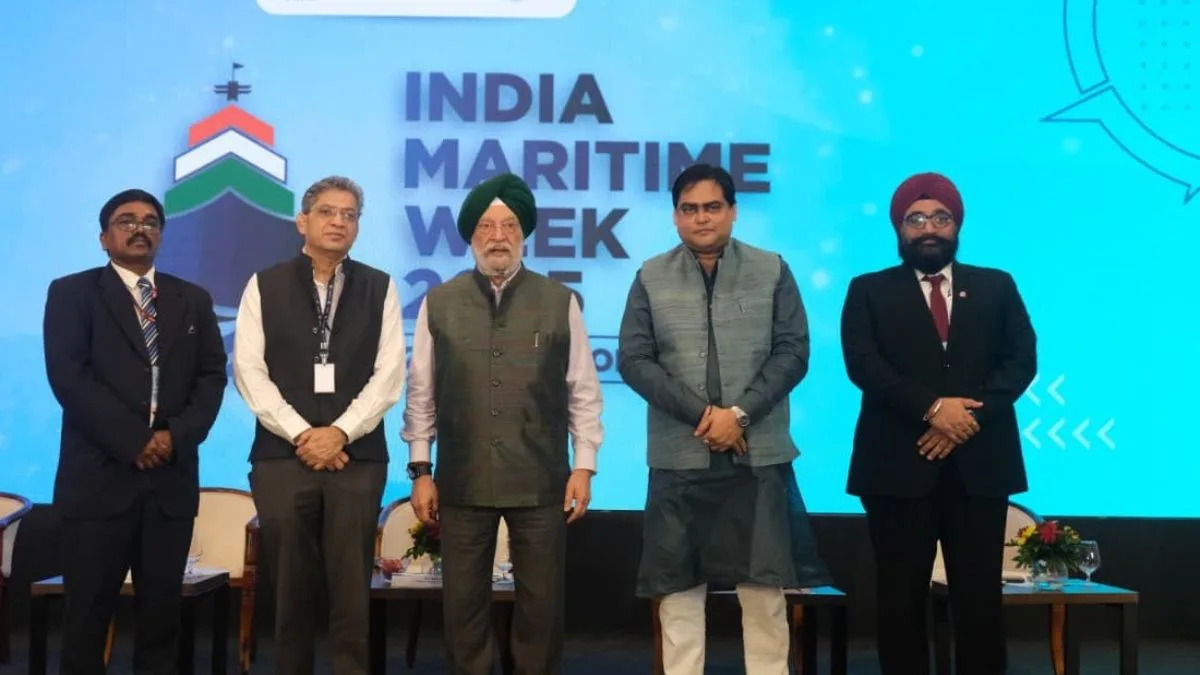
Photo: IANS
India currently consumes about 5.6 million barrels of crude oil per day, compared to 5 million barrels four and a half years ago. At the present rate of growth, the country will soon reach 6 million barrels per day, said Hardeep Singh Puri, Minister of Petroleum and Natural Gas.
While addressing the ‘Revitalizing India’s Maritime Manufacturing Conference’ held in Mumbai as part of India Maritime Week 2025, the minister said India’s rapid economic growth is closely connected to the progress of its energy and shipping sectors, which together serve as strong pillars of national development.
Advertisement
“Looking ahead, he said the maritime sector is expected to attract about Rs 8 trillion in investment and create around 1.5 crore jobs by 2047,” the minister said.
Advertisement
The minister further shared that according to the International Energy Agency, India is expected to contribute nearly 30% of the global rise in energy demand in the next two decades, an increase from the earlier estimate of 25%, and added that this growing energy requirement will naturally increase India’s need for ships to move oil, gas, and other energy products across the world.
The petroleum minister informed that during 2024–25, India imported around 300 million metric tons of crude and petroleum products and exported about 65 million metric tons.
“The oil and gas sector alone accounts for nearly 28% of India’s total trade by volume, making it the largest single commodity handled by ports,” the minister said.
He said that India currently meets about 88% of its crude oil and 51% of its gas needs through imports, which shows how important the shipping industry is for the country’s energy security.
Minister Puri further explained that the freight cost forms a significant part of the total import bill.
Oil marketing companies pay around 5 dollars per barrel to transport crude from the United States and about 1.2 dollars from the Middle East. Over the last five years, Indian PSUs such as IOCL, BPCL, and HPCL have spent nearly 8 billion dollars on chartering ships, an amount that could have built a new fleet of Indian-owned tankers, he said.
Hardeep Singh Puri also pointed out that only about 20% of India’s trade cargo is carried on India-flagged or India-owned vessels. He said this presents both a challenge and an opportunity for India to increase its ship ownership and manufacturing capacity.
“The government is working on steps like aggregating PSU cargo demand to give long-term charters to Indian carriers, advancing the Ship Owning and Leasing (SOL) model, setting up a Maritime Development Fund for affordable vessel financing, and implementing Shipbuilding Financial Assistance Policy 2.0 with higher support for LNG, ethane, and product tankers,” he said.
Highlighting the transformative changes brought in India’s maritime sector, he said it has seen major changes over the past eleven years.
“Port capacity has increased from 872 million metric tons per annum in 2014 to 1,681 million metric tons today, while cargo volumes have gone up from 581 million tons to about 855 million tons,” he added.
He said that efficiency has also improved with turnaround time reduced by 48% and idle time cut by 29%.
The Sagarmala Programme has already mobilized projects worth over Rs 5.5 lakh crore to modernize ports and connect coastal regions.
Advertisement