Haryana Chief Minister Nayab Singh Saini, stating that his government is committed to the welfare and holistic development of farmers, the underprivileged, youth, and women, said the policies of the government are transparent, intentions sincere, and that, under the leadership of Prime Minister Narendra Modi, development efforts in the state are progressing at three times the previous pace. The government continues to work with the ethos of “Sabka Saath, Sabka Vikas, Sabka Vishwas”.
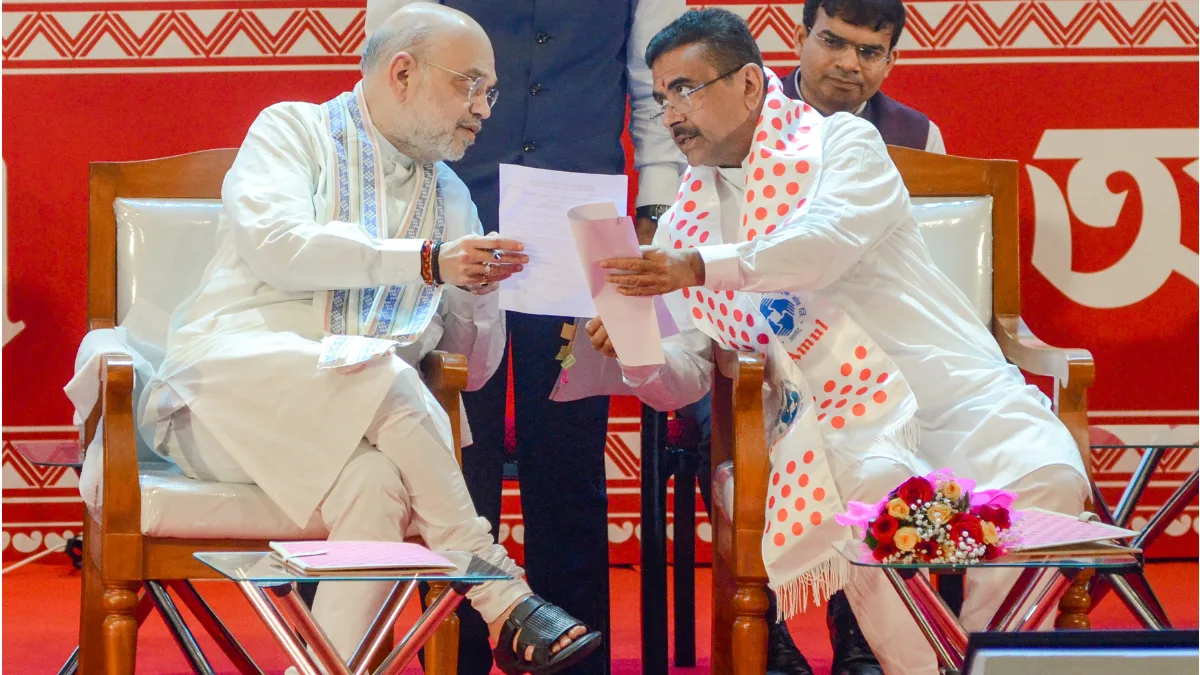
The chief minister made these remarks while addressing a state-level function held in Panchkula to mark the one successful year of the present Haryana government. He said the Scheduled Castes, who had long been deprived of their rightful opportunities, are now being empowered through increased participation in government jobs, Panchayat, and local body elections.
Advertisement
He added that the Backward Class-B community has been granted reservation in Panchayati Raj institutions and urban local bodies, including 5 per cent reservation for the post of Sarpanch and proportional representation based on their population for other posts.
He pointed out that the government has granted land rights to the Prajapati community in 1,700 villages to support their traditional pottery business. Now, there will be no hurdles in their livelihood. We have taken steps to restore the dignity and respect of the Prajapati community, he said.
The chief minister informed that the Haryana Village Shamlat Land Act, 1961 has been amended to grant ownership rights to individuals who were tenants before the formation of the state. A provision has been made to grant ownership rights to families occupying Panchayat and Municipal land for more than 20 years.
Speaking about renewable energy initiatives, the chief minister said under the PM Surya Ghar: Muft Bijli Yojana, the state aims to install free rooftop solar systems of up to 2 kilowatts by March 31, 2027. So far, 37,825 solar systems have been installed.
He asserted that the state government has placed farmers at the heart of its policies. Today, all crops in Haryana are procured at the Minimum Support Price (MSP). Over the last 11 crop seasons, an amount of Rs 1,54,000 crore has been directly transferred to the bank accounts of 12 lakh farmers.
He also highlighted the enactment of the Haryana Agricultural Land Lease Bill, 2024, which has helped restore trust between tenant farmers and landowners by providing legal clarity and security for both parties. To curb the sale of counterfeit agricultural inputs, a stringent law has been passed, mandating a five-year jail sentence for those found guilty of manufacturing or selling fake fertilizers, seeds, or pesticides.
Saini stated that Haryana’s youth are brimming with energy and talent, and in recognition of this potential, the state government has introduced transformational reforms in the recruitment process for government jobs. Notably, interviews have been abolished for Group C and Group D posts, ensuring that appointments are made purely on the basis of merit.
He also highlighted that 1.2 lakh youth have been provided employment through the Haryana Kaushal Rozgar Nigam, offering job and service security. Additionally, contract employees, guest faculty, guest instructors in the Technical Education Department, and extension lecturers and guest professors in colleges have all been extended greater service protection.
The chief minister said that the government has prioritized access to higher education by establishing a college every 20 kilometers across the state. Over the past 11 years, the government has opened 80 new government colleges, including 30 exclusively for girls. He further shared that Model Sanskriti Schools, operating on the CBSE pattern, have been set up every 10 kilometers.
He said under the “Bima Sakhi Yojana” launched by Prime Minister Narendra Modi launched from Panipat to empower women, 9,656 women have become Bima Sakhis. Inspired by its success, the state government has introduced the “Lado Sakhi” scheme. A provision has been made to provide an incentive of Rs. 1,000 to “Lado Sakhis” who care for pregnant women during delivery and after the birth of a daughter.
Saini further said that the “Deendayal Lado Laxmi Yojana” has been launched to provide economic and social security to women and girls. Beginning in November, eligible women from economically weaker sections will receive monthly financial assistance of Rs 2,100. A budget allocation of Rs 5,000 crore has already been made for this initiative. The goal is to make five lakh women in Haryana ‘Lakhpati Didi’. So far, 2.13 lakh women associated with self-help groups have achieved this milestone. Under the central government’s “Namo Drone Didi” initiative, 100 women have been trained in drone operation and provided with free drones, with 100 more women set to receive training and drones this year.
He added that the state government is committed to increasing women’s participation in startups from 45 to 60 per cent by offering additional incentives. Currently, 50 per cent of startups in Haryana are led by women. On September 17, the birthday of the prime minister, the government launched the nationwide “Swasth Nari, Sashakt Parivar Abhiyan” along with the 8th Nutrition Month, aimed at improving health and nutrition services for women, adolescent girls, and children.
Saini said that the government is committed to making the “Fit India Movement,” initiated by the prime minister, a success in building a healthier India. To achieve this objective, the state is strengthening its health infrastructure at a rapid pace. He shared that Haryana is progressing swiftly towards the goal of establishing a medical college in every district. The number of medical colleges in the state has increased from 6 to 17, and the number of MBBS seats has risen from 700 to 2,435.
He stated that industry is the backbone of our economy, to accelerate industrial growth, the state has developed a robust ecosystem promoting “Ease of Doing Business.” As a result of various incentive schemes, 12,20,872 micro, small, and medium enterprises (MSMEs) have been registered in the state over the past 11 years, attracting investments worth Rs. 28,377.59 crore.
The chief minister stated that during his recent visit to Japan, nine Japanese companies expressed interest in investing approximately Rs 5,000 crore in Haryana and signed Memorandums of Understanding (MoUs) to that effect. These investments are expected to generate employment opportunities for around 15,000 youth in the state. Industrialists and companies from Haryana have expanded their reach by visiting African countries such as Tanzania, Kenya, and Rwanda, where they have even established industrial units. Recently, a delegation of 13 progressive farmers, led by the agriculture minister, visited Kenya to explore opportunities in agriculture and develop a roadmap for exporting floriculture products to international markets.
He emphasized that, as a result of the government’s proactive incentive schemes, Haryana has emerged as a preferred destination for both domestic and international investors. Under the Haryana Startup Policy 2022, the state now hosts over 9,500 startups, including 19 unicorn companies. In addition, more than 250 Fortune 500 companies have established a presence in Haryana.
He said today, Haryana is setting a new benchmark for prosperity. The state’s infrastructure has witnessed rapid development. Twenty-one new national highways have been declared to connect every district, and work on 13 of them has already been completed. A Regional Road Upgradation Project has been launched to enhance road connectivity. Under this initiative, 4,227 roads spanning 9,410 kilometres are being repaired and upgraded at a cost of Rs 4,827 crore in the current financial year.