Extraction of minerals from the Indian offshore: Opportunities and challenges
The mineral economy of India is at a crucial moment of structural transition.
The imposition of steep tariff rates by the United States may seem irrational, even reckless, but their impact on India is both real and consequential.




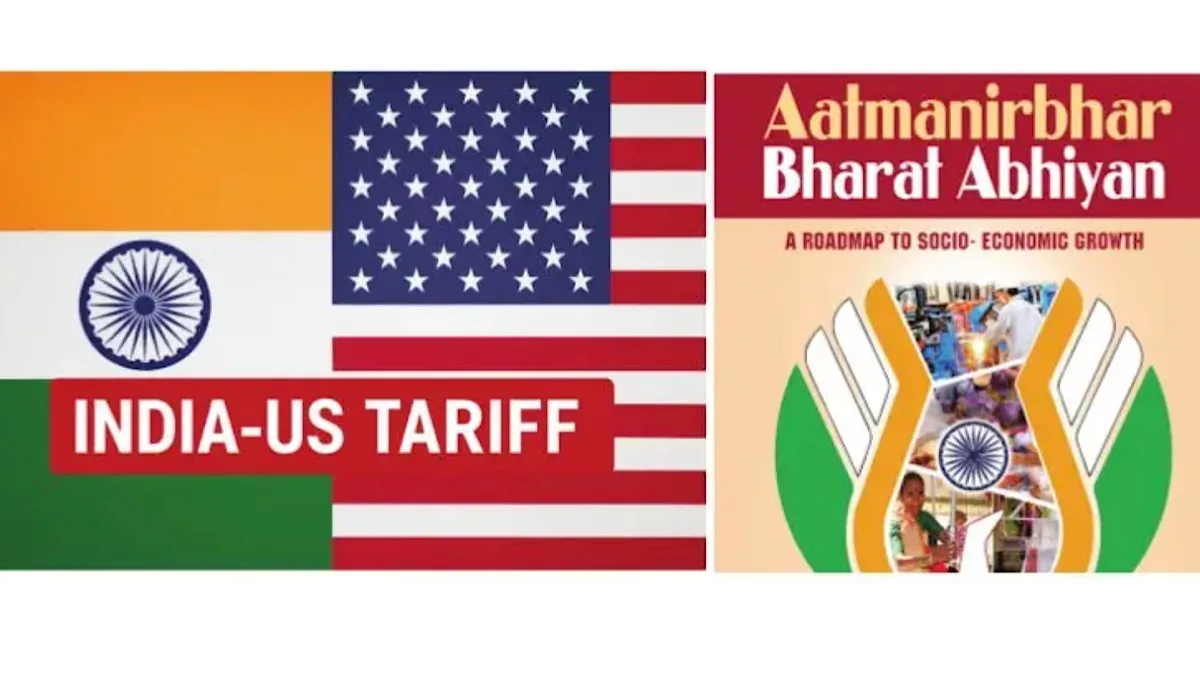
Photo:SNS
The imposition of steep tariff rates by the United States may seem irrational, even reckless, but their impact on India is both real and consequential. These pressures arrive at a time when India, like much of the world, stands at a critical crossroads ~ struggling to stabilize economically, advance socially, and strengthen politically. Yielding to demands to open our markets to foreign agricultural products would strike at the heart of our rural economy.
If we concede, we risk devastating our farmers and compromising our food security. This then is not the moment to retreat ~ on the contrary, it is the moment to respond. India must convert crisis into opportunity by reassessing its strengths and redefining its path forward. Whatever the fallout of these tariff wars, one truth remains: the world cannot afford to ignore us. With a growing population of 140 plus crore, India is both a consumer powerhouse and a strategic force. The question is not whether we are visible ~ but whether we are really ready and prepared!
Advertisement
Our slogans ~ ‘Atmanirbhar Bharat’ and ‘Make in India’ have not yet translated into tangible success. We continue to depend heavily on China for raw materials and manufacturing inputs. Our inability to produce quality goods at scale, coupled with a lack of infrastructure and affordable support for startups, leaves us vulnerable. We must learn quickly, and decisively. This means building self-reliance in critical sectors, reducing import dependency, and fostering a culture of professionalism and innovation. At the same time we witness a paradox which is striking:
Advertisement
while we manufacture world-class automobiles, we still import basic diagnostic tools like car scanners and electronic test equipment. Our industries produce mobile phones, appliances, and textiles, but many of these lack the finish, durability, and design precision found in global counterparts. This isn’t a question of capability ~ it’s a question of commitment to quality. Part of the problem lies in our fragmented standards. India’s vast diversity is strength, but it must be compressed into a unified national framework of quality, punctuality, and civic behavior.
Time discipline, for instance, remains a neglected virtue. From public transport to professional meetings, delays are normalized. This casual approach erodes productivity and global credibility. We must instill a culture where time is respected, not wasted. Our cities, too, are choking ~ physically and functionally. Decongestion must become a national priority, not just a municipal concern. This includes better urban planning, decentralization of economic hubs, and investment in rural infrastructure to reduce migratory pressure. Education is another area demanding urgent reform.
The gap between costly private schools and poorly equipped government institutions continues to widen. We must define a common education policy that is both affordable and uniform in quality. English, as a global language, must be embraced pragmatically – not as a cultural imposition but as a tool for professional mobility and national integration. A dual-language approach, combining vernacular roots with English proficiency, can ensure that every student, regardless of region or background, has access to opportunity.
Teachers form the backbone of any society, yet their compensation often fails to reflect their importance. From primary educators to professional instructors, pay packages must be dignified and competitive. Our youth, in general, show a troubling unwillingness to learn and work. This is not a failure of character but of system. Freebies and short-term appeasement have replaced incentives for productivity. We must shift the narrative: reward timely and quality work, discourage dependency, and instill pride in contribution. Social education must accompany academic instruction-teaching values, civic responsibility, and ethical awareness. The culture of entitlement must give way to a culture of contribution.
India’s foreign trade strategy must also evolve. Encouraging progress has been made in identifying new trading partners, and our exports have shown promising trends. But we must go further ~ diversify our markets, reduce overdependence on any single bloc, and build resilient supply chains that reflect our strategic autonomy. This is not just a hedge ~ it’s a strategy for sovereignty. Demographically, India faces a dual challenge. By 2015, we had the world’s largest young population – a potential powerhouse of innovation and labour. Yet we failed to harness it meaningfully. Skill gaps, unemployment, and social unrest are the consequences of that missed opportunity.
Looking ahead, by 2045 or 2050, India will have one of the largest elderly populations. And once again, we are unprepared. There is no comprehensive plan for geriatric care, social security, or age-friendly infrastructure. On both fronts ~ youth and elderly ~ we must acknowledge failure not to assign blame, but to galvanize action. What makes India’s predicament more perplexing is the paradox of excellence. In many areas – space research, digital payments, pharmaceuticals, and elite education ~ we shine globally. Yet, in basic services like sanitation, public transport, and civic infrastructure, we falter embarrassingly.
This duality is not accidental. It stems from a fragmented approach to governance, where pockets of brilliance coexist with vast zones of neglect. The fault lies in our inability to scale excellence, to institutionalize quality, and to demand the same standards across all sectors ~ not just the ones that attract global attention. The remedy begins with mindset. We must move from exception-based pride to system-wide reform. Excellence should not be the result of individual heroism but of institutional integrity. Whether it is a village school or a metro rail project, the expectation of quality must be non-negotiable. This requires leadership that values consistency over charisma, and citizens who hold systems accountable ~ not just celebrate isolated success stories. Public faith, too, must be re-examined.
While every faith and belief will always remain a deeply personal and sacred domain, its public performance has increasingly become a source of division. Across the globe, and within India, the politicization of faith has led to societal fragmentation. We must reaffirm that spirituality is a private journey, and governance must remain secular, inclusive, and rational. National unity cannot be built on exclusion or spectacle. Our foreign policy demands recalibration. The lack of support during ‘Operation Sindoor’ exposed a vacuum in regional alliances. We must rebuild trust with our neighbours, open borders for free trade, and avoid isolationist postures that yield no economic benefit. India must engage with the world – not from a position of defensiveness, but with confidence and clarity. The challenges before us are not insurmountable, but they are urgent.
* We must hasten to train and utilize a very large number of ‘unemployable’ young population in the ‘Make In India’ manufacturing programme to really become Atmanirbhar.
* We must discipline our youth and dignify our elders. * We must reform our education and reward our teachers.
* We must demand accountability and reject mediocrity.
* We must manufacture with quality and pride and trade with confidence. * We must believe with humility and govern with wisdom.
* We must learn to discharge responsibility with accountability.
India’s strength lies not just in numbers, but in character. It is time to rise ~ not with slogans, but with substance. As Roy Bennett aptly said, “Every challenge, every adversity, contains within it the seeds of opportunity and growth”
(The writer is a retired Air Commodore, VSM, of the Indian Air Force)
Advertisement