Super El Niño Effect Hits Home: Bengal’s Villages Face Early Climate Breakdown
The first signs of the developing global Super El Niño are no longer confined to satellite maps over the Pacific Ocean.
No other university had attempted a course of this kind — one that cuts across borders and disciplines to address a global challenge.




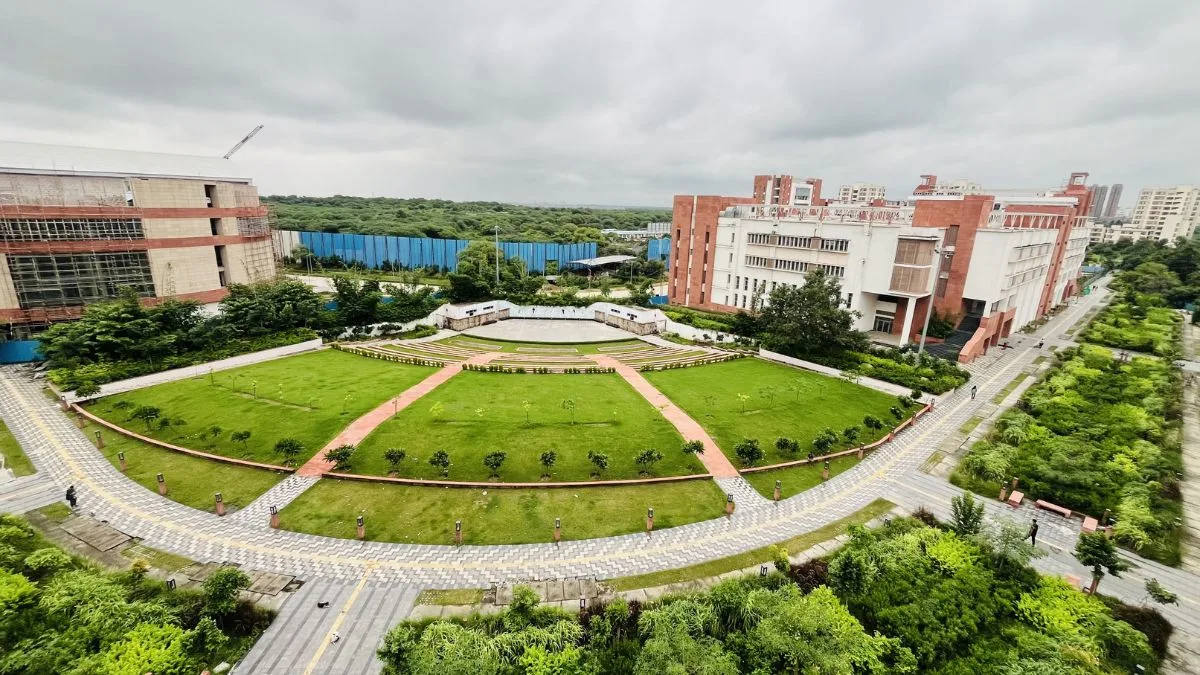
South Asian University (Official Website)
When the South Asian University (SAU) in Delhi launched its Master’s programme in Climate Change, Green Transition, and Sustainability, it marked a first across the SAARC region.
No other university had attempted a course of this kind — one that cuts across borders and disciplines to address a global challenge.
Advertisement
For SAU President Prof. K. K. Aggarwal, this initiative is not just about adding a new degree; it’s about embedding sustainability into the DNA of higher education.
Advertisement
An engineer with a PhD from Kurukshetra University and over 400 research papers to his credit, Prof. Aggarwal has held several academic leadership roles, including as the Founding Vice Chancellor of Guru Gobind Singh Indraprastha University. “Every graduate today must understand climate change,” he says. “It’s not optional anymore.”
Over the past two years, SAU has seen rapid expansion — from 600 students to more than 1,500, with infrastructure to house 3,500. Alongside the new climate program, the university has launched departments in Management and Computer Science, and is preparing to introduce a full-fledged Media Studies program next year. “Reputation matters,” says Prof. Aggarwal.
“I didn’t want to start a media course until our infrastructure was world-class. When we launch, it must be the best in Delhi.”
The climate program, he adds, emerged from a collective regional need. “All SAARC nations recognized the importance of such a course, but none had started one. We took the initiative — and I am glad we have already received 30 strong applications in the very first year.”
Aggarwal’s vision for education goes beyond traditional boundaries. This year, SAU launched a five-year integrated program where students study physics, chemistry, mathematics, and biology together before specializing.
“In India, we divide children into PCM or PCB streams at 16, but in real life, science doesn’t work that way,” he says. “We produce physicists, chemists, and biologists — but not scientists. I want to change that.”
To make education more inclusive, SAU has also expanded online learning. Its virtual campus began with a selective Master’s in Data Science and AI, enrolling just 40 students, including one from Chicago. “We’re not chasing numbers,” Aggarwal stresses. “We’re chasing quality.”
The university recently introduced Executive PhD and MBA programs, offering working professionals a chance to pursue advanced research. “If a person with 20 years of professional experience earns a PhD, they can teach for another decade post-retirement,” he explains. “It’s a win for both academia and the nation.”
As a treaty-based institution, SAU voluntarily aligns with India’s National Education Policy 2020 to ensure competitiveness and flexibility. Despite financial challenges from uneven contributions by SAARC members, India’s 60% support and renewed payments from others have stabilized operations.
Today, about 20% of SAU’s students are from other SAARC nations, though the number fluctuates due to visa issues. Still, Aggarwal remains optimistic. “Political complexities will come and go, but knowledge must flow freely,” he says. “That’s what this university stands for — collaboration, innovation, and education that prepares every student to face the defining issue of our times.”
Advertisement