Cockroach Rising
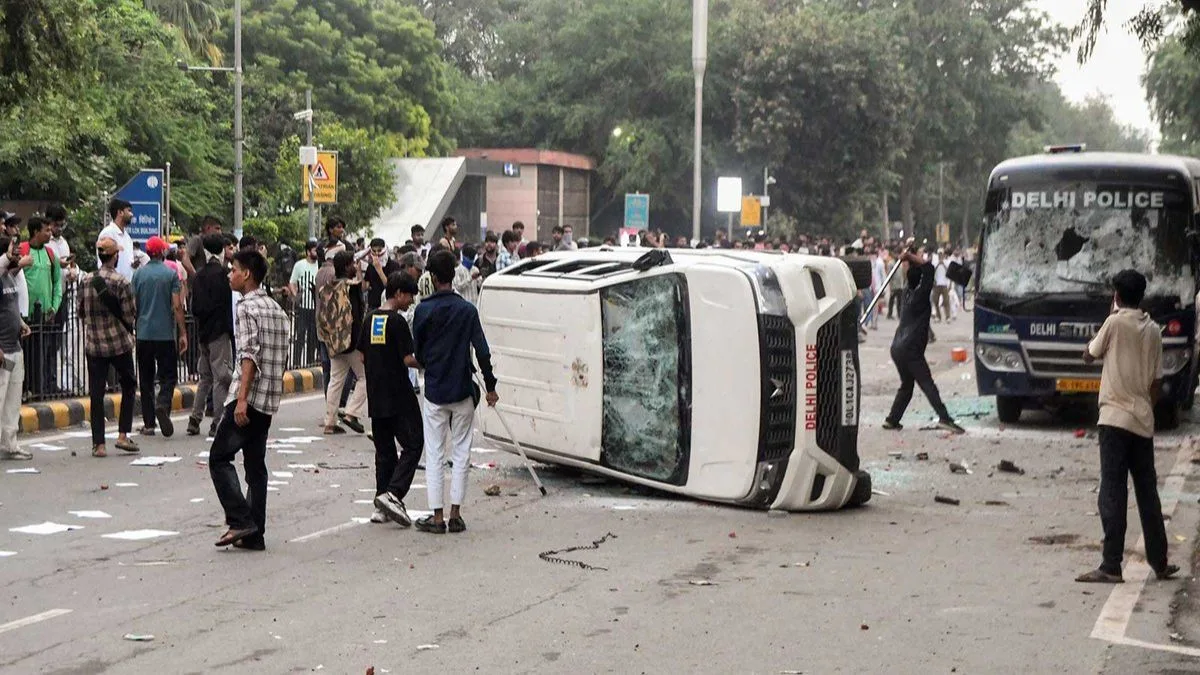
What began as an irreverent internet joke has acquired the unmistakable weight of a political movement.
The plan has been designed to meet the city’s drainage requirements over the next 30 years and aims to address both present challenges and future demands amid rapid urban growth and waterlogging issues.





Photo: SNS
A new drainage master plan has been unveiled for the national capital to provide a permanent solution to the city’s waterlogging problems and modernise the sewerage and drainage system of the city.
The plan has been designed to meet the city’s drainage requirements over the next 30 years and aims to address both present challenges and future demands amid rapid urban growth and waterlogging issues.
Advertisement
The unveiling of this historic master plan took place at the NDMC convention center, in the presence of Union Minister for Housing and Urban Affairs Manohar Lal, Chief Minister Rekha Gupta, Delhi PWD Minister Parvesh Verma, and others.
Advertisement
This has been launched as part of the service fortnight that began on September 17, Prime Minister Narendra Modi’s birthday, and will carry on up to October 2.
According to the Union Minister, the central government will be helping the Delhi government with regard to the implementation of this master plan.
According to CM Gupta, the last such plan was prepared in 1976, when the national capital’s population was just 60 lakhs, but presently, with the population pegged at almost 2 crores, such a plan is needed.
She claimed that Delhi has witnessed progress with the efforts put in by the present government, which resulted in reduced waterlogging during the recent rainy season, and assured that the city will become completely waterlogging-free in the future.
Notably, Delhi has approximately 18,958 km of drainage network under the jurisdiction of eight different civic agencies and departments, including PWD, Irrigation and Flood Control, MCD, DDA, and the NDMC.
The plan has been designed after consultation with all these civic agencies and departments.
In the plan, PWD has divided the city into three basins that are Najafgarh, Barapullah, and Trans-Yamuna, and accordingly brought on board consultants to redesign the drainage network.
The specialised consultants have assessed crucial factors like slopes, depressions, and the existing old and insufficient infrastructure to improve drainage efficiency.
After the Detailed Project Report is approved by the government, the agency will start the process of inviting tenders from private companies to carry out the work on the ground, officials said.
The entire plan will be implemented in five phases, including the three basins, and the total cost is likely to be over Rs 57,000 crore.
The project aims to reduce waterlogging incidents by at least 50 per cent during the monsoon within the next three years.
The goal is also to enhance the stormwater drainage capacity by upgrading existing systems to handle a minimum of 56.1 mm of rainfall per hour.
The aim is also for a 30 per cent reduction in flood-related accidents and health issues over the next five years through improved drainage and timely maintenance.
Advertisement