Samajwadi Party MP Iqra Hasan Choudhury has opined that 33 per cent reservation of women in Parliament won’t suffice and that quota within parties is more important.
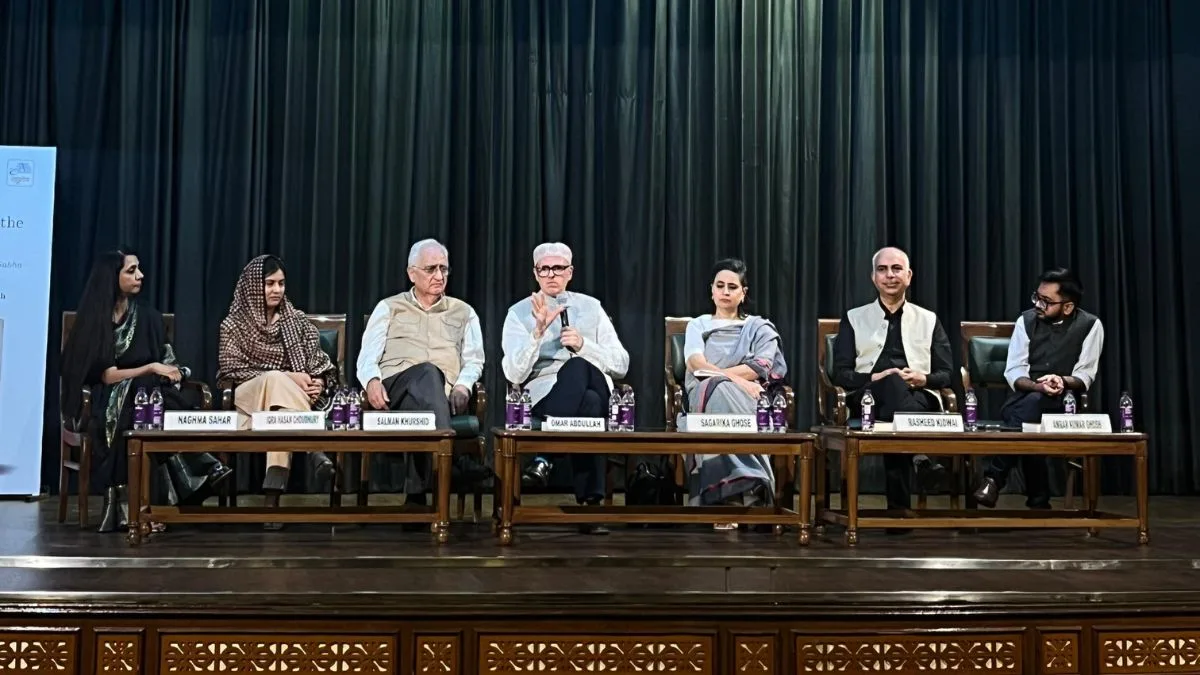
She was speaking at the launch of the book “Missing from the House: Muslim Women in the Lok Sabha” written by journalist Rasheed Kidwai and Ambar Kumar Ghosh, Associate Fellow at the Observer Research Foundation, at the India Islamic Cultural Centre here recently.
Advertisement
Moderator Naghma Sahar, a senior journalist, framed the discussion starkly. “It’s about Muslim women in the Lok Sabha and how they have been actually missing from the House,” she said, laying out the numbers that shaped the evening.
Since Independence, only 18 Muslim women have been elected to the Lok Sabha, most from political families and none from the southern states, she said.
Kidwai reminded the audience that the book celebrates women, highlighting the transformative presence of those who did make it to Parliament. They often shifted debates and priorities, and their records remained largely untarnished. “Not one Muslim woman MP has been accused of hate or corruption charges,” he noted.
Co-writer of the book, Ghosh described the tally of 18 as “abysmally low,” pointing to the structural hurdles both inside parties and in society that hindered greater representation.
Jammu and Kashmir Chief Minister Omar Abdullah addressed the role of family background in politics. “Can I also put in a bit of a defense for people who join politics because they belong to a family, male or female… For everybody else, it is ‘halal’ (lawful in Islamic teaching). For us, it is ‘haraam’ (forbidden),” he said.
He urged fairness and equal treatment, emphasizing that Parliament suffers when it fails to reflect the full diversity of the country.
Sagarika Ghose, Trinamool Congress MP in the Rajya Sabha, confessed she had been surprised by the findings. “I had no idea that there were just 18 women so far from 1951 to now,” she said.
Calling the number shocking, she highlighted the bottleneck within political parties. “If parties do not open the door, then no law can change the numbers,” she said. The session repeatedly returned to what many described as a “boys’ club” culture within politics, a space where Muslim women are doubly discriminated against.
Iqra Hasan Choudhary, Lok Sabha MP from Kairana, Uttar Pradesh, representing the Samajwadi Party, brought a personal perspective as one of the very few Muslim women currently in Parliament. She spoke about the extra scrutiny women face, from comments on dress to public behavior.
“We do not ask our male counterparts the same question,” she said. On the Women’s Reservation Bill, she stressed that a 33 percent quota alone would not suffice. “We have the Women’s Reservation Bill, 33 percent, but if parties are not giving tickets, how is it going to help? That is why I feel reservation within parties is more important,” she argued.
Presiding over the event, senior Congress leader Salman Khurshid called the absence of Muslim women a democratic deficit. He also cautioned against false narratives that constrain Muslim women’s participation. “There is a massive problem. There are fake stories about what Islam is and what is assumed to be Islam,” he said, noting how such narratives narrow rather than expand space for women.
Speakers highlighted the need for reforms inside political parties, genuine preparation of grassroots leaders, and broader social acceptance. The consensus was clear: numbers alone will not suffice. What is needed is meaningful participation, not token representation.
The absence of Muslim women in Parliament is not just a statistic; it is a question of how Indian democracy defines itself and who it allows to speak in its name.