Bastar, once synonymous with deprivation and insurgency, is today emerging as a beacon of investment, opportunity, and inclusive development. With public and private commitments worth nearly ₹52,000 crore, the region is on course to become one of Chhattisgarh’s fastest-growing industrial and socio-economic hubs.
The transformation is underpinned by ₹43,000 crore investment from NMDC, coupled with over ₹1,000 crore in private capital across healthcare, food processing, MSMEs, and hospitality. At the recent Bastar Investor Connect, investment proposals exceeding ₹967 crore were received, promising to generate more than 2,100 jobs across sectors such as agriculture, food processing, and allied industries.
Advertisement
Connectivity projects remain at the heart of this transformation. Railway projects worth ₹5,200 crore, including the Raoghat–Jagdalpur line and doubling of the KK rail line, are expected to boost trade, tourism, and security operations. Road projects of ₹2,300 crore will link all seven districts of Bastar, with new routes planned through Abujhmad and Dantewada’s Barsur, further extending to Bijapur. Officials note that such connectivity will accelerate development delivery and weaken insurgent networks.
For the first time, Bastar will host a 350-bed private multi-specialty hospital and medical college in Jagdalpur with an investment of ₹550 crore. Additional projects, including a ₹33 crore multi-specialty hospital and a 200-bed medical institute, will bring advanced healthcare within reach while creating jobs for local youth.
Skill development initiatives are also gathering pace. Under the Mukhyamantri Kaushal Vikas Yojana, over 90,000 youths have been trained, with 39,137 securing employment. In 2024–25 alone, more than 3,000 youths are being trained in IT, automotive, construction, and renewable energy sectors.
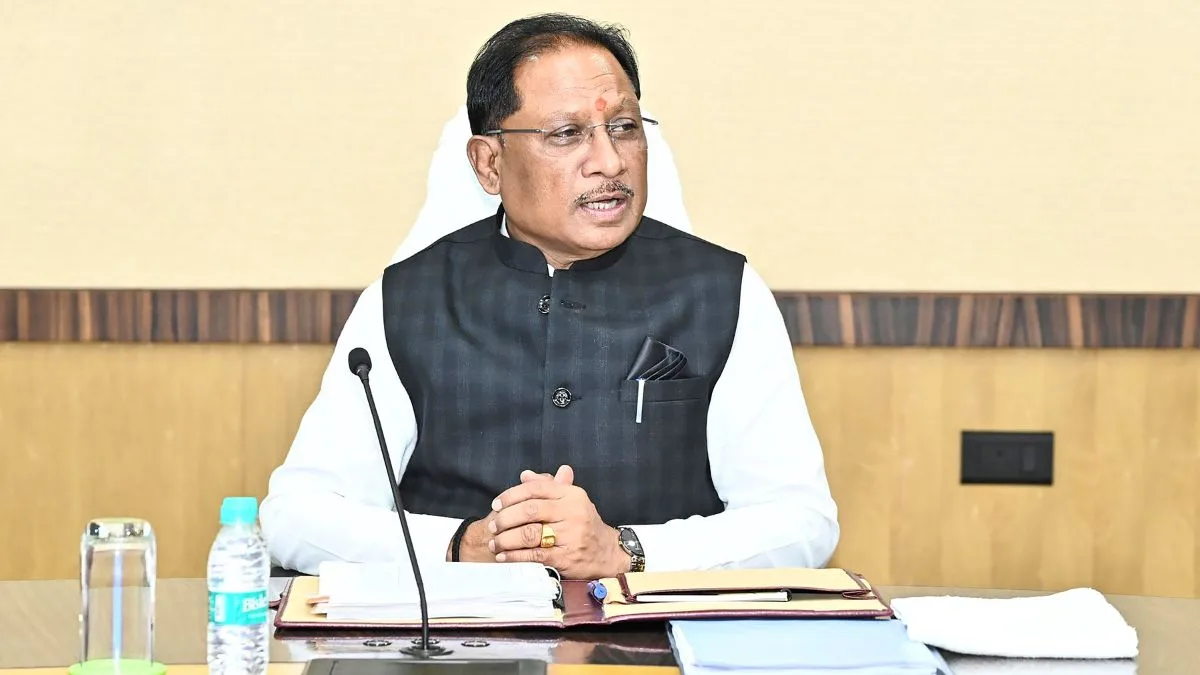
Chief Minister Vishnu Deo Sai, who has toured Bastar more than 100 times in 20 months, underscored that development is inseparable from peace. Flagship schemes such as Niyad Nella Naar have delivered Aadhaar enrolments, mobile connectivity, and healthcare access to the remotest corners.
Meanwhile, a new rehabilitation policy for surrendered Naxals promises monthly financial assistance, land, housing, and vocational training. Over 15,000 houses under PM Awas Yojana have been sanctioned for surrendered cadres and conflict-affected families.
Since December 2023, security forces have intensified operations, killing 453 Naxals, arresting 1,611, and securing the surrender of 1,636. Over 65 new camps have been established, strengthening civilian confidence in governance. The state has set a target of achieving complete Naxal eradication by March 2026.
The Chhattisgarh Industrial Policy 2024–30 offers unprecedented incentives—particularly for pharmaceuticals, agro-processing, aerospace, IT, and defence. Investors in Bastar’s Group-3 blocks will receive maximum subsidies, with an additional 10% for SC/ST entrepreneurs and families impacted by extremism. Notably, firms employing surrendered Naxals will receive a 40% wage subsidy for up to five years.
Officials and industry leaders alike describe Bastar’s evolution as a “turning point.” As one senior official observed, “From railways and hospitals to factories and schools, Bastar is scripting a new identity, one of trust, resilience, and growth.”