Tiger kills woman, dies after being rescued by foresters
A tiger attacked and killed a woman and injured four others in a village near the Bandhavgarh Tiger Reserve (BTR) in the Umaria district of Madhya Pradesh in the wee hours of Sunday.
Thirteen applications were approved on November 29, 2023, and another eight on May 31, 2024.




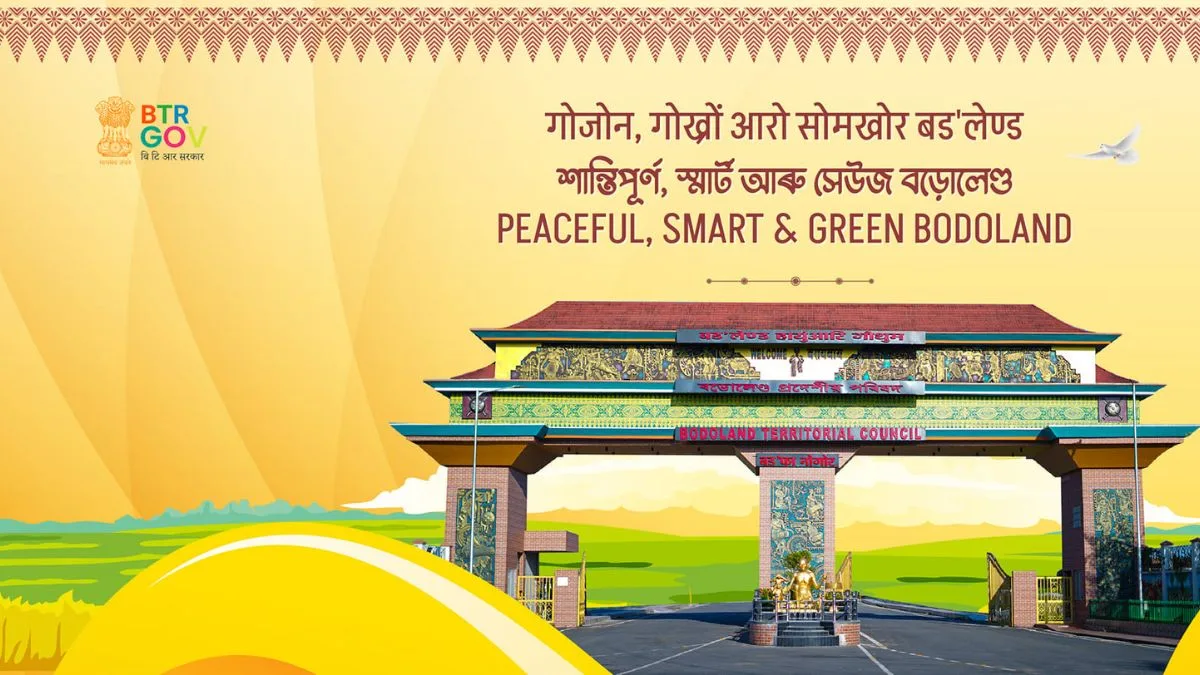
Photo: Bodoland Territorial Council (Official Website)
The Bodoland Territorial Region (BTR) in Assam has secured 21 Geographical Indication (GI) tags for traditional products, crafts, and agricultural items.
Thirteen applications were approved on November 29, 2023, and another eight on May 31, 2024.
Advertisement
This initiative aims to protect Bodo cultural heritage, prevent the misuse of traditional motifs, textiles, and instruments, and preserve endangered practices.
Advertisement
It also seeks to preserve traditions, revive practices, which are at risk of decline, and bring informal sectors—such as three traditional alcoholic beverages—into formal recognition.
A group of Bodo youths, Kansai Brahma, Nachani Brahma, Pulak Basumatary, Swapna Muchahary, and Ling Narzihary—spearheaded the process.They initially researched hundreds of items, shortlisted more than 50, and filed 21 GI applications. The team collaborated with Advocate (Prof.) Ganesh Hingmire, a national awardee known for his work on GI rights.
This recognition gives BTR a significant place in India’s GI framework. Products such as Bodo Dokhona (traditional attire), handloom crafts, musical instruments, local cuisines, silk, and horticultural produce are now legally protected for their origin, quality, and uniqueness.
GI status offers legal protection, prevents imitation, and builds trust among buyers. It also enables producers—especially women engaged in handloom and handicrafts—to fetch higher prices and expand market access, including through women’s self-help groups.
Each product reflects indigenous knowledge systems, such as unique textile patterns, rice beer fermentation methods, and organic farming practices. GI protection ensures these traditions continue undiluted while opening entrepreneurial opportunities for youth. Digital platforms will further enable regional products to be marketed nationally and internationally.
The BTR government has announced a plan to register a large number of Authorised Users (AUs) under the Chief Executive Member’s Special Initiative Scheme.
While India has over 600 GI tags, the number of AUs remains low—only 29,000 nationally. BTR alone aims to register over one lakh artisans, farmers, and weavers, with each AU linked to two or three GI products. This will give them access to government schemes, training, and marketing support.
The government has also announced plans for “GI Villages,” where clusters of artisans and farmers will receive support in training, infrastructure, and direct market linkages. There are also proposals for a Bodo Heritage Park to showcase GI products and build a center for cultural and economic activities.
The three traditional Bodo alcoholic beverages included in the GI list will be developed into marketable brands. The team is exploring funding options through central government schemes and private investment.
Eco-friendly production practices in weaving, handicrafts, and instrument-making are linked to carbon credit opportunities.These efforts align with the Sustainable Development Goals (SDGs)—especially in the areas of responsible production and climate action.
Experts suggest that Bodoland’s GI initiative can serve as a model for other Sixth Schedule regions. This initiative effectively links cultural heritage with economic growth and provides a structured path for artisans, farmers, and weavers to sustain livelihoods while preserving identity.
Ling Narzihary, one of the team members, said, “We missed the Industrial Revolution and the IT Revolution, but we will not miss the GI Revolution.”
Advertisement