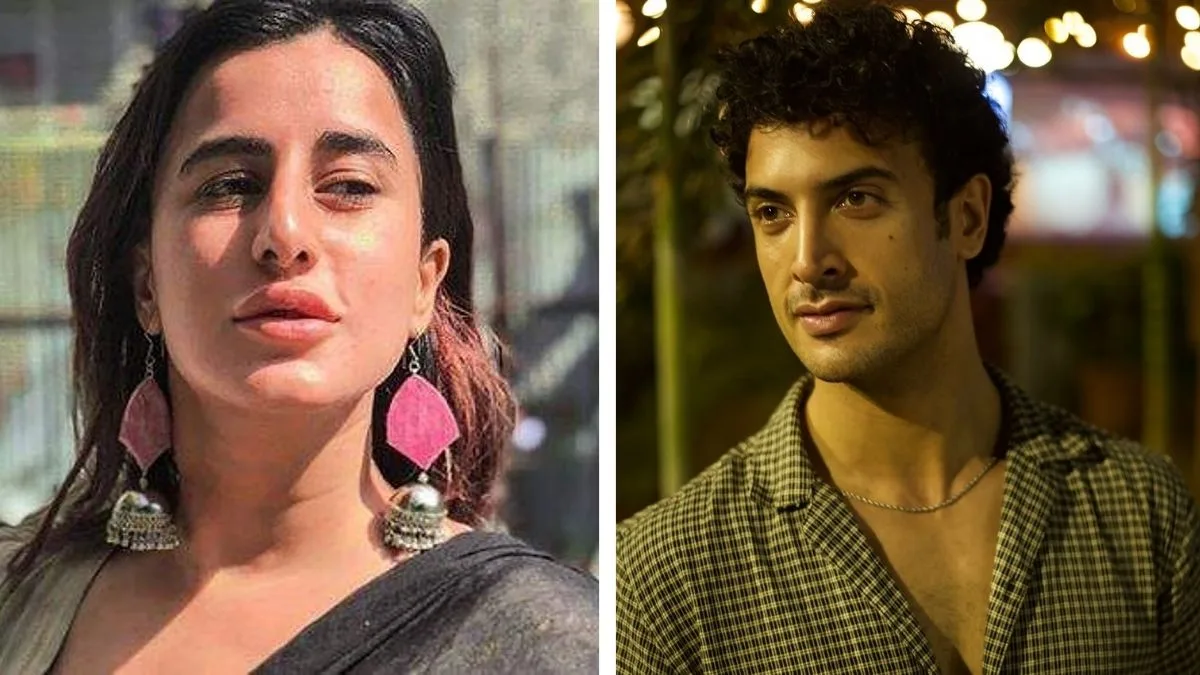
Bollywood actor and writer Saloni Chopra has once again raised a serious question that many in the film industry prefer to avoid: ‘Why does Bollywood continue to reward men accused of abuse while women who speak up are pushed aside?’
In a long Instagram post, Saloni shared her frustration after spotting actor Zain Durrani in the recently released Amazon Prime film ‘Songs of Paradise’. For her, the film title itself felt ironic.
Advertisement
“Paradise for whom?” she asked, pointing out that years after several women, including herself, spoke about his violent behaviour, he is still getting a big platform.
This is not the first time Saloni has spoken about her experiences. Back in 2018, during India’s #MeToo movement, she publicly named several men in the industry. She revealed that she had faced harassment while working with filmmaker Sajid Khan on ‘Housefull 2’ and also accused Vikas Bahl of misconduct.
Alongside those revelations, she had spoken about her abusive relationship with Zain Durrani.
According to her, Zain would physically assault her, choke her, and drag her out of the house. She claimed he often flipped the narrative, after abusing her, he would cry or faint, making himself look like the victim.
Saloni Chopra also said that when she tried to call out his behaviour, she discovered he was repeating the same pattern with other women.
Saloni recalled how, when she and other women went public with their stories, Zain and even one of his directors responded with what she described as a “copy-paste apology.”
To her, it felt like the industry had dismissed their trauma with a bulk email, “like we had subscribed to his mailing list,” she wrote.
But what troubles her more is that years later, instead of accountability, she sees these men being polished and repackaged as stars.
In her post, Saloni explained the larger problem: why women often hesitate to raise their voices. She said that while abusers continue to get projects, promotions, and applause, the women who speak out face consequences. Careers stall, opportunities vanish, and names are whispered about with contempt or pity.
Saloni Chopra described how, in one film meeting, when the discussion turned to how the industry should respond to #MeToo, the solution suggested was not to create safer sets but to hire fewer women. The logic was chilling: fewer women mean fewer accusations.
“This,” she said, “is the value system of an industry that rewards men who hit women and punishes women who try to tell the truth.”
Another key part of her post targeted those in the industry who call themselves feminists or post about equality on social media, but then happily share screen space with men accused of violence.
According to Saloni, feminism cannot just be a “script” or a marketing tool. It has to reflect in real choices about who you work with and support.
“If you know someone is abusive and you still stand next to him, produce his films, or act beside him,” she wrote, “then your message is clear: women’s pain is disposable, men’s careers are not.”
“When I wake up every day to news of another woman’s life destroyed by violence, and then see abusive men celebrated on prime-time screens, I can’t help but wonder if we have failed at humanity,” she said.
She asked whether the industry has any real values left if men like Zain Durrani or Sajid Khan can continue to find work, while women who speak out quietly sideline.
“Silence makes you part of the problem,” she warned. “When you ignore the truth because it is uncomfortable, you are saying that violence against women is forgivable as long as the man is profitable.”
The #MeToo movement in India had started a wave of conversations about harassment and abuse in Bollywood and other industries. Many women came forward with their stories, naming powerful men.
For a short while, it seemed like things were changing. But as time has passed, some of those same men have slowly found their way back into films and shows.