UP Government extends summer vacation until June 24, prioritises children’s safety and quality education
The Uttar Pradesh government has taken a major decision prioritising the safety, health and quality education of children.
This year marks the tenth anniversary of the establishment of the India-S. Korea Special Strategic Partnership. I do not know, apart from improved diplomatic relations with Korea, what tangible benefits have resulted from this partnership for India so far.




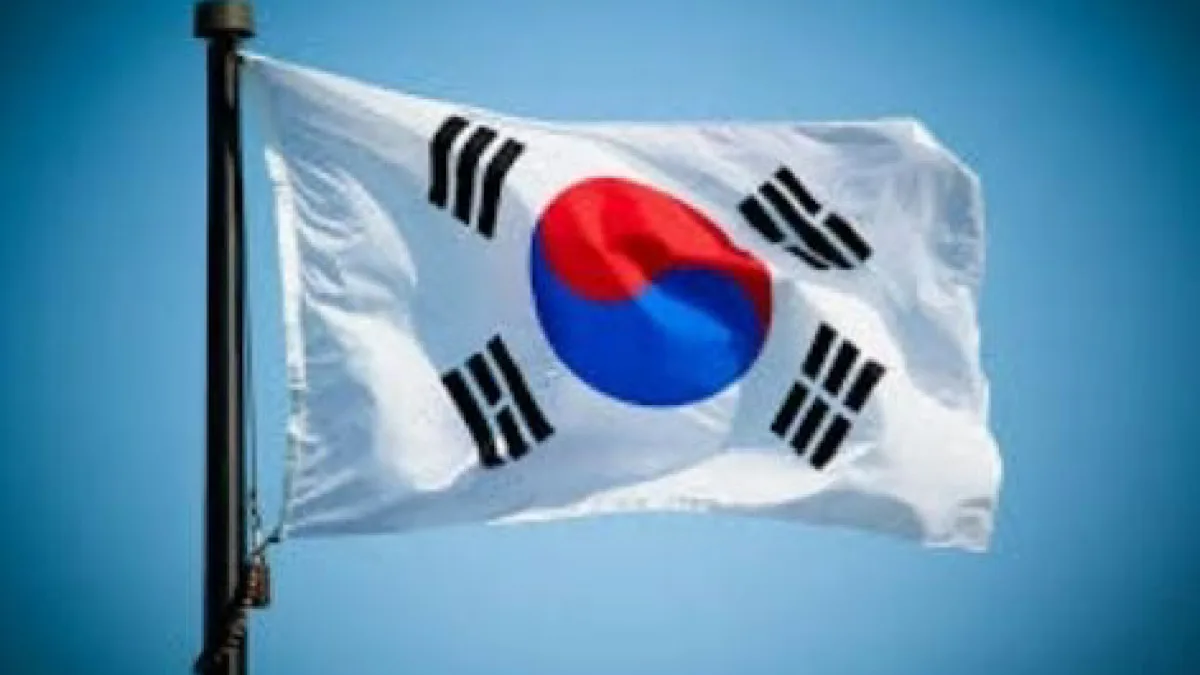
South Korea flag.
This year marks the tenth anniversary of the establishment of the India-S. Korea Special Strategic Partnership. I do not know, apart from improved diplomatic relations with Korea, what tangible benefits have resulted from this partnership for India so far. Can India learn from the Koreans how to become a leader in the technology world? In a recent TV commercial, South Korean car-maker Hyundai was touting “what Hyundai Sonata can do that Honda Accord cannot”.
South Korea’s success has been driven by an intense rivalry with Japan. A friend of mine bought a Honda car in the mid-1970s which became a laughingstock because of its small size and poor repair record. Subsequently, a Japanese invasion revolutionized the American automotive industry. Honda dramatically improved the quality, reliability and style of its automobiles. Cars from companies like Toyota, Nissan, Mitsubishi, Suzuki, Mazda, Isuzu and Subaru started to appear in American showrooms.
Advertisement
US companies were forced to improve quality and reliability to compete with the Japanese. The Japanese did the same in consumer electronics. American domestic brands like RCA and Zenith had a dominant presence in televisions, radios, hi-fi equipment etc. Sony entered the market and became a leader with acclaimed critical reviews. Other companies like Panasonic, Hitachi, Toshiba, Sanyo and Sharp gradually became household names. By the early 1990s, Zenith had gone bankrupt and RCA consumer electronics was sold to a French company. There is a striking parallel between the global invasion of Japanese products in the 1980s and ’90s and invasion of Korean products in the past two decades.
Advertisement
Automobile brands like Hyundai, Daewoo and Kia were ridiculed at the beginning because of poor reliability and bare-bone designs. The prices were low, but the consumers shrugged them off. Just like Honda in the 1980s, Hyundai made major improvements in style and technology of their products. Today, Hyundai Sonata is one of the most popular mid-size cars and their Genesis line is a bona fide luxury brand. On the consumer electronics front, Koreans have effectively driven the Japanese out of business.
It is not just the television displays where Korean brands now dominate; home appliance sections are crowded with Korean washers, dryers and refrigerator models, a market that the Japanese did not even enter. The Koreans were able to lead the TV business, not by copying others in technology but by developing their own version of display using flat panel LCD technology. Japanese companies bet on competing flat panel display systems such as plasma, DLP and flat-faced CRTs but lost in the game. More than a triumph in marketing or cost, it was a decisive victory in technology.
Samsung has entered the cell phone market and gives Apple a run for their money – something the Japanese could not do. Samsung is also a leader in semiconductor chip manufacturing. The Koreans are leaders in battery technology for electric cars. They have also penetrated other technological markets such as medical equipment and heavy machinery. The Koreans dominate the ship-building market and construction business. The emergence of Korean companies in advanced technologies did not surprise me. When I was working for Sony during the 1990s, I visited South Korea multiple times.
I was impressed by the inquisitiveness of Korean engineers. They were “hungry” for knowledge and had a profound desire to show the world their capability. This was in sharp contrast with Sony engineering groups in Tokyo where I faced polite indifference. Their attitude was that the Japanese knew everything there was to know about engineering and manufacturing. The Koreans have one other advantage over the Japanese: they value higher education. Many Sony engineers had no college degree and almost no one had a graduate degree. The emphasis was “on the job training”.
Korean engineers, on the other hand, were all college-educated, many with graduate degrees. I also sensed a family-type unity among Korean workers. For example, companies provided living quarters for all employees, right next to the operation sites, which not only motivated them but improved their productivity. The export-oriented economic policies of the Korean government have been a major reason behind the success of Korean businesses on the global stage and have made S. Korea the ninth largest exporter in the world. Technology aside, I saw their national pride outside of work.
They would proudly point out uniquely Korean items whether we were eating at a restaurant or on a sightseeing tour. One Korean engineer even emphasised that it was a “Korean Karaoke” during after- dinner entertainment. Koreans have also been successful in cultural and artistic areas. Bong Jon-ho won the best director and screen-play writer Oscars in 2020 for the film Parasite. The show Squid Game won two Emmys in 2022. Margaret Cho is a well-known name in the comedy circuit. In skating, Korean American ice-skater Michelle Kwan dominated the scene during the first part of this century and Kim Yuna was the first Korean to win an Olympic gold in skating.
The first music video to receive more than a billion hits on YouTube was “Gangnam Style” by the Korean pop artist PSY which is anything but foreign-influenced. More recently, the global popularity of K-pop groups and K-dramas attests to the creativity of Koreans. The motivation of the Koreans to surpass the Japanese can be traced back to the Japanese occupation of Korea from 1910 to 1945 and the Japan-Korea war. The Koreans have never forgotten the ill treatment by the Japanese and despise them. Koreans are thankful to the US for helping them to be free from the Japanese. They love to emulate Americans and feel comfortable with American culture. An American woman I met in Seoul who was married to a Korean gentleman told me that when her husband asked for permission for the marriage from his mother, she replied “you can marry anyone except a Japanese”.
During the opening ceremony of the 2018 Winter Olympics in South Korea, an NBC TV commentator, Joshua Ramo declared that, “Every Korean will tell you that Japan is a cultural, technological and economic example that has been so important for their own transformation”. This caused an immediate backlash, resulting in an apology from NBC to the Koreans and termination of Mr. Ramo from his assignment.
In summary, the Koreans have shown us that key ingredients behind global success in technology are national pride, intense drive to excel, perseverance, belief in higher education, fearlessness in competition, acceptance of Western democratic values (appreciation of freedom and creativity) and favourable government economic policies on export. India can certainly follow their example. Perhaps the Koreans can also teach us how an emotional urge to get even with our aggressors (the British in our case) can motivate us to excel. India even has an advantage over South Korea when it comes to dominance in global business; India can compete with China in labour costs.
(The writer, a physicist who worked in industry and academia, is a Bengali settled in America.)
Advertisement