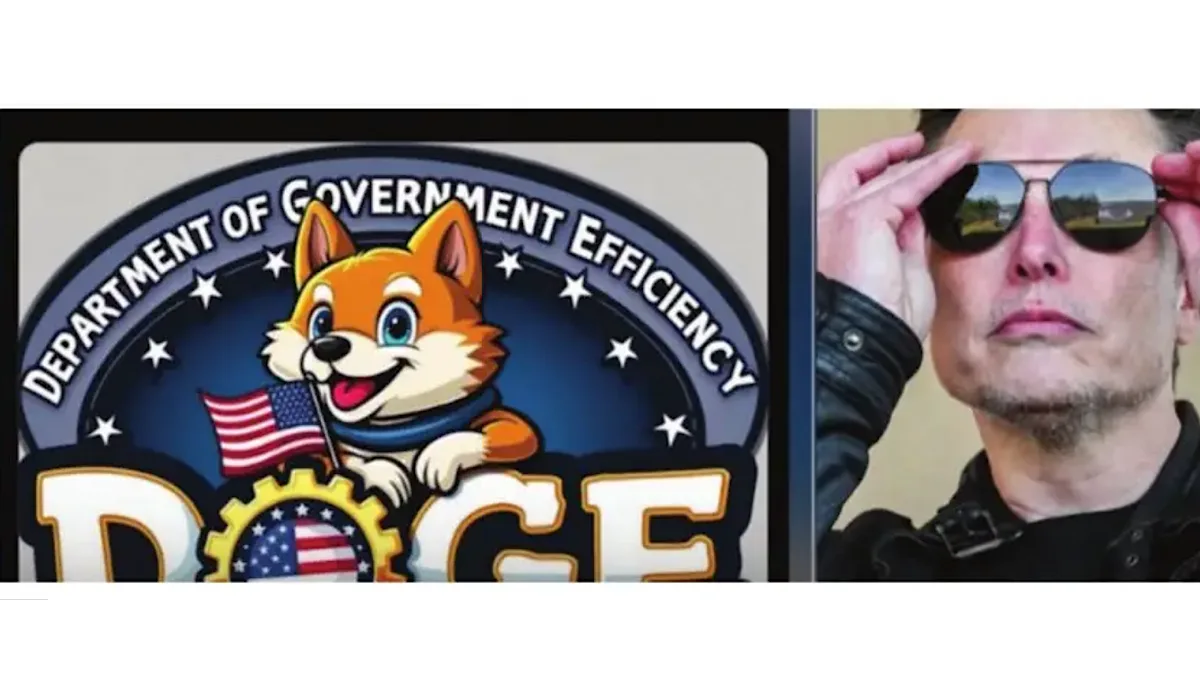
The exit of a much battered, and chastened, Elon Musk from DOGE was widely celebrated by his critics. Musk is a man with many epic successes and failures behind him ~ with an unblemished record of learning from his failures, and turning them into successes ~ all before you can say Jack Robinson. But Musk who pushed down the costs of rocket launches and space exploration by ninety per cent, revolutionised online payments, upended the car industry, and changed much more, met his match in the American bureaucracy.
The DOGE experiment has been keenly watched, with many political leaders in many countries ~ mostly from opposition parties ~ raring to imitate Musk in grinding down bureaucracy to dust. Nigel Farage, the leader of Reform UK, adopted the Musk and Trump agenda, and was promptly rewarded by voters with a substantial poll lead over the ruling party (Labour) in local elections, with many rooting for his ramshackle outfit as a potential party of government. Notably, Reform UK has launched a DOGE (UK) in councils, and punters are now betting on Farage becoming the next Prime Minister. Anti-establishment rhetoric, with appeals for private sector efficiency in government departments, is not unusual.
Advertisement
Much earlier, Arvind Kejriwal – a career civil servant, and a rank outsider to politics ~ contesting on a promise of good governance, thrice got a mandate from the people of Delhi, twice with an overwhelming majority. It is quite another matter that most of Kejriwal’s governance initiatives were torpedoed by the Central Government, and in a classic case of ‘when you can’t beat them join them,’ Kejriwal and his colleagues decided to behave like conventional politicians ~ only to end up in jail on charges of corruption. Despite the Kejriwal fiasco, many in India still want hidebound politicians and bureaucrats to be replaced by smart outsiders. Trump, even after many years in government, down entire government departments, and firing thousands of government employees.
However, as Musk and Trump soon found out, disruption is easy but rebuilding is extremely difficult. DOGE initially promised to cut Federal expenditure by US$2 trillion, but Musk revised the goal to US$1 trillion in April 2025, which has further been pared down to US$ 150 billion. Some studies suggest that, after redundancy payments and other legal costs are factored in, DOGE will end up costing more than what it saved. Additionally, the US Government is facing a number of law suits, across the US, filed by people affected by DOGE actions. Musk did not profit much by his association with the government. Rather, Musk became the second most hated man after Trump, unsavoury details about his personal life were published in the media, and his businesses suffered greatly, prompting him to throw in the towel, on the 129th day of his appointment.
The DOGE ex – periment has a number of lessons for eager beavers aiming to reform public administration:
a) Brilliant business and military leaders fail at political governance because their colleagues i.e., fellow politicians have their own predilections and interests, and bureaucrats do not obey orders blindly; before implementation, bureaucrats test all political decisions on the anvil of existing SOPs, circulars and instructions. When the Duke of Wellington, of Waterloo fame, became the Prime Minister in 1828, he said after his first cabinet meeting: “I gave them their orders and they wanted to stay and discuss them!” No wonder the Duke is remembered as one of Britain’s ablest generals, but the worst Prime Minister of the nineteenth century.
b) Faceless bureaucrats take thousands of decisions daily that affect the lives of innumerable people. With a view to enhance efficiency in governance, reformers like Musk attempt to change the rules and procedures of taking such decisions, but such changes are often challenged in courts, which test the changes in light of existing regulations. It is, therefore not surprising that DOGE is being opposed in court in thirty lawsuits, some brought about by fourteen State attorneys general; hundreds of Freedom of Information requests have also been filed, which may result in even more lawsuits. Conclusion: Potential reformers have to be masters at countering lawfare i.e., strategic use of legal proceedings or legal systems to harm or intimidate an opponent.
c) Sometimes, there is a need for complicated regulations. In a famous anecdote, a British Foreign Secretary once asked a reformer: “Sir, can you, with your simplified rules, determine the nationality of an illegitimate child born to a Haitian woman, from a Brazilian man, on a French ship, anchored in British waters?” Therefore, Musk’s obsession with minimalism, which translated into the war cry “Delete!” for all unnecessary things, like landing gear for rockets, failed miserably in Government.
d) The failure of DOGE has conclusively proved that outsiders cannot reform governance in the US, without first learning how to run it. It may be instructive to view governance reform in the Indian context. Reform of the bureaucracy was on top of the agenda of NDA 1.0, for which it had the necessary public support, but the Government faltered when flagship initiatives like demonetisation and GST ran into problems. NDA 2.0 initiated administrative reforms in September 2020, by launching the National Programme for Civil Services Capacity Building (Mission Karmayogi), aimed at capacity building of Government employees, by upgrading their training mechanism. Thereafter, the Department of Personnel and Training (DoPT) published a draft Framework of Roles, Activities and Competencies (FRAC), providing an overview of the guiding principles, common vocabulary and steps required to complete the pre-FRAC process.
Later, in May 2021, the Government floated a Request for Proposal for hiring a private consultant to design and develop a FRAC for civil servants, so that the country can have a “fit-for-future civil service.” FRAC was to complement Mission Karmayogi, and was, eventually slated to dovetail into it. Working in tandem, both would have provided enhanced competencies and better-defined roles and activity profiles at all levels, leading to a ‘Roles based HR Management System’ for the bureaucracy instead of the present ‘Rules based’ one.
This was probably the last we heard about FRAC ~ unceremoniously scuppered by the entrenched bureaucracy. However, reforming the bureaucracy is not rocket science. Routine measures that would improve governance with little effort, like giving proper training to subordinate Government employees and formulating SOPs for them, in light of recent technical advances, could easily be attempted. Then, a matrix of responsibility and accountability for government employees needs to be worked out, so that dereliction of duty can be identified and dealt with. Lastly, the procedure to book delinquent officers needs to be streamlined by getting rid of the meaningless rigmarole that makes action against bureaucrats virtually impossible. These steps would put the fear of God in lower-level functionaries.
The last time this approach was adopted was in 1975 ~ during the much reviled Emergency ~ and it succeeded spectacularly. All said, the corruption, inefficiency and lack of initiative of the bureaucracy is intriguing, given the fact that Government service is the employment of choice for the flower of Indian youth, who have excelled magnificently, even in the highly competitive American corporate world. Perhaps, to have an efficient and performing bureaucracy, the Government needs to put in place a framework of evaluation where good performance, excellence and initiative are rewarded, and corruption and non-performance are punished. Looking to the DOGE experience, reforms proposed by DOGE have often been stalled by courts, but a parliamentary democracy like India, where Parliament is supreme, has a better chance of implementing ad – ministrative reforms because the Government through Parliament can change all laws standing in its way.
What is needed is a will to reform, and a well-throughout plan for reform. However, there is little chance of non-civil service personnel influencing governance in India, because even a token induction of outsiders at upper echelons of the Government has been repeatedly thwarted by the entrenched permanent bureaucracy. It is no secret that only a well-functioning bureaucracy can accelerate reforms and pitchfork us in the comity of developed nations. But, we can make full use of our human capital only in a milieu which promotes good political and bureaucratic leadership. Otherwise, we risk ending up as a country in which “Wealth accumulates but men decay” (The Deserted Village, Oliver Goldsmith).
(The writer is a retired Principal Chief Commissioner of Income-Tax)