Two years ago, President Mohamed Muizzu rose to power in Maldives on an openly “India Out” platform. Editorials back then were already writing the obituary of India’s Maldives policy.
PM Modi was the first world leader to congratulate Muizzu.
Advertisement
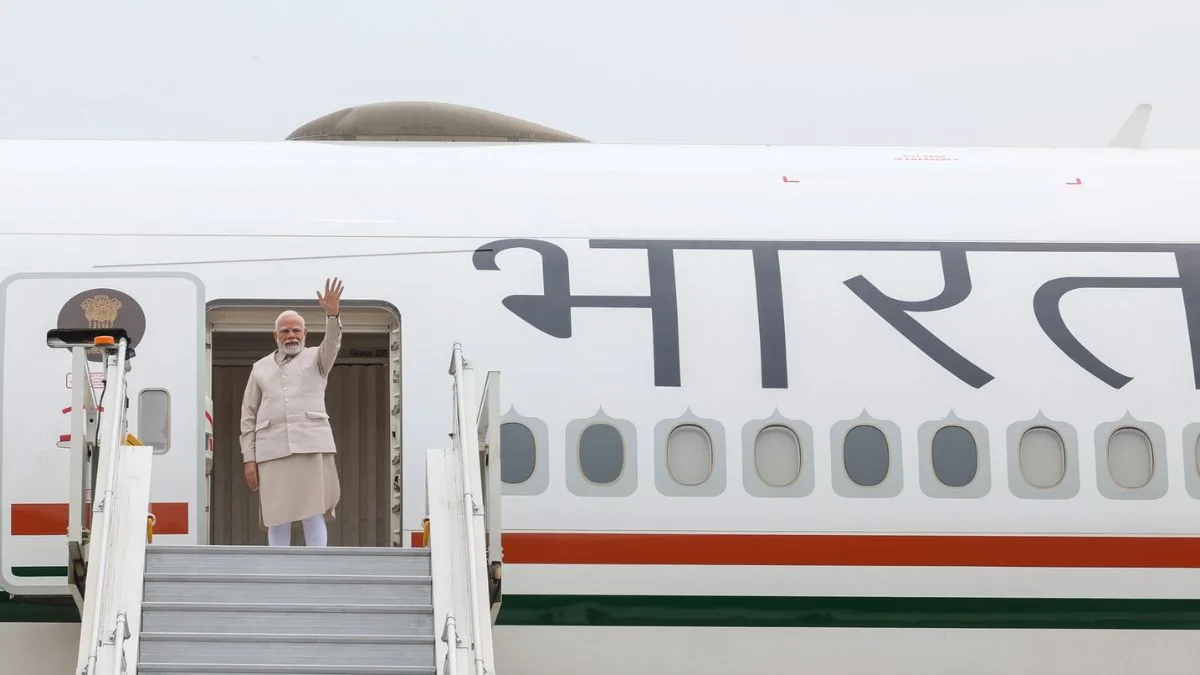
This week, the prime minister will become the first foreign leader to be received in the Maldives on a state visit under President Muizzu. Even more symbolic, he’s the Guest of Honour for Maldives’ 60th Independence Day celebrations.
Since President Muizzu took charge, India has shown that it is a friend in need. Be it through economic support, assistance for capacity building, and other such endeavours, India has always stood with Maldives.
Under the Joint Vision for Comprehensive Economic and Maritime Security Partnership, India has provided specialized training slots to Maldivian Coast Guard and Defence Force officers at Indian defence academies.
Prior to this visit of the PM, President Muizzu had visited India in October last year, marking his first state visit abroad after assuming office in November 2023. During the visit, he had said, ‘India is a key partner in the socioeconomic and infrastructure development of the Maldives, and has stood by the Maldives during times of need’.
This is not an isolated story of India’s quiet diplomacy.
Look at Sri Lanka.
When President Anura Kumara Dissanayake assumed office, many commentators feared New Delhi-Colombo ties would nosedive too.
In a powerful symbol of trust, PM Modi recently visited Sri Lanka on a state visit earlier this year, becoming the first foreign Head of Government to be received under the new leadership. In an unprecedented gesture, President Dissanayake personally accompanied PM Modi throughout the visit, from ceremonial welcome to joint public events to iconic cultural sites.
PM Modi was also conferred the Mithra Vibhushana, Sri Lanka’s highest civilian honour for a foreign national.
During the visit, President Dissanayake publicly called India “Sri Lanka’s first responder” highlighting a powerful mutual trust between the two countries. Whether it’s responding first in crises or standing by as the reliable neighbour when others step back, India speaks for itself. It’s India’s conduct that keeps its partnerships resilient.
The PM operates with a clear sense of strategy and purpose. Though many believe they grasp his approach, there are deeper, more nuanced layers to his leadership style that often remains out of public view.
A defining feature of PM Modi’s foreign policy has been strategic restraint – a measured and thorough – approach that has served the country well. He is often there for any country when others fail or refuse to respond. Be it vaccines to humanitarian relief, be it capacity building or economic assistance, PM Modi is the leader who stands by nations.
This consistency has ensured that, regardless of changes in political leadership abroad, India’s bilateral relations remain stable and constructive. The result is a steadily expanding global footprint for India, driven by a foreign policy that balances principle with pragmatism.