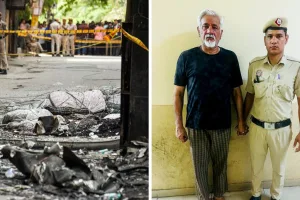
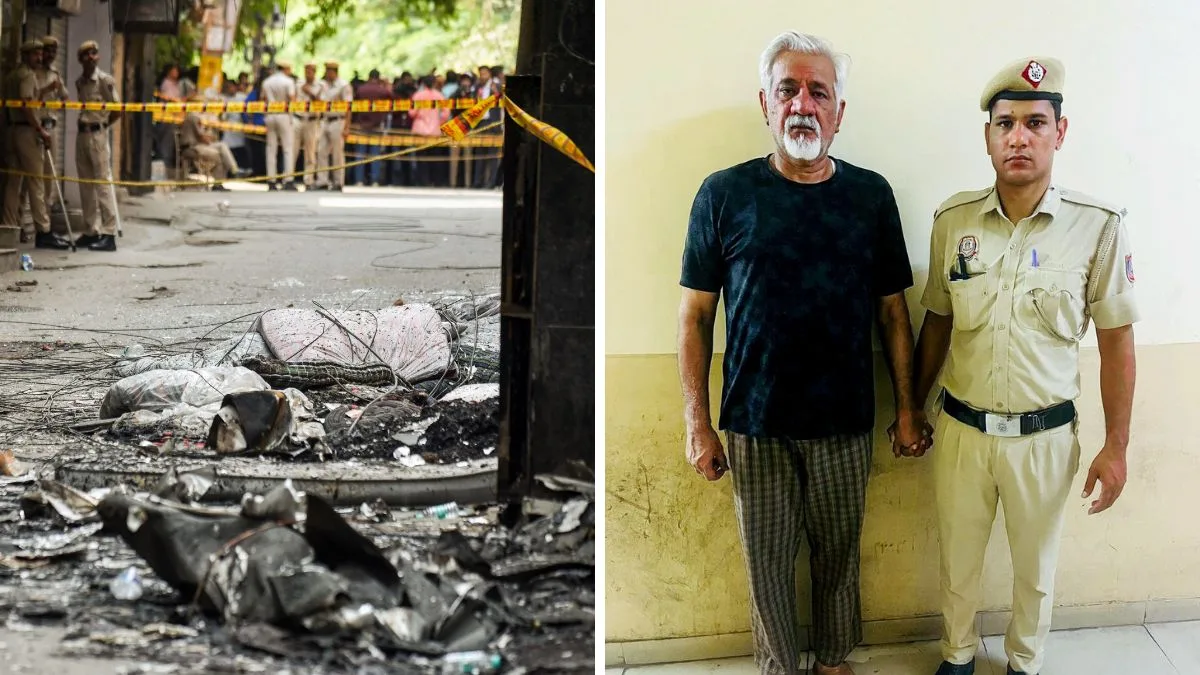
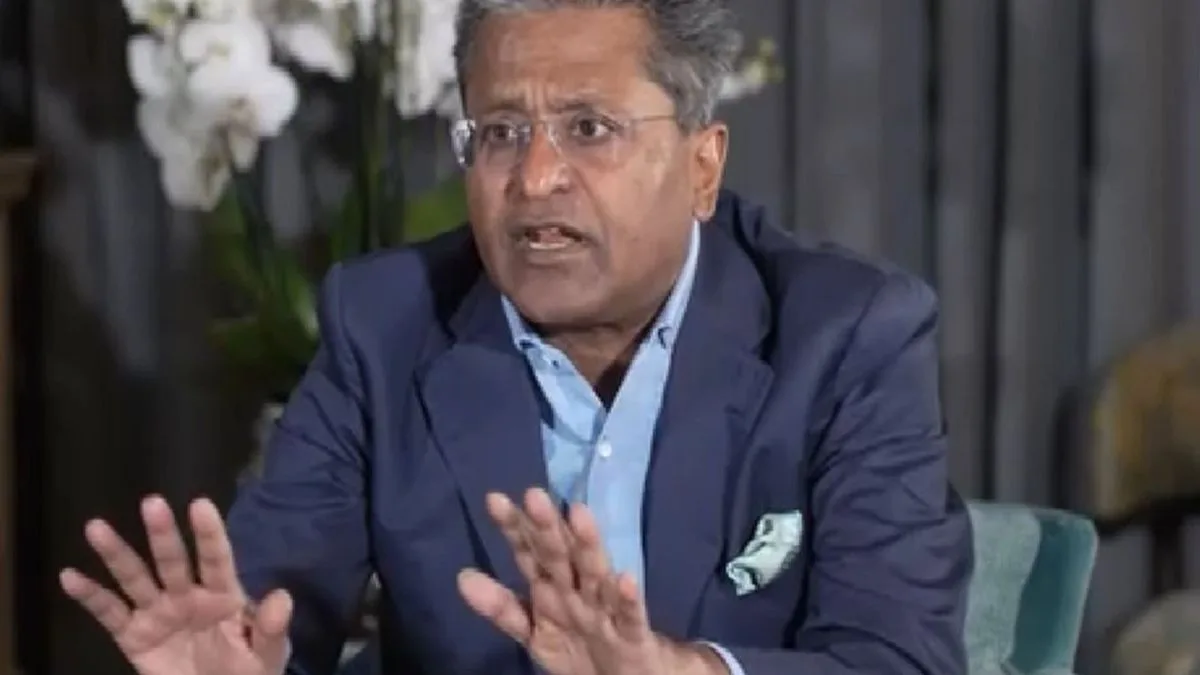
No link between DGEME Lt Gen Sahni and Thailand assault video, says Army
The clarification came after several posts circulated online, falsely linking a viral video from Thailand to the senior Indian Army officer.
Occupied quietly in the corner of the Indian Institute of Technology-Ropar, a dedicated team of researchers is working to help the Indian Armed Forces achieve their vision of fully indigenised drones, a critical asset in times of war.




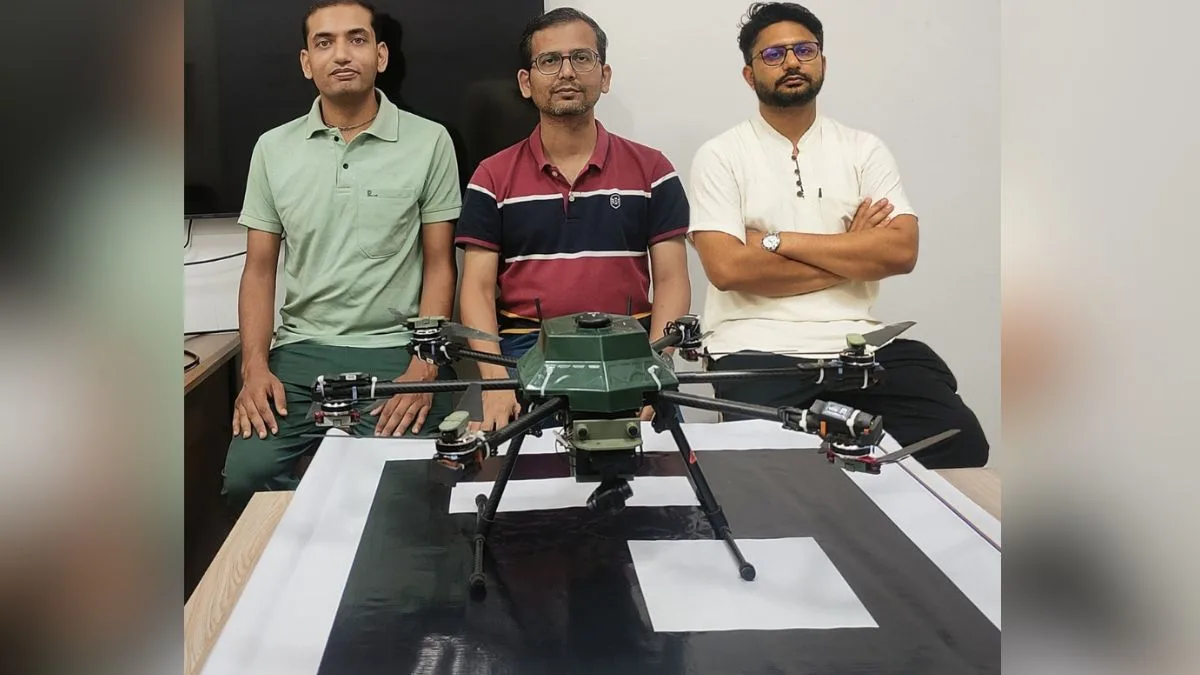
Photo: SNS
Occupied quietly in the corner of the Indian Institute of Technology-Ropar, a dedicated team of researchers is working to help the Indian Armed Forces achieve their vision of fully indigenised drones, a critical asset in times of war.
A team of professors and students at the institute’s Centre of Drones and Autonomous Systems (CoDRAS) is working towards developing next-generation, patented technologies that will ensure that India’s drones are both safe and self-reliant. Their focus includes developing advanced flight algorithms, AI-driven navigation systems, and secure communication networks — all designed to reduce dependence on foreign systems and keep sensitive data safely within the country. Their efforts align closely with the vision of Aatmanirbhar Bharat, wherein the country’s data will be protected within its borders.
Advertisement
Speaking to The Statesman, Dr Shashi Shekhar Jha, coordinator CoDRAS, said that the recent global conflicts have seen a tremendous increase in the use of technology-based warfare equipment, particularly the drones. “Closer home, Operation Sindoor also disclosed the range of drone capability in not only safeguarding our own border lines but also defending them while launching counter-offensives beyond the enemy lines,” he said.
Advertisement
The team is currently developing two major projects at the behest of the Indian Army. The projects include facilitating autonomous landing of drones on the frontlines and war zones, and real-time geo-location estimation using the drones.
Headed by Dr Jha and Dr Sudeepta Mishra, the autonomous landing also has a senior research fellow, Shivam Kainth, working on the project. “The project is of special interest to the Indian defence forces for enabling uninterrupted drone surveillance and operations at the frontlines,” Dr Jha revealed the details. “With continuous operational capabilities, drones can provide real-time situational awareness, enhance reconnaissance missions, and support critical decision-making in GPS-denied or contested environments.”
Stating that under the project, the team is developing static platforms for precision landing of the drones, especially in terrains where it is not possible to have a clear land area or plain terrain, Dr Mishra said that the idea is to enable the drone to guide itself to the landing platform. “We are also trying to modify it as per the needs of the Indian Army so that it can land on both static and movable bases, including tanks and vehicles. At times, it becomes difficult to bring the drone back because of the signal issues due to the range. However, this landing base will be automatically linked with the drone, and they would be able to park themselves post the sortie,” he said. The project is in the testing stages, and the team is hopeful to finish it by the end of this year.
The other project, ‘Real-time Geo-location estimation using Drones’, focuses on drone-based object identification, geo-location estimation, and change detection. The team includes Principal Investigator Dr Jha, Senior Research Fellow Shivam Kainth, and Research Intern Kanwarveer Singh (Btech CSE IIT Ropar).
Stating that the drones will help the defence forces in tracking the change in movement and even the foliage in case of densely covered areas, especially near the border, Dr Jha said that by leveraging aerial imagery and onboard processing, the system enables defence forces to identify and precisely locate suspicious activities, estimate damage, and detect environmental or structural changes in real-time.
“Such capabilities are critical for enhancing situational awareness, supporting rapid decision-making, and strengthening surveillance operations in sensitive and dynamic environments,” he went on to add.
IIT Ropar recently signed a Memorandum of Understanding (MoU) with AVPL, a Gurugram-based company, to jointly develop drones equipped with fully indigenous hardware, software, programming, and intelligence systems. The collaborative research and development efforts will be carried out under CoDRAS.
Stating that India must take control of its technological destiny, Prof Rajeev Ahuja, Director, IIT Ropar, said at the time, “This partnership will help us build drones and systems that are completely made in India, with Indian intelligence and security at the forefront. We are not just talking about aerospace innovation. We are building national defence capabilities.”
Advertisement