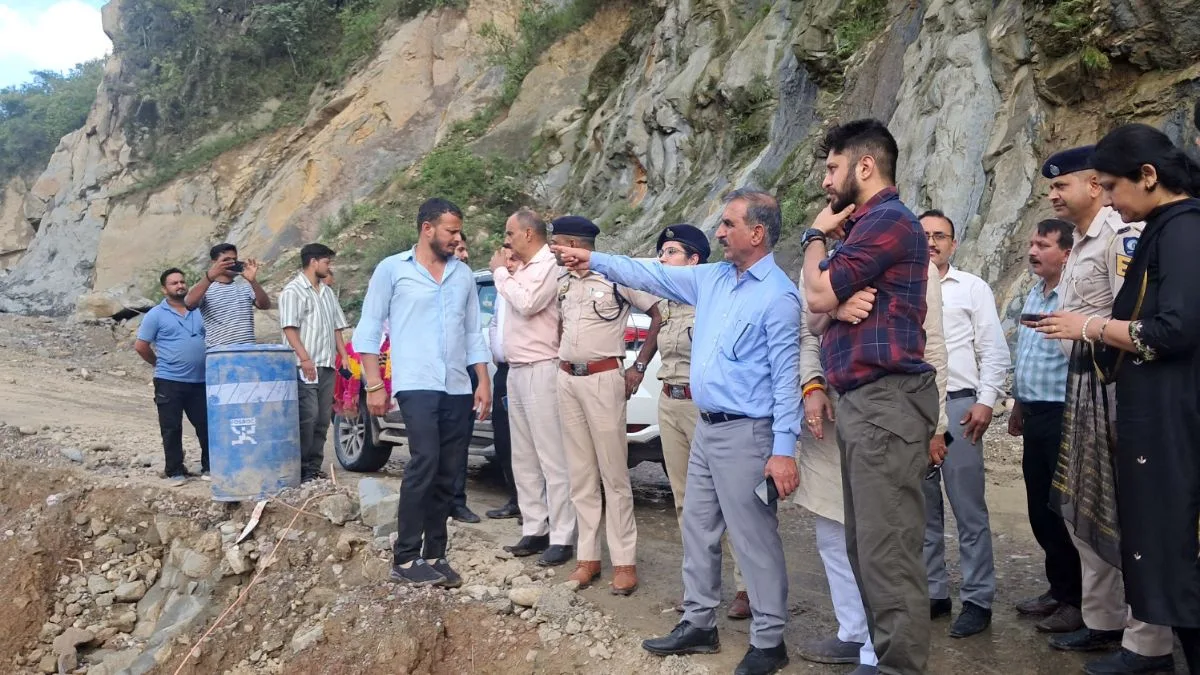
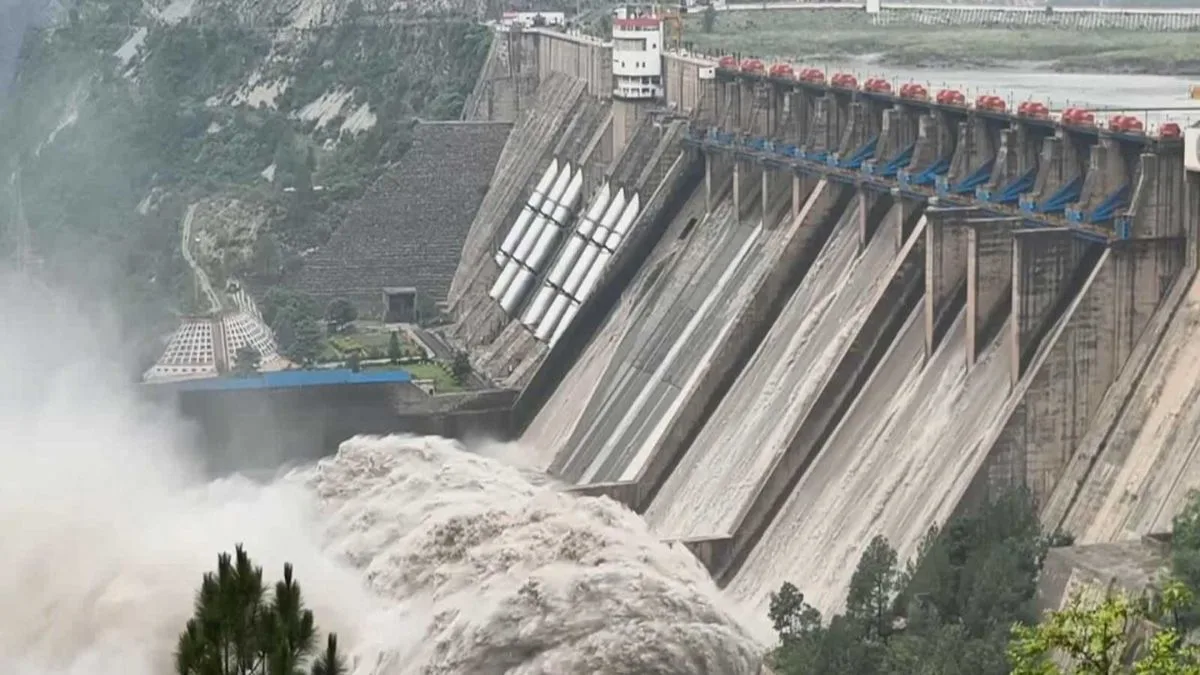
Himachal Pradesh Chief Minister Sukhvinder Singh Sukhu said on Thursday that massive relief and restoration efforts were underway on a war footing in the rain-hit regions of the state, particularly in Mandi district’s Thunag and Janjheli subdivisions.
These areas were severely impacted by intense cloudbursts and landslides caused by torrential rainfall in recent days.
Advertisement
He said that the state government was fully alert to the hardships being faced by the disaster-affected population.
“We are making every effort to provide timely relief and restore essential services. Daily review meetings are being chaired by the Chief Secretary to ensure seamless inter-departmental coordination and swift ground response,” he stated.
He added that both State and National Disaster Response Force (SDRF and NDRF) teams have been deployed in the worst-hit regions of Janjheli and Thunag to assist in search, rescue, and relief operations.
Senior officials, including the Engineer-in-Chief of the Public Works Department (PWD), Director (Operations) of the Himachal Pradesh State Electricity Board Limited (HPSEBL), and Chief Engineer of the Jal Shakti Department, are stationed at Thunag to oversee operations. Personnel from the police, Home Guards, and local volunteers are also actively involved in the response efforts.
Highlighting the scale of the disruption, Sukhu said that a total of 246 ration kits containing essential food items like flour, rice, pulses, and edible oil have been air-dropped and distributed in the affected areas—157 in Thunag, 69 in Janjheli, and 20 at the Longni Relief Camp in Dharampur.
Across Himachal Pradesh, 392 roads have been blocked due to landslides and flash flooding. The PWD has mobilized heavy machinery, including 289 JCBs and excavators, 15 robots, 16 dozers, and 111 tippers to clear debris and reopen routes. Of the total blocked roads, 196 were expected to reopen on Thursday, 79 by July 4, and the remaining 117 over the next few days. The overall damage to road infrastructure from June 20 to July 3 is estimated at ₹182 crore.
Mandi district has been the worst-affected, with 189 roads blocked and infrastructure damage pegged at Rs 47 crore.
A large fleet of machinery, including 84 JCBs and excavators, one robot, three dozers, and 36 tippers, has been deployed in the district. Restoration work is ongoing on key roads including MDR 24 (Mandi–Gaggal–Chail Chowk–Janjheli), Sanarli–Shankar Dera Road, MDR 119 (Chattri–Magrugalla to Janjheli), and MDR 96 (Thalout–Panjain–Thachi–Shetadhar–Chiuni–Lambathach).
The Jal Shakti Department is working round-the-clock to repair drinking water and irrigation infrastructure damaged in the flash floods. Despite the challenges posed by road closures and poor mobile connectivity, field teams and engineers are operating under difficult conditions. Gravity-based water supply schemes have been temporarily activated after chlorination to ensure safe drinking water. Water is also being sourced from hand pumps and natural springs where feasible.
In addition, the government has urged the public to use water judiciously during this crisis. Field testing kits have been distributed to Panchayats to monitor water quality and ensure safety.
Electricity supply has also suffered massive disruption. The 33 KV Gohar–Thunag line has been restored, and power to key installations in Thunag is being reinstated. Efforts are ongoing to restore the 33 KV Gohar–Pandoh line, with HPSEBL deploying five teams comprising 60 personnel in the affected areas.
The state electricity board has reported losses of approximately Rs 20 crore to its infrastructure in Thunag and surrounding regions. Multiple 33 KV and 11 KV lines have been damaged, affecting power supply to 258 transformers. Senior officers, including the Director (Operations) and Chief Engineer of the Mandi zone, are camping on-site to oversee the restoration.
To address communication issues, the Department of Telecommunications has activated Intra Circle Roaming (ICR) in Thunag, allowing mobile users to connect to any available network. Additionally, satellite phones (ISATs) have been deployed to support emergency communication in the region.
Commending the tireless efforts of frontline workers, CM Sukhu reaffirmed the government’s unwavering commitment to restoring normalcy at the earliest. “All relief and rehabilitation work is being closely monitored at the highest level. We are determined to reach every affected citizen with help and support,” he said.