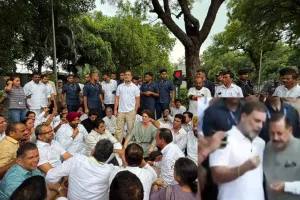
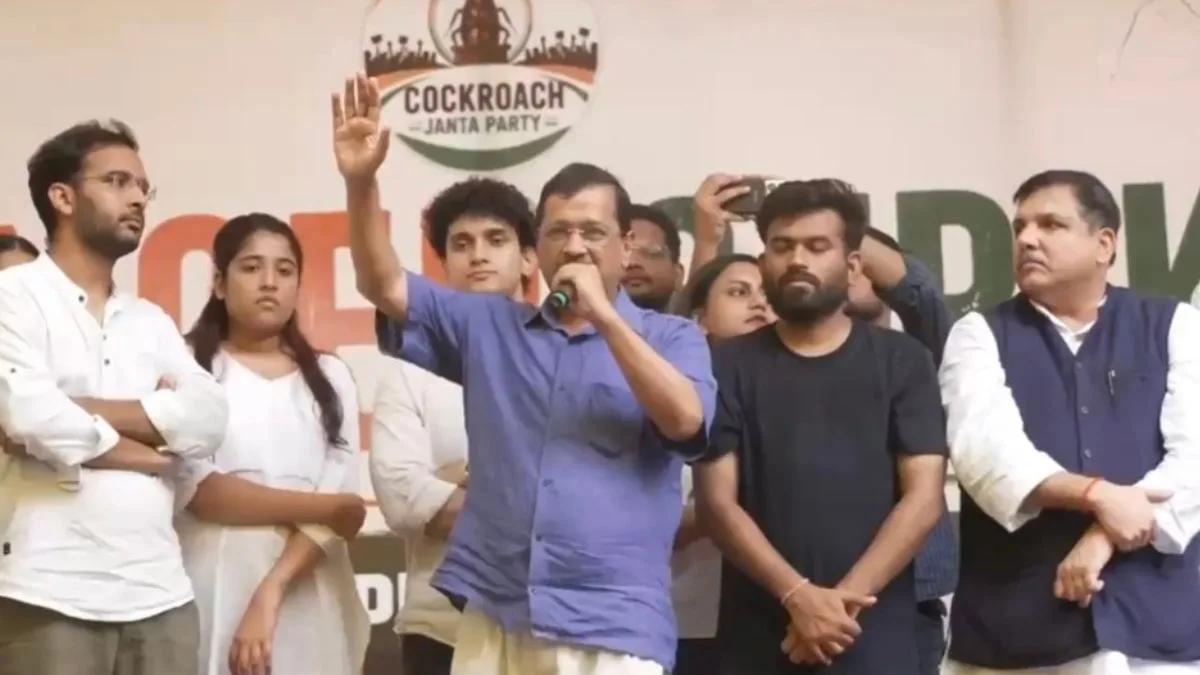
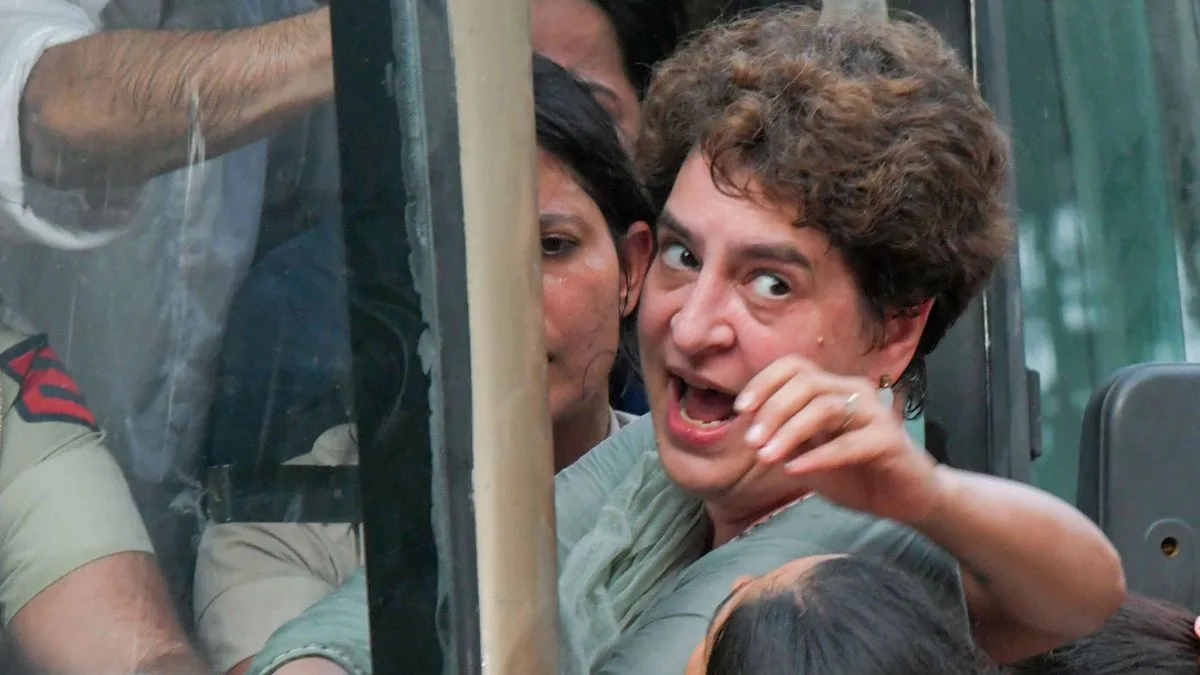
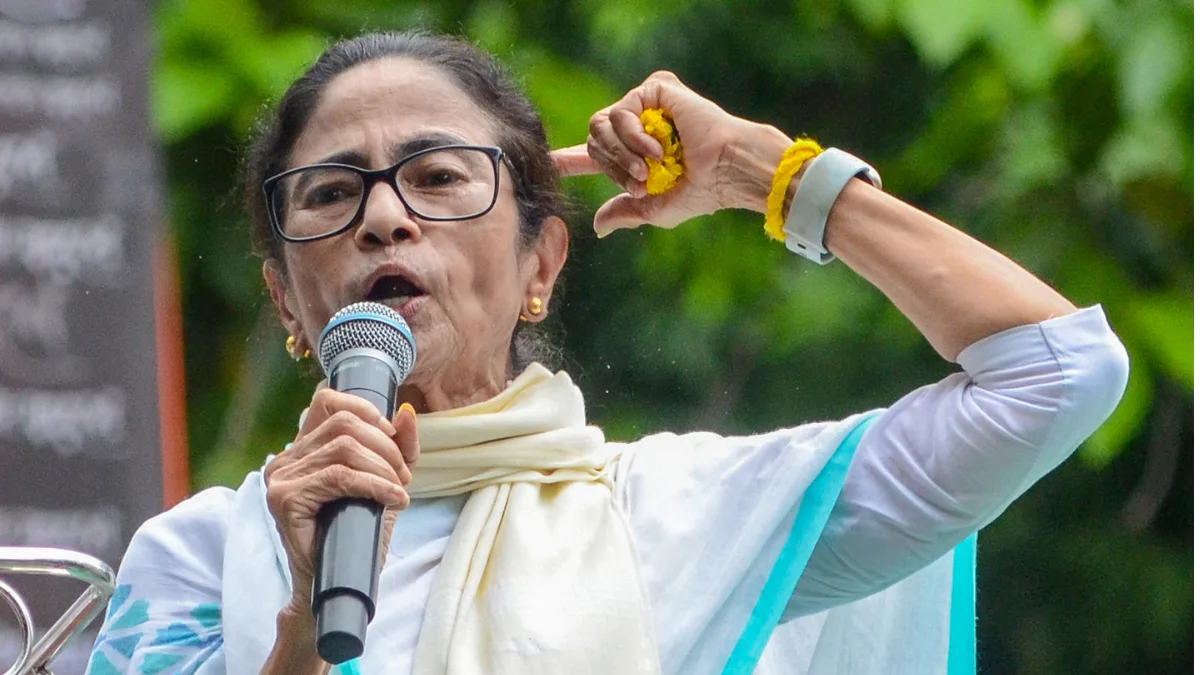
Mamata’s call for anti-BJP unity at Martyr’s Day rally junked by Congress, Left
Bengal BJP president Samik Bhattacharya said Mamata Banerjee should first focus on uniting her own party before attempting to forge an opposition alliance.
Arbitration as an alternate method of resolving disputes is not new in India. Before and after the Arbitration and Conciliation Act, 1996 was amended, there were a few private-sector arbitration organisations operating in various states.





(Photo:SNS)
Arbitration as an alternate method of resolving disputes is not new in India. Before and after the Arbitration and Conciliation Act, 1996 was amended, there were a few private-sector arbitration organisations operating in various states. Arbitration’s private approach to dispute settlement allowed private players to establish and operate arbitration organisations. However, the much-discussed expansion of ADR institutionalisation in response to the increased pressure on courts has yet to begin.
“The Government of India under the dynamic leadership of Hon’ble Prime Minister is committed for speedy resolution of commercial disputes and to make India an international hub of Arbitration and a Centre of robust ADR mechanism catering to international and domestic arbitration, at par with international standards available” has been the opening sentence of the Justice Sri Krishna Committee’s report on the institutionalisation of arbitration as an alternative conflict resolution method in India.
Advertisement
The High-Level Committee was tasked with reviewing the institutionalisation of arbitration mechanisms and making recommendations for improvements. The Committee, which met seven times in eight mon – ths, gave its report to the Minister of Law and Justice Ravi Shankar Prasad on 4 August 2017. Since then, the government has held elections twice and won the mandate to govern the country, changed law ministers twice, and altered the arbitration act twice (in 2019 and 2021), enacted the Mediation Act 2023 but the promised institutionalisation has yet to materialise.
Advertisement
The enactment of the Mediation Act took over three years of deliberations. Both acts claimed to institutionalise Alternative Dispute Resolution (ADR) in India by establishing the Arbitration Council of India and the Mediation Council of India. Again, on 20 March 2025, the current Law Minister, Arjun Ram Meghwal, assured the Rajya Sabha that “the Government is promoting alternative dispute resolution mechanisms including arbitration and mediation, as these mechanisms are less adversarial and are capable of providing a better substitute to the conventional methods of resolving disputes.
The Government is further taking policy and legislative interventions, to strengthen these mechanisms and make them more efficacious and expeditious.” He went on to describe the key aspects of the Arbitration and Conciliation Act of 1996 and the Mediation Act of 2023, both of which are already available to the public on any law book stand on any street. The Law Minister’s explanation of the legislative provisions for ADR in these acts is nothing more than beating around the bush. The honourable member of parliament who raised the question in the house wanted to know what steps the government had taken to establish and operationalise the Arbitration Council of India (ACI), as well as the Mediation Council of India (MCI), which were promised through these acts to encourage, support, and regulate ADR services outside the government. It is not the first time that law ministers have promised the institutionalisation of ADR; previous law ministers have also assured the parliament of the institutionalisation of ADR in India through the establishment and operation of the Arbitration Council of India and the Mediation Council of India. They explained that these councils would help grow ADR service providers in a country with over five crore cases pending in its courts, which are already plagued by questionable infrastructure, unfilled judicial positions, and gender disparities in judge strength in the High Courts and the Supreme Court of India.
Our finance minister too allocated funds in the two successive budgets for operationalisation of these councils. Recently, in a colloquium organised by the India International Arbitration Centre, Delhi, while delivering his key note address, our vice president Jag dish Dhankhar said “Arbitrators play as much critical role as members of the bar associated with the arbiter process. Surprisingly, there is, I am saying it with utmost restraint, absolute tight fist control of a segment of a category that is involved with arbiter process determination. And this tight fist control emanates out of judicial feats. And if we examine it on an objective platform, it is excruciatingly painful. This country has rich human resource in every facet.
Oceanography, maritime, aviation, infrastructure and what not. And the disputes are relatable to the experience which is sectoral. Unfortunately, we have taken in this country a very myopic view of arbitration as if it is adjudication. It is much beyond adjudication. It is not conventional adjudication as historically evaluated globally”. He went on ventilating his concern about the arbitration ecosystem in India by saying “Now is the time when India is emerging in every field globally. Why not India should emerge as a global dispute resolution centre? If I reflect to myself……what do they have which we don’t? Their infrastructure is hardly comparable to what we have.
And look at cultural centres where arbitrators can really engage. Go to Kolkata, go to Jaipur, go to Bangalore, Hyderabad, Chennai, any part, get away from the metro then you will have. I have seen in ten years growth of arbitral centres with credibility in Dubai and Singapore. On self-assessment without fear of contradiction, I can say we are nowhere. We are not in the mind of people who are having commercial relationship with us if it is international commercial arbitration.” Despite much talked about institutionalising arbitration through seminars, workshops, and arbitration weeks, as well as promises made in parliament, the two ADR councils have yet to be implemented. Section 11(3A) of the Act requires that the High Courts and Supreme Court name Arbitration Institutions; nevertheless, this remains a non-starter, and the Arbitration Institutions’ applications are pending before the High Courts for unknown reasons.
Except for a tiny number of Arbitration Institutions developed and supported by well known law firms, state governments do not aid other professionally constituted ADR organisations. Thus, there is an urgent need for the Centre and all High Courts in the country to take note of the Arbitration and Mediation Institutions operating in each state and designate them as ADR Institutions in order to reduce the much-discussed burden on courts and make India a hub for Alternative Dispute Resolution.
(The writer is former International Senior Advisor, United Nations Development Programme)
Advertisement