Nepal’s March 2026 general election has brought forth one of the most dramatic political upheavals in the Himalayan nation since the abolition of the monarchy eighteen years ago.
Balendra Shah’s Rastriya Swatantra Party (RSP), with its overwhelming victory, has effectively dismantled the traditional political system long dominated by the Nepali Congress on the one hand and the fractious Communist bloc of the Communist Party of Nepal (Unified Marxist–Leninist) and its rival, the Nepali Communist Party.
Advertisement
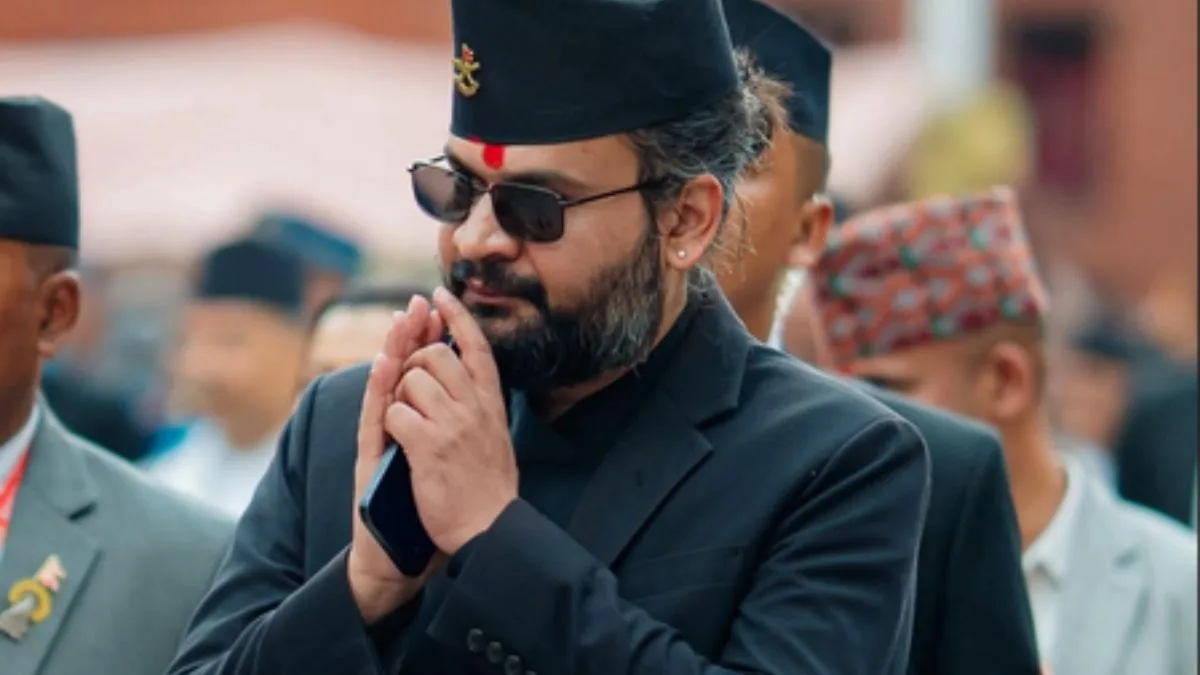
Shah or Balen Shah, as he is popularly called, a former rapper-turned-mayor of Kathmandu whose popularity surged through anti-corruption activism and youth mobilisation, is slated to become Nepal’s next prime minister.
His victory reflects a generational revolt against entrenched political elites, where young voters, frustrated with economic stagnation, corruption, and what they see as a cartel of ageing political leaders, rallied behind a movement promising accountability, reform, and a more assertive national identity.
The electoral earthquake’s seismic shock, besides reshaping Nepal’s domestic politics, will in the days ahead have significant geopolitical implications. Nepal’s delicate balancing act between India and China, long a defining feature of its foreign policy, may now evolve into a more assertively independent posture.
India will have to understand that the election represents the loss of familiar political networks that have historically anchored bilateral relations. It will have to build relations anew with students who will have ties with India but not necessarily the familiarity or the close links that their parents or grandparents had forged with Nepal’s southern neighbour.
Balen Shah’s political rhetoric, which in the past included criticism of India’s regional role, including on the Kalapani–Lipulekh border dispute, advocacy for reducing Nepal’s economic dependence on India, and aggressive nationalist jingoism, including references to maps depicting a “Greater Nepal.”
Yet despite such rhetoric, the realities of geography and economics will likely push Kathmandu toward pragmatism. The India–Nepal relationship is deeply intertwined through open borders, extensive trade flows, labour migration, and dense cultural and familial links that stretch across the hills and dales that make up the Hindu-dominated nation state.
“Balen Shah and the next rung leaders are practical men and women and understand that while maintaining their policy of ‘Nepal First’ which means looking after Nepal’s interests, they need close ties with India and we expect relations to actually strengthen,” said KC Sunil, President of Nepal-India Chamber of Commerce and Industry.
Top Indian officials who served in Nepal and are now involved in neighbourhood policy-making told UNI, “Rhetoric and statecraft are two things. Every Nepali leader who has come to power speaks of “Nepali Swabhiman” and then does business with New Delhi. The ground reality in Nepal is that the intertwining with the Indo-Gangetic valley is a two-way street which cannot be disentangled easily nor should it be.”
India’s leadership appears aware of this reality and has responded cautiously but positively to the political transition. Narendra Modi, the Prime Minister of India, promptly congratulated the Nepali people on the successful conduct of the elections. “The gesture was a signal that India is ready to engage constructively with Nepal’s new leadership,” officials pointed out.
Behind the scenes, Indian diplomacy has also begun widening its outreach beyond the traditional party elites it once relied upon. Officials in New Delhi have quietly started building contacts with younger political actors, civic groups, and student networks, constituencies that were central to the protest movements that propelled Shah to prominence.
Besides trade (worth about USD 8.7 billion in 2024-25), Kathmandu is aware that New Delhi is too enmeshed in its economy to be wished away. Some 33.5 per cent of all FDI stock in Nepal is from India, compared to 12.5 per cent from China.
The relationship may therefore evolve toward a more transactional and pragmatic framework, particularly on trade, energy cooperation, and infrastructure. Kathmandu may push for revisions to the 1950 Treaty of Peace and Friendship, long criticised within Nepal as unequal but the relationship will be even more intense as Nepal tries to modernise and industrialise.
Despite Shah’s nationalist rhetoric, Beijing too is unlikely to lose its economic footprint in Nepal. Over the past decade, China has emerged as a major investor in Nepal’s infrastructure, financing roads, hydropower plants, and connectivity initiatives linked to the Belt and Road Initiative. These investments have already embedded China deeply in Nepal’s development trajectory.
However, Shah has also signalled unease about projects such as a proposed BRI industrial park near the strategic Siliguri Corridor, perceived as undermining Nepal’s sovereignty and impacting its security.
He has also criticized the use of the Lipulekh Pass, controlled by India, for trade between China and India, framing the arrangement as an infringement on Nepal’s territorial claims.
Unlike the ousted Communist prime minister KP Sharma Oli, whose tenure was marked by a visibly pro-Beijing orientation, Shah appears determined to avoid overt alignment with any major power.
Concerns within Nepal about debt sustainability (a fifth of the country’s national budget goes towards debt servicing) and dependency on Chinese financing have become increasingly prominent in public discourse. As a result, the new government may seek to renegotiate or slow certain projects while still keeping the door open to Chinese capital.
“If any external power currently enjoys familiarity with Nepal’s emerging political generation, it may be the United States,” said Indian diplomats. Washington has invested heavily in governance programs, youth leadership initiatives, and development assistance in Nepal. Many activists who later entered politics through the RSP had previously interacted with international development networks and civil society programs supported by Western institutions.
Within Kathmandu’s political circles, there is also a widespread, though unproven, belief that Western encouragement helped energise youth-led protests against corruption and political stagnation. Whether or not such claims hold substance, for Washington, the immediate opportunity lies in cultivating ties with a youthful leadership focused on transparency, anti-corruption, and democratic reform.
“However, much will depend on how Balen Shah structures his government. The incoming cabinet is expected to be unusually youthful, reflecting the generational movement that brought the RSP to power. While this marks a sharp break from Nepal’s aging political class, governing requires administrative experience and policy expertise,” cautioned Prof Biswajit Dhar, former WTO chair at the Indian Institute of Foreign Trade.
Nepal’s deep pool of diplomats, technocrats, and civil servants could provide crucial institutional guidance, helping the new government pursue reforms while maintaining stability. But then those are choices for Nepal to make.