The buzz around the Epstein files is refusing to die down. Just when Washington thought the big document dump would calm the noise, it has instead opened a fresh round of suspicion, eye-rolls, and sharp political jabs. Lawmakers are asking: were all the files really released, or is this just another neat headline with messy footnotes?
DOJ says “everything is out there”
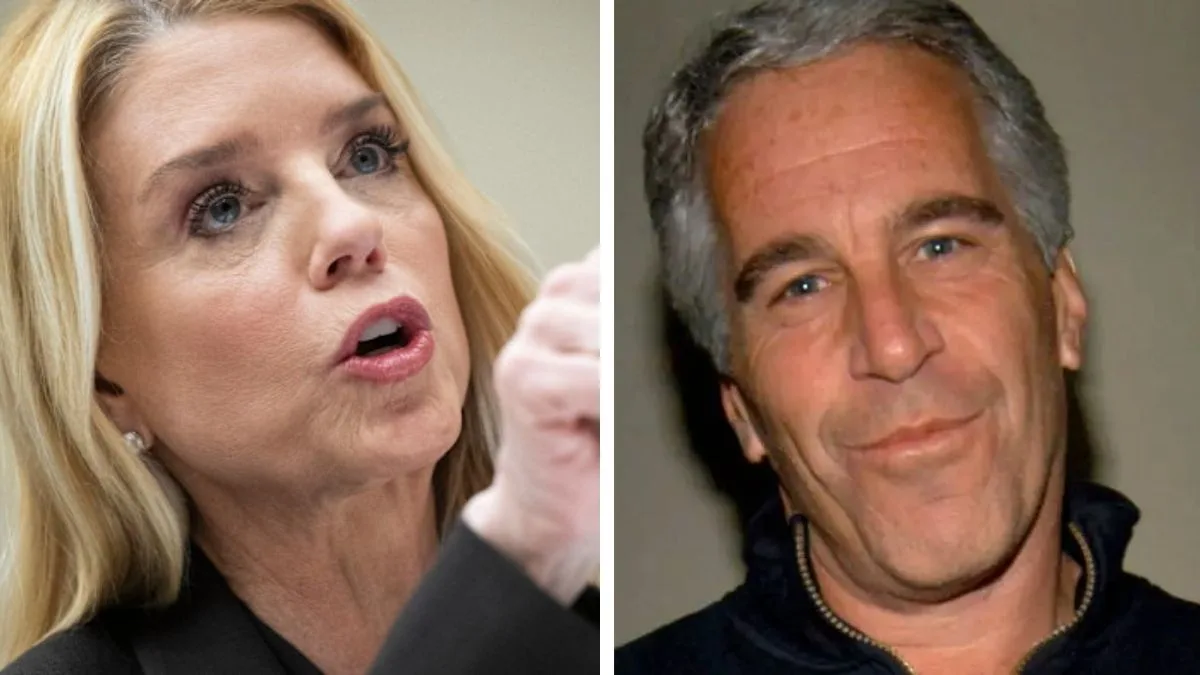
Pamela (Pam) Bondi sent a formal letter to members of Congress saying the Justice Department has released all records related to convicted sex offender Jeffrey Epstein.
Advertisement
This move, she wrote, follows a law passed last year, the Epstein Files Transparency Act, which ordered the disclosure of millions of documents connected to Epstein and several related categories.
According to Bondi, the department released all “records, documents, communications and investigative materials” in its possession. She also attached a list of government officials and politically exposed people whose names appear somewhere in the files.
On paper, it sounds like full transparency. In reality, critics say the fine print tells a different story.
Redactions, privilege rising doubts
Republicans and Democrats alike are not fully convinced. Thomas Massie, who has been leading the push for file disclosure along with Ro Khanna, said bluntly that the job is “not done yet.”
His concern? Redactions. He pointed to mistakes where names were blacked out even though they should not have been. He also questioned why some names appear to be shielded at all.
Massie argued that the Justice Department is citing “deliberative process privilege” to withhold certain internal records. That legal shield allows agencies to keep internal discussions private.
But Massie says the transparency law he co-wrote clearly demands the release of internal memos, emails, notes about decisions on whether to investigate or prosecute people linked to Epstein.
In simpler terms, lawmakers want to know not just who was mentioned, but why some people were never charged.
The ghost of the 2008 deal
One of the biggest unanswered questions still hanging in the air is the infamous 2008 non-prosecution agreement with Epstein. That deal allowed him to plead guilty to lesser charges instead of facing more serious federal prosecution.
Massie said the newly released material should include insight into how and why that deal happened. Critics suspect that without those internal discussions, the public is only seeing the surface story, not the backstage politics that may have shaped prosecutorial decisions.
Adding fuel to the suspicion, Massie also claimed the Justice Department removed some documents before lawmakers could review unredacted versions at the department.
A name list without context
Bondi’s letter also included a long list of individuals labeled as government officials or politically exposed persons who appear in the files at least once. She warned that names appear in many different ways.
Some people had direct email contact with Epstein or his associate Ghislaine Maxwell. Others were mentioned only briefly, sometimes inside unrelated press reports or documents.
Still the list is broad and eye-catching. It reportedly includes figures from across the political spectrum over the past two decades including Donald Trump. But crucially, the list gives no context about why each name appears.
Political heat inside the judiciary room
The tension spilled into public view during a heated session with the House Judiciary Committee last week. Lawmakers pressed Bondi about the redactions and about past prosecution decisions tied to Epstein’s network.
Instead of offering detailed answers, Bondi reportedly deflected several questions and responded with sharp remarks aimed at individual lawmakers. The exchange was less like a calm legal briefing and more like a political showdown complete with insults and prepared talking points.
That performance did little to reassure critics who want transparency, not theatrics.
The existence of Bondi’s letter was first reported by Fox News Digital, which broke the story before the wider political storm followed. Since then, the conversation has shifted from “Have the files been released?” to a more pointed “What is still hidden?”
So here is the awkward reality. The Justice Department says the Epstein-related records are fully released under the law. Lawmakers from both parties say the heavy redactions, withheld internal discussions, and missing context make that claim look incomplete.
This tug-of-war is not just about documents. It is about trust. The public wants clarity on why some powerful figures were investigated, why others were not in addition to whether past prosecutorial decisions were influenced by status or connections.