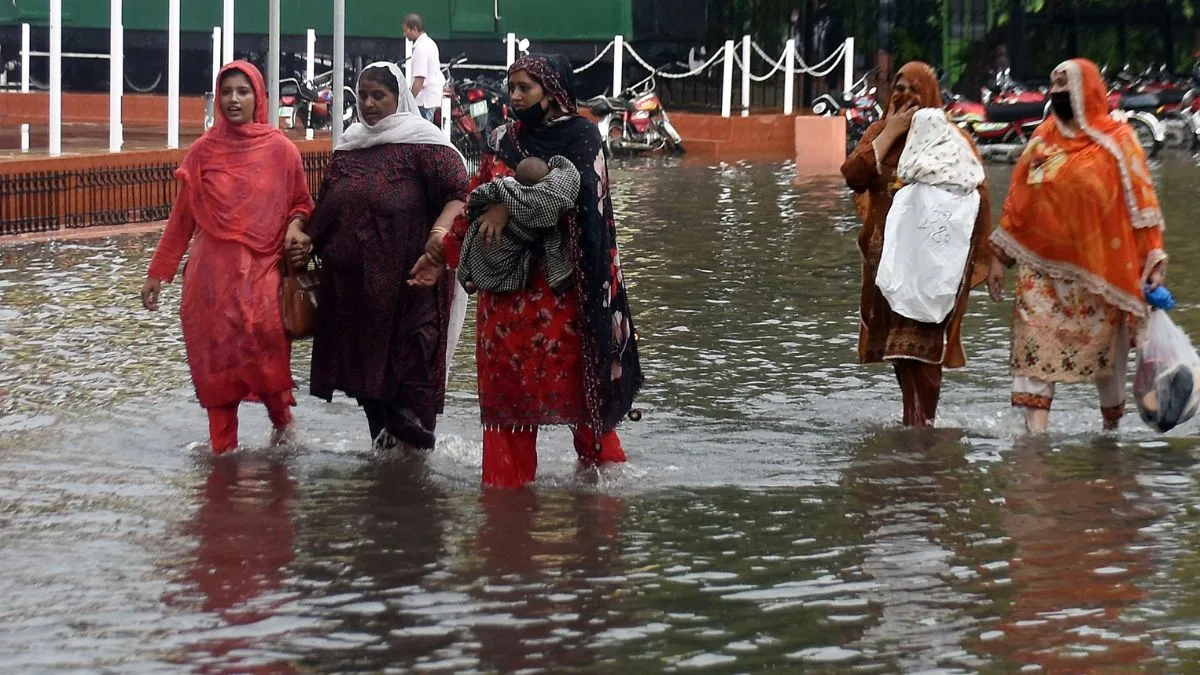
At least 37 people have died in rain-related incidents in Pakistan, with the ongoing monsoon triggering flash floods and landslides across several regions, including Khyber Pakhtunkhwa, Gilgit-Baltistan, Punjab and Pakistan-occupied Kashmir.
According to Dawn, the death toll from flash floods and other rain-related incidents has jumped to 20 in Khyber Pakhtunkhwa and 17 in Punjab. On the other hand, landslides triggered by heavy rains have significantly damaged crops, houses and roads in Khyber Pakhtunkhwa, Gilgit-Baltistan, Punjab and Pakistan-occupied Kashmir.
Advertisement
The rains, which started on July 19, are expected to continue in Khyber Pakhtunkhwa till July 23, the Pakistan Meteorological Department said.
Pakistani President Asif Ali Zardari has asked all federal, provincial and local authorities to intensify coordinated preparedness, rescue and relief measures, with Pakistan entering a “critical phase of the monsoon season,” read an official statement.
“The President expressed deep sorrow over the loss of precious lives and damage to homes, infrastructure and property caused by the recent rains and related incidents. He extended his heartfelt condolences to the families who have lost loved ones and expressed solidarity with all those affected,” added the statement shared on X.
Further, National Disaster Management Authority (NDMA) and Provincial Disaster Management Authorities (PDMAs) have been directed to maintain close coordination and ensure timely dissemination of early warnings.
Zardari has called for continuous monitoring of rainfall, river flows and water levels in upper catchment regions, especially in Gilgit-Baltistan and Pakistan-occupied Kashmir and directed downstream areas to make advance preparations for possible flooding.
Among the latest fatalities from the Khyber Pakhtunkhwa region have been reported from North Waziristan, where two men drowned after being swept away by a flash flood in the Tochi river.
In Pakistan’s Punjab, Gujranwala has been the worst hit region.
Of the 17 deaths reported in Punjab, 12 were caused by the collapse of buildings or other structures, two by lightning strikes and three from electrocution, local authorities said.
Notably, water levels in the Chenab river continues to rise, with a moderate flood recorded at Marala Headworks on Wednesday. At Marala Barrage, inflows increased from 84,895 cusecs on Tuesday morning to 132,169 cusecs by Wednesday noon and then to 275,608 cusecs at night, local media reports said.