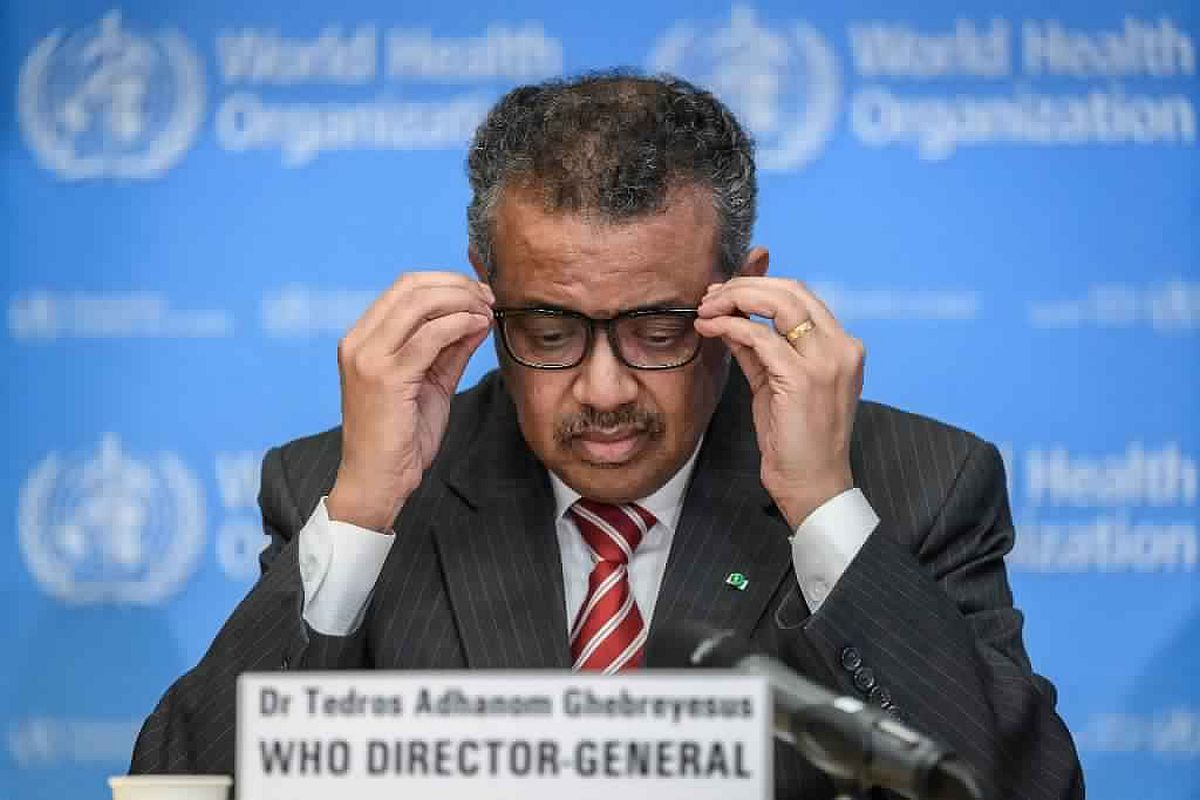
Director-General of the World Health Organization (WHO), Tedros Adhanom Ghebreyesus warned young people that they were “not invincible” against the Coronavirus pandemic.
“Today I have a message for young people: You are not invincible,” the WHO chief said at a live-streamed press conference on Friday in Geneva, hours before the organization reported that the number of infections worldwide climbed in the last 24 hours by roughly 25,000 to 234,073.
Advertisement
“This virus could put you in the hospital for weeks or even kill you,” Ghebreyesus said.
“Even if you don’t get sick, the choices you make about where you go could be the difference between life and death for someone else.”
Ghebreyesus said that self-restraint could save lives.
“Solidarity is the key to defeating COVID-19. Solidarity between countries but also between age groups,” he added.
“Every loss of life is a tragedy. It is also a motivation to double down and do everything we can to stop transmission and save lives.”
The WHO chief further said the original epicentre in China of the Coronavirus outbreak reporting no new cases has given hope to the rest of the world battling the pandemic.
The city of Wuhan registered no new cases of COVID-19 in 24 hours — for the first time since reporting its first case in December in an outbreak that has gone on to infect more than 250,000 people around the world and kill more than 11,000 people.
“Yesterday, Wuhan reported no new cases for the first time since the outbreak started,” WHO chief Tedros Adhanom Ghebreyesus told a virtual news conference in Geneva.
“Wuhan provides hope for the rest of the world that even the most severe situation can be turned around.
He said if all exercise caution, the situation can reverse.
Tedros said the WHO’s greatest worry was the impact that the virus could have if it took hold in countries with weaker health systems or more vulnerable populations.
“That concern has now become very real and urgent,” he said, but added that significant sickness and loss of life in such countries was not inevitable.
“Unlike any pandemic in history, we have the power to change the way this goes,” he said.
The WHO also said it was now using the term “physical distancing” rather than “social distancing” to describe the need to maintain space between people to avoid the Coronavirus passing.
Although people may need to go into physical isolation, they did not need to become socially isolated, he said, adding it was important to maintain good mental health during the crisis.
“We can keep connected in many ways without physically being in the same space,” said Maria Van Kerkhove, who heads the WHO’s emerging diseases unit.
Whilst advising people to maintain their mental and physical health during the crisis, including exercising and eating a healthy diet to help the immune system, Tedros also had a message for the world’s smokers.
“Don’t smoke. Smoking can increase your risk of developing severe disease if you become infected with COVID-19,” he said.
The WHO also said it was launching a new health alert messaging service on WhatsApp, containing news, information, details on symptoms and how to prevent against catching the virus.
To access it, WhatsApp users need to send the word “hi” to the number 0041 798 931 892.
The service is initially available in English, with other languages to be rolled out next week.
(With agency inputs)