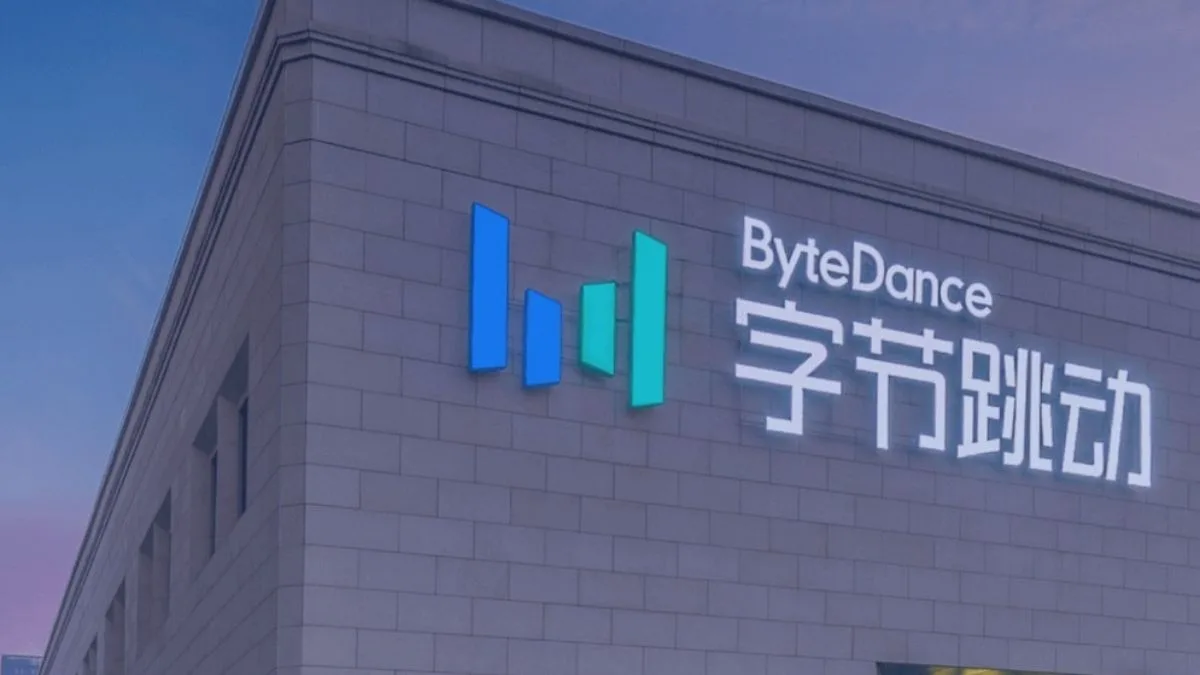
ByteDance’s paywall gamble seems to have backfired in China as its flagship chatbot Doubao has witnessed a massive 6.1 million drop in monthly active users (MAUs) in May.
In China’s fierce AI consumer race, this marks a rare slump for the app that came out in 2023, South China Morning Post (SCMP) reported, citing data released by global AI market tracker Aicpb.com on Wednesday.
Advertisement
Analysts have suggested that ByteDance could be risking throwing away its lead in artificial intelligence consumer race by monetising too early. The assessment comes after the company teased its first-ever subscription options.
Li Bangzhu, founder of Aicpb.com, said that the 1.81 per cent month-on-month decline is a “worrying sign” for the TikTok owner in the competitive domestic market where user numbers dictated “everything”.
“The era of free AI services in China is still far from over, so Doubao definitely might be monetising too early,” Li said.
This comes after Doubao’s iOS App Store page was updated last month to unveil the new subscription tiers. Under this, ByteDance announced that the standard paid plan starts at 68 yuan (US$10) per month (688 yuan per year), while users will be required to pay 500 yuan per month (5,088 yuan per year) for the premium “professional” plan.
The data further highlights that despite losing millions of followers, Doubao continues to remain China’s most popular AI mobile app with about 330 million users, while its closest rival – Qwen, the flagship consumer AI app from Alibaba Group Holding – was quickly gaining ground.
Last month, Qwen saw its MAUs jump by over 13 million to reach 234 million users, cementing itself as one of the fastest-growing AI platforms in China.
As of now, the gap between the two leading platforms remains nearly 100 million users. However, Li believes that shifting momentum in the AI market suggests that Qwen was steadily eroding ByteDance’s head start.
“At a time when user migration costs are still low, whoever goes ahead with charging users first would concede the initiative to their rivals,” South China Morning Post quoted him as saying.
The major decline in Doubao’s MAUs underscore a broader challenge for tech giants in China, indicating that consumers in the country have showed little willingness to pay for using AI services based upon chatbot interactions.
For now, platforms like Doubao, Qwen and DeepSeek continue to remain mostly free to use. But tech companies are reportde to be facing increasing financial pressure due to this.
In a research note in May, Morgan Stanley analysts mentioned that the skyrocketing computing power, which is needed to meet the demand for advanced agentic AI, made free access “economically unsustainable” for the domestic industry.