Delhi to expand EV charging network to 32,000 stations in four years
The Delhi Government has started chalking out a comprehensive roadmap to develop a strong and reliable charging network for electric vehicles (EVs) across the national capital.
According to an official statement, the first-of-its-kind initiative seeks to create 6,000 metric tonnes per annum (MTPA) of integrated Rare Earth Permanent Magnet (REPM) manufacturing capacity in India.




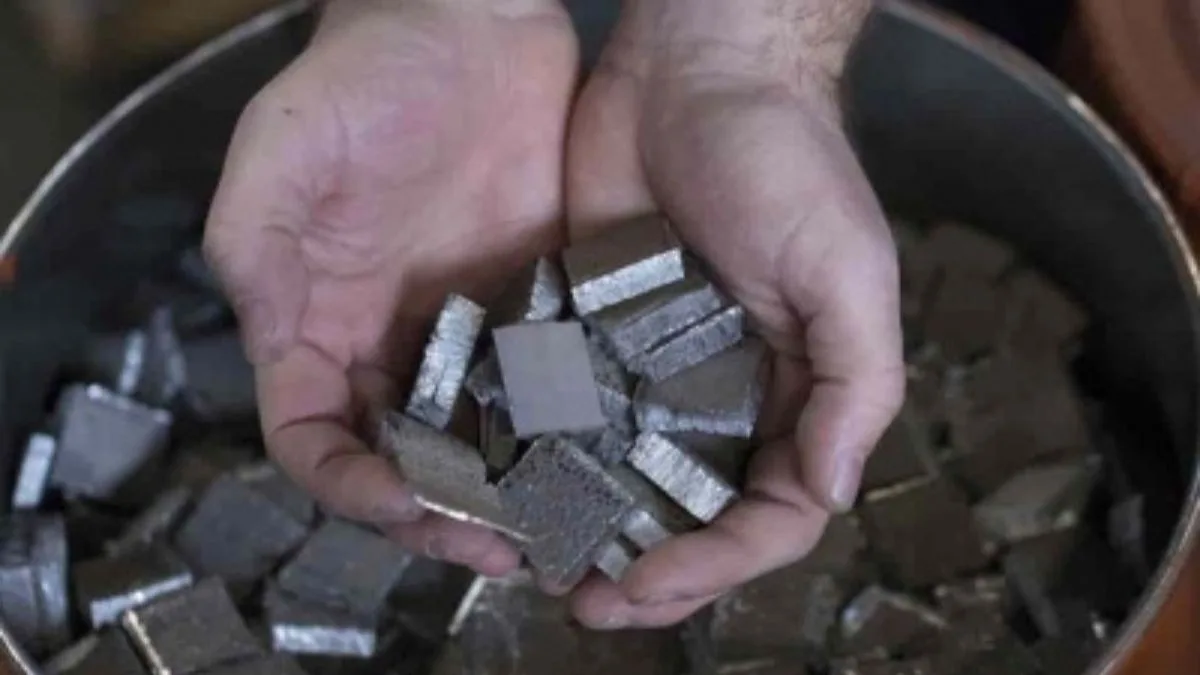
Photo: IANS
The Union Cabinet, chaired by Prime Minister Narendra Modi, on Wednesday approved a ₹7,280-crore Scheme to Promote Manufacturing of Sintered Rare Earth Permanent Magnets, aimed at building domestic capacity in a strategically critical sector currently dominated by China.
According to an official statement, the first-of-its-kind initiative seeks to create 6,000 metric tonnes per annum (MTPA) of integrated Rare Earth Permanent Magnet (REPM) manufacturing capacity in India. The objective is to strengthen self-reliance and position the country as a significant player in the global magnet supply chain.
Advertisement
The scheme’s financial outlay includes ₹6,450 crore in sales-linked incentives, to be disbursed over five years, and a ₹750-crore capital subsidy for setting up REPM manufacturing facilities.
Advertisement
The overall duration of the scheme is seven years, comprising a two-year gestation period for establishing manufacturing units and five years for incentive payouts.
The government plans to allocate the total capacity to five beneficiaries through a global competitive bidding process, with each eligible for up to 1,200 MTPA.
Rare-earth permanent magnets, among the strongest known permanent magnets, are essential components in electric vehicles, renewable energy systems, electronics, aerospace, and defence applications.
The scheme aims to support end-to-end domestic manufacturing, covering the conversion of rare-earth oxides into metals, metals into alloys, and alloys into finished magnets.
India currently depends heavily on imports of REPMs, particularly from China. The new incentive framework is expected to catalyse investment in processing, refining, and magnet-making capabilities—areas where domestic infrastructure is still limited.
Advertisement