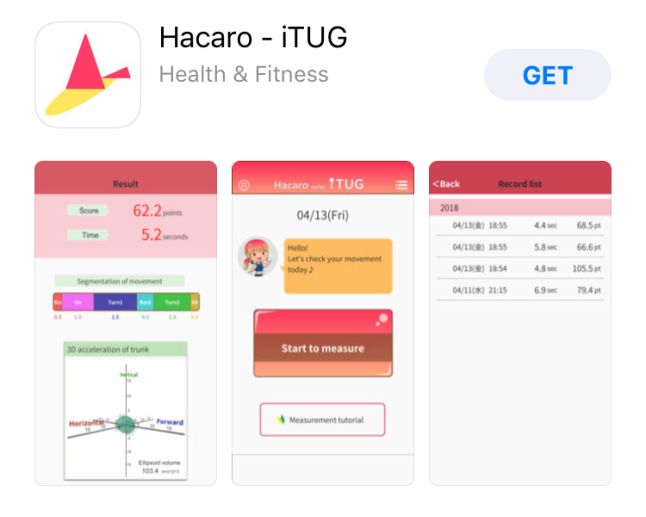
Japanese researchers have developed an iPhone app that can detect early signs of dementia, the media reported. The free iTUG app can detect walking impediments indicative of possible dementia by measuring a user’s walking speed and time, among other factors, The Mainichi reported.
Using the smartphone’s internal sensors the app measures the speed of the subject’s movements backwards and forwards, up and down, and left to right as they walk, and produces a score out of 100 indicating the level of impairment, if there is any.
Advertisement
As a result, healthcare workers can determine the time it takes a patient to stand, walk 3 meters, do a U-turn and return to their seat, the report said.
Advertisement
A score of less than 50 points suggests the possibility of light walking impairment.
“As the number of people needing nursing care continues to rise, it (this app) should allow us to make appropriate risk evaluations and administer treatment early,” said Shigeki Yamada, a neurosurgeon at the Otowa Hospital in Kyoto.
Further, the new iTUG app can also help in recognising patients with normal pressure hydrocephalus — a type of dementia that is considered “curable”, by identifying walking difficulties early.
The iTUG iPhone app is also a promising tool for caregivers administering rehabilitation programs, and hopes are high that it will allow for accurate observation of rehabilitation effectiveness.
The app is currently only available for the iPhone, but the developers are looking to create versions for other smartphones.
The lawsuit seeks court-ordered destruction of allegedly misappropriated Apple material and claims nearly 400 former Apple employees have joined OpenAI as the AI company accelerates its hardware push.
Apple's annual developer conference highlighted a broader AI strategy, with upgraded software, smarter app experiences and stronger protections for children across devices.
The nearly 10-day journey will test spacecraft systems and manual piloting beyond Earth’s orbit. The crew will travel around the Moon, gathering data to prepare for future human lunar missions.