UEFA President Aleksander Ceferin did not attend Sunday’s FIFA World Cup 2026 final, with reports pointing to growing tensions between European football’s governing body and FIFA over disciplinary rulings, refereeing issues and tournament operations.
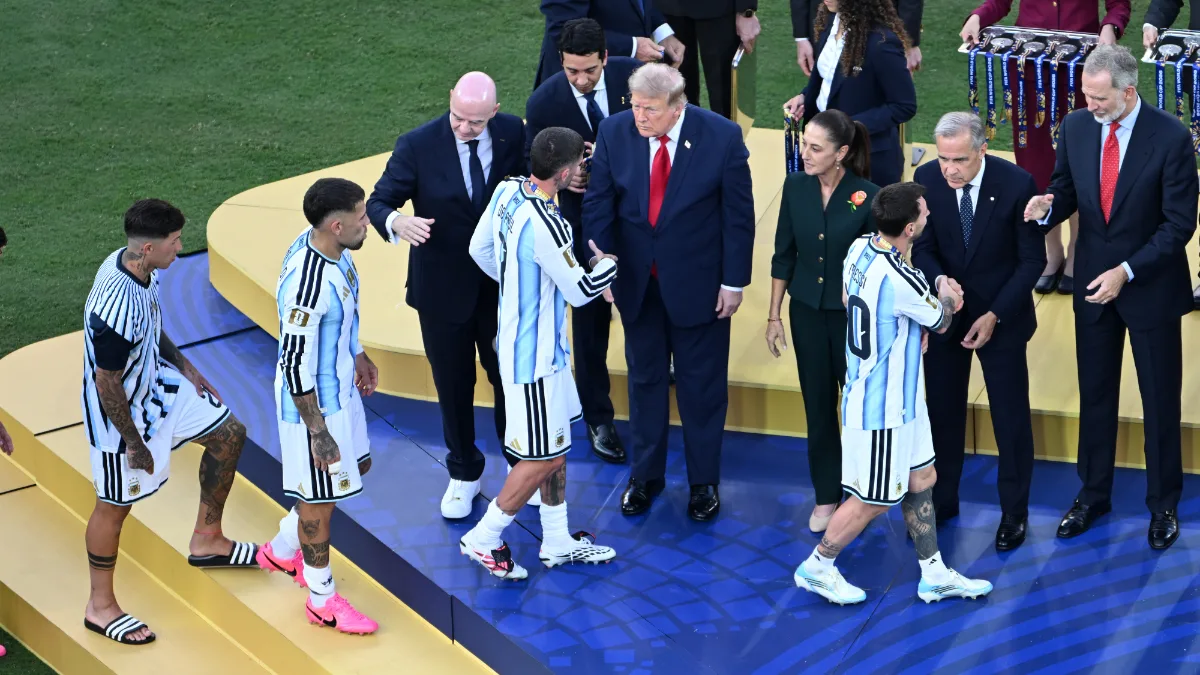
Ceferin’s absence from the showpiece clash between Spain and Argentina highlighted the increasingly strained relationship between the two organisations during the tournament.
Advertisement
Disciplinary row sparks friction
One of the biggest flashpoints came after FIFA opted not to enforce an automatic one-match suspension for United States forward Folarin Balogun following his red card, a decision that reportedly drew strong criticism from UEFA officials, who viewed it as crossing “a red line”.
Another source of disagreement was the absence of Somali referee Omar Abdulkadir Artan, who was unable to officiate at the tournament after being denied entry into the United States. Artan has since been appointed to referee the UEFA Super Cup between Paris Saint-Germain and Aston Villa next month.
European delegates also raised concerns over FIFA’s handling of matches involving Iran, as well as several operational changes introduced during the tournament, including mandatory hydration breaks and the extended half-time interval used in the World Cup final.
Spain crowned world champions
On the pitch, Spain defeated defending champions Argentina 1-0 after extra time at the New York-New Jersey Stadium to lift their second FIFA World Cup title and first since 2010.
Substitute Ferran Torres scored the winner in the 106th minute after Nico Williams nodded Pedro Porro’s cross into his path.
Spain dominated large spells of the final but were repeatedly denied by Argentina goalkeeper Emiliano Martinez, who produced a series of outstanding saves to keep his side in the contest.
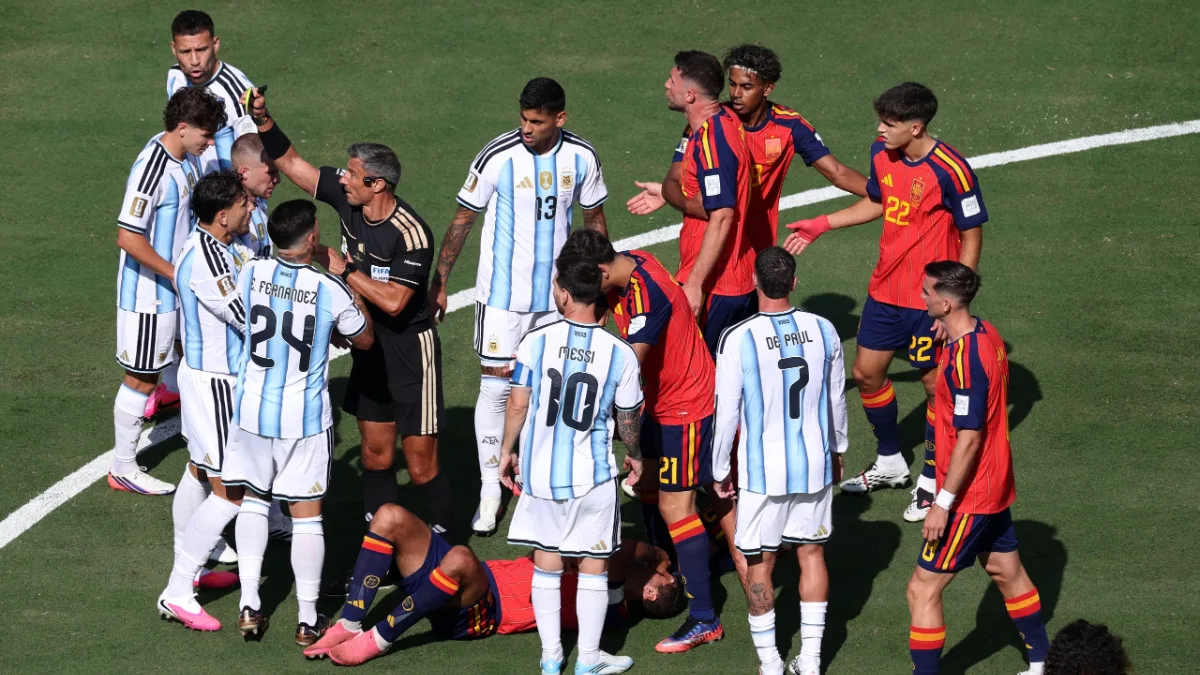
Argentina’s task became even more difficult when Enzo Fernandez was sent off in second-half stoppage time after receiving a second yellow card for a late challenge on Pau Cubarsi.
Spain thought they had gone ahead early in extra time through Nico Williams, only for the goal to be ruled out after referee Slavko Vincic spotted a foul by Mikel Merino on Nicolas Otamendi in the build-up.
Torres eventually broke the deadlock six minutes later, firing into the roof of the net to secure Spain’s victory.
The triumph extended La Roja’s unbeaten run to a European-record 38 international matches and ended Argentina’s bid to become the first nation since Brazil in 1962 to successfully defend the FIFA World Cup.