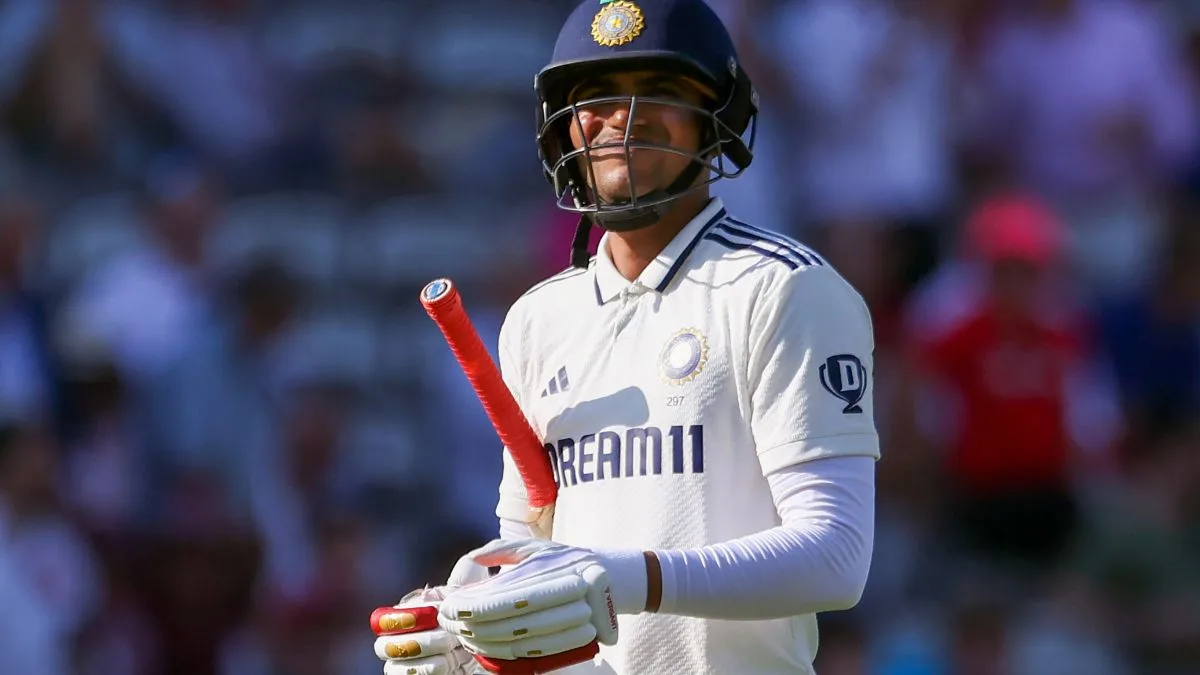
Former India head coach Greg Chappell has offered pointed advice to new Test captain Shubman Gill, urging him to assert his leadership and clearly define how he wants the team to play. With India trailing 1-2 in the five-Test series against England, the fourth Test at Old Trafford starting July 23 looms as potentially series-defining.
“This is where Gill’s leadership challenge becomes very real. He must start setting expectations — clearly, proactively, and consistently. Gill must define what sort of team he wants India to be. The captain sets the tone, not just with words, but with actions, clarity of purpose, and visible standards,” wrote Chappell in his column for ESPNcricinfo.
Advertisement
Chappell emphasized that whether during training, in the middle of a match, or in the dressing room, clear and calm communication is essential. He noted that Gill cannot rely solely on his batting to lead the side and must learn to communicate in a way that aligns the team, fosters belief, and builds trust.
Gill has already scored three centuries against England in the ongoing Anderson-Tendulkar Trophy series. However, after India’s narrow 22-run loss in the third Test at Lord’s, the young captain now faces the significant task of leading a comeback to level the series at Manchester.
Chappell believes the next match will be the toughest test of Gill’s leadership, even though he’s only three Tests into his captaincy stint.
“The Old Trafford Test is shaping up to be the biggest examination yet for Gill — not just as a batter, but as a leader. He’s learning on the job, but the timeline is not generous. He must bring composure, clarity, and confidence to a side that desperately needs it. And he must do it now.”
“That doesn’t mean he can’t show emotion. In fact, his passion on the field at Lord’s was good to see. But actions like confronting Zak Crawley over time-wasting only matter if backed up by the hard work done behind the scenes. A captain earns the right to be loud only after doing the quiet work of planning, uniting, and inspiring his group.”
Calling Gill a bright young talent who has shown greatness with the bat and glimpses of leadership potential, Chappell said this moment could define his trajectory as India’s Test captain.
Chappell, who played 87 Tests for Australia and later served as a selector, also stressed the need for Gill to become a better communicator and to clearly set expectations for the team’s performance in the longer format.
“Gill must define what sort of team he wants India to be. The captain sets the tone — not just with words, but with actions, clarity of purpose, and visible standards. That includes demanding discipline in the field. India cannot afford to slip back into being a poor fielding side. The best teams are superb in the field — they don’t give away easy runs or drop catches.”
“Great captains are great communicators. Gill must become one — and quickly. Whether it’s in training, in the middle, or in the dressing room during a break — clear, calm communication is essential. His bat can’t always do the talking. He must learn to speak in a way that aligns the group, encourages belief, and builds trust.”
“If Gill wants to become a great Test captain, this is his moment to stamp his authority — not just with the bat, but with his leadership. Set the standard. Demand it from others. Pick your team. Back them. And make sure every man knows what is expected — then hold them to it.”
“Because in the end, cricket isn’t about heroes. It’s about partnerships. It’s about teams. And it’s about captains who bring the best out of those around them. If Gill can lead with clarity of thought and strength of purpose, he won’t just shape this series — he’ll shape the future of Indian cricket,” Chappell wrote.
Jadeja needed to take calculated risks at Lord’s: Chappell
Chappell also weighed in on Ravindra Jadeja’s gritty unbeaten 61 off 181 balls in the third Test, saying it was a composed effort, but ultimately too conservative in the context of India’s chase of 193. India were bowled out for 170, falling short by 22 runs.
“The Lord’s Test also provided a telling moment in the way Jadeja was managed late in the match. Left with the tail, Jadeja did what many specialist batters do in that situation: he shielded the tail, farmed the strike, and played conservatively. On the surface, it was a disciplined innings. But was it the right one?”
“The truth is, Jadeja was the only recognised batter left. If India were to chase down the target, he had to take calculated risks. His job wasn’t to leave balls and collect singles — it was to win the match. That clarity should have come from the dressing room, from the captain.”
“He needed to be told directly: ‘You are the man who has to get this done. The tail’s job is to hang in there with you — but you must go for the win,’” wrote Chappell.
Jadeja shared defiant partnerships of 35 and 23 with Jasprit Bumrah and Mohammed Siraj respectively, lasting 132 and 80 balls. But Chappell drew a contrast with how Ben Stokes led England to a miraculous win in the 2019 Headingley Test against Australia in a similar situation.
“We saw exactly that from England’s Ben Stokes against Australia in Leeds in 2019. In a similar situation, he backed himself and produced one of the best innings of the past 50 years.”
“Importantly, Stokes played that innings knowing that, succeed or fail, his team and leadership would have his back. That’s the mindset that needs to be fostered in any great team,” Chappell concluded.