The killing of Jamaal Khashoggi in the Saudi consulate in Istanbul in 2018 led to Riyadh facing global flak. US President Joe Biden promised to hold Saudi Crown Prince Mohammed bin Salman accountable. Everything changed a year later when the US began courting Riyadh to stem the Chinese challenge to its domination i n t h e Middle East . Biden’s predecessor, Donald Trump, had negotiated the Abraham Accords which resulted in the UAE and Bahrain normalizing ties with Israel.
Biden had to do better and his target was Saudi Arabia. In July 2022, well before the Hamas attack on Israel, during Biden’s visit to Riyadh, Mohammed bin Salman demanded a NATO-type defence pact in return for establishing ties with Israel. Recognition of Israel by Riyadh could change the Middle East landscape. The US suggested similar treaties as existing with a few Asian nations, including Japan and South Korea, or establishing a naval base similar to Bahrain. These actions could avoid Congressional approval, which would then have been difficult. Washington also offered to designate Saudi Arabia as a non-NATO ally, akin to Israel. But the Saudis sought assured guarantees to deter attacks such as the September 2019 Yemeni missile strikes on its oil facilities. For Biden, Riyadh recognizing Tel Aviv would have been a diplomatic victory. The Palestinians were aghast.
Advertisement
Such an act would reduce support from Arab states and signal the end of a Palestinian state. In May 2024, months after the Hamas attack and Israel’s retaliation, Washington again attempted to push another deal with the Saudis. As per CNN, this deal had three components. The first was a package of agreements between the US and Saudi Arabia, the second, normalization of relations between Riyadh and Israel, and the third was a pathway to a Palestinian state. The package of agreements would include security, economic and technological guarantees, as well as support for its civilian nuclear programme.
This also fell through because Israel refused to discuss the creation of a Palestinian State. Riyadh had rolled out the red carpet for Trump in his first international visit this year hoping for a security deal, but none was offered. The US currently has troops deployed in the Prince Sultan Air Base outside Riyadh. This left the Saudis disappointed. Riyadh continues facing threats from Iran (though China negotiated peace between them in 2023) and its proxies in Yemen. With the US unwilling to provide iron clad security, Europe would do not participate. Russia was uninterested.
The last straw for Riyadh was the Israeli strike on Iran and Qatar, another US ally. While the US joined the attack on Iran’s nuclear facilities, it secretly supported the strike on Qatar. American air-to-air refuellers assisted the Israeli air force in its attacks on Qatar. This happened despite Qatar gifting an aircraft to Trump on his visit a few months ago and it being a close US ally. So much for trust in the US. Where do threats to Riyadh emerge from, apart from an internal Arab Spring? The major threat is from Iran and its proxies in Yemen. While the Yemenis could be handled, the concern was Iran and Israel in the long term. The Saudis wanted a security pact with a nation which could control Israel and be a challenge to Iran. This could only be the US. When it backed down from the deal, the option was to select a nation which hated Israel.
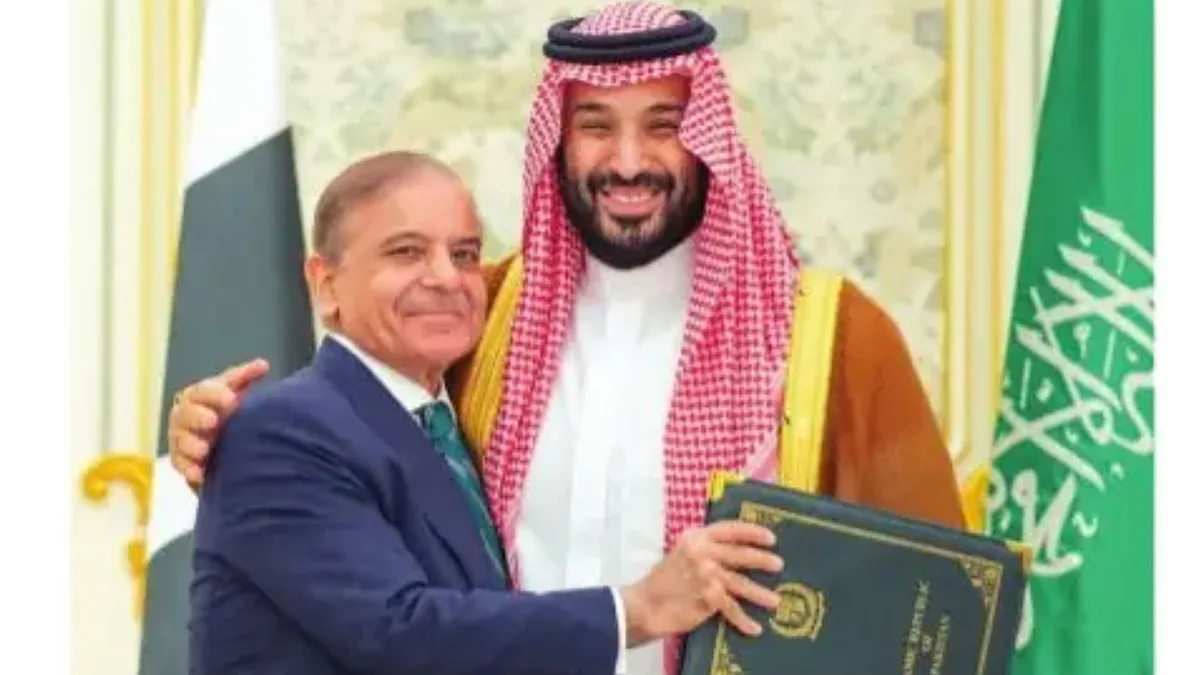
Pakistan fitted the bill. Thus, it was not that Pakistan was the best option, the fact is that it was the only option. For Islamabad, Riyadh has been a financer over the years. Rawalpindi has deployed troops in Saudi Arabia on multiple occasions and also trained their forces. Riyadh had funded Pakistan’s nuclear programme by providing it with USD 3.4 Billion at a critical junction. Saudi Arabia has bailed out Pakistan whenever the nation has fallen into a financial crisis, and hence Islamabad is beholden to it. The recently inked security treaty had been under discussion for some years.
Saudi Arabia is unlikely to engage in any conflict outside its borders. It had sought U S guarantee which meant employment of US forces on its territory in its defence and now seeks Pakistani forces fighting on its behalf in any conflict scenario. This will also ensure trusted troops for preventing regime change. In simple terms, it has purchased Pakistan’s armed forces and possibly even its nuclear assets for a few dollars. These would be the mercenaries which Riyadh would employ. In 2015, Pakistan had refused to join the Saudi-led coalition against Yemen, then headed by its former army chief, Raheel Sharief, which marred ties. It can no longer do so. The Indian MEA statement on the deal says: “The Government was aware that this development, which formalizes a long-standing arrangement between the two countries , had been under consideration.”
This implies that India believes that the agreement does not pose a threat, though it may embolden anti-India forces in Pakistan and also fund its military capability development. The Saudis have also mentioned that the pact is not against any specific country or event. Indo-Saudi ties are robust. As per another MEA readout, India is the second largest trading partner of Saudi Arabia whereas it is India’s fifth largest. In FY 2023-24, bilateral trade stood at USD 42.98 billion, with Indian exports at USD 11.56 billion and imports at USD 31.42 billion. The question remains whether Riyadh will deploy forces in the event of an Indo-Pak dispute in support of Pakistan.
In reality, the deal is largely linked to building Pakistani armed forces to deploy in support of Saudi Arabia when needed. While Pakistan believes the Saudis will intervene in case of an India-Pak conflict, it is very unlikely. Saudi Arabia has never entered into conflict outside its region and is unlikely to do so. Whether Riyadh provides diplomatic support to Pakistan in a conflict with India or stays neutral is unknown. Also, what would constitute a conflict meriting intervention? Is it a couple of strikes on terrorist camps or an all-out offensive? Short conflicts may not involve any intervention as against long-drawn wars. However, Pakistan would be employed at will by Saudi Arabia. Finally, iifa future U S administration were to offer security guarantees to Riyadh, would it continue with its defence pact with Pakistan. This is unlikely. The Saudis would prefer the US any time. Until it gets what it needs, Pakistan can feel thrilled.
(The writer is a retired Major-General of the Indian Army.)