Digital Dividend
The proposed public listings of Jio Platforms and the National Stock Exchange (NSE) are being viewed primarily through the prism of their size.
While announcing budgets each fiscal year, India has been experimenting on various growth models, some led by capex, others hoping to be triggered by enhanced domestic consumption.




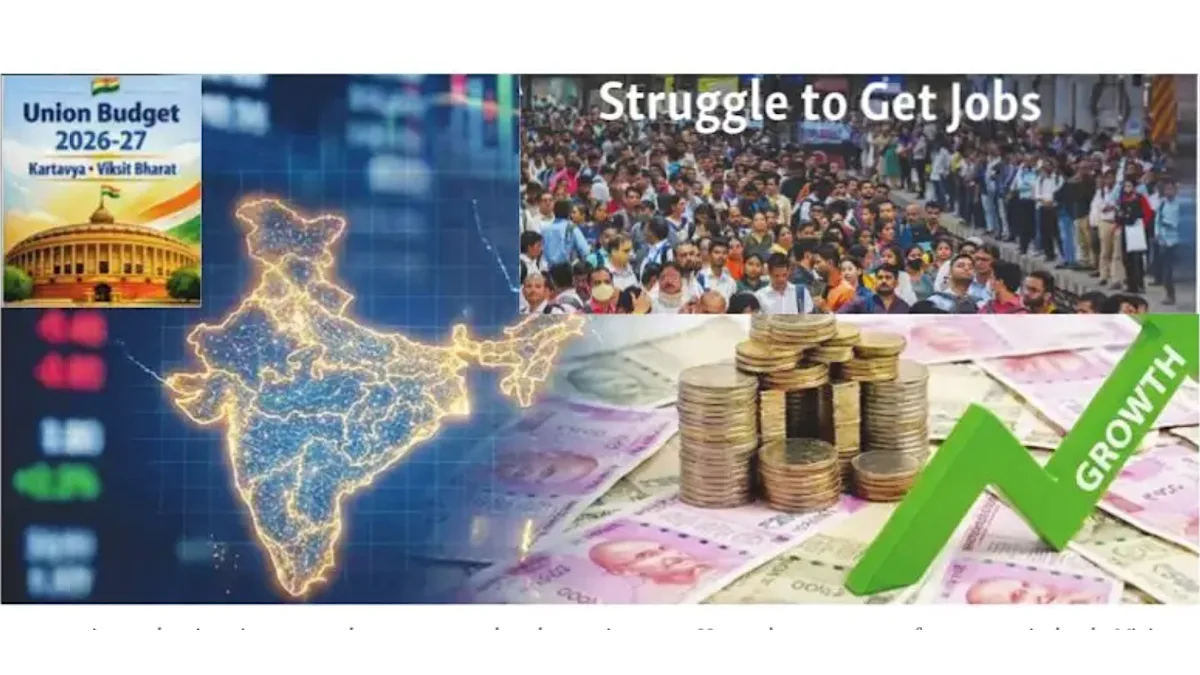
Photo:SNS
While announcing budgets each fiscal year, India has been experimenting on various growth models, some led by capex, others hoping to be triggered by enhanced domestic consumption. In the budget of 2022-23, the budget rode high on capex pushing growth and this author had discussed the role of investment for growth relying heavily on capital investment in infrastructure, on public sector investments and on the potency of the private sector acting as a catalyst via increased investments (The Statesman, 4 April 2022).
The budget of 2025-26, this author had analyzed, was largely a balancing act, wherein the government had placed increased faith in boosting domestic consumption through personal tax relief as well as in generating consumer demand by reducing the indirect tax burden of GST (The Statesman, 25 February 2025, and 31 October 2025). In FY 2025-26, India’s growth strategy relied primarily on private consumption, which was pegged at 7 per cent, primarily boosted by rural demand. With the government front-loading capital expenditure, investment grew at the rate of 7.8 per cent. Manufacturing, mostly based on high value technical products, was more subdued, following at a rate of 7 per cent.
Advertisement
But it was the services sector benefiting from growth in infrastructure, expanded warehousing and availability of strategic credit, that rose by 9.1 per cent, spearheading the India growth story. Given this backdrop, the economy is expected to benefit from a diversified base of domestic consumption, the government-led thrust on capex, a burgeoning service sector and a supporting infrastructure-led ecosystem to provide stable ground for its projected growth in 2026-27. The challenges, however, are humongous. Geopolitical tensions, trade disruptions, global trade protectionism, flight of foreign capital, the sliding rupee that has fallen by over 5 per cent against the US dollar and a threatening tariff regime.
Advertisement
There is also the need to confront domestic difficulties on account of weak urban consumption, tardy private investment, low agricultural productivity, natural disasters, and the adverse fallouts of climate change. In 2026, the government has therefore adopted a cautionary approach thanks to the geopolitical headwinds and has presented a conservative budget based on the three “kartyavas” of sustainable economic growth, capacity-building and sabka sath, sabka vikas. Elaborating further, the Finance Minister has stated that these three pillars will expedite the reform momentum towards Viksit Bharat.
While the first “kartyava” was proposed to be achieved by enhancing productivity and competitiveness and building resilience to volatile global dynamics, the second “kartavya” relies on capacity building to fulfil aspirations and the third “kartavya” is proposed to be achieved by ensuring that every family has access to resources, amenities and opportunities for meaningful participation. The government continues to assert its ongoing thrust on structural reforms, a robust and resilient financial sector and cutting edge technologies including AI applications. In the Budget of 2026-27, the government is estimated to spend 7.7 per cent more than the revised estimate of 2025-26, while receipts are projected to be 7.2 per cent higher than the revised estimate of 2025-26, predicting a nominal GDP growth of 10 per cent in 2026-27.
Revenue deficit is targeted at 1.5 per cent of GDP, similar to that of 2025-26, while fiscal deficit, reduced from 4.4 per cent of 2025-26, is targeted to be at 4.3 per cent of the GDP. Outstanding liabilities, which are projected as 55.6 per cent of the GDP, as compared to 56.1 per cent of GDP in 2025-26, are expected to fall to 50 per cent of GDP by March 31. Such fiscal rectitude is a reflection of a cautionary approach of balancing domestic growth while cushioning it from the volatility of the changing global economic order. Tax revenue has been projected to rise modestly to 8 per cent of GDP, with the rationalization of GST in 2025 leading to a 2.62 per cent decline in the collection as compared to the previous year. Hence the fiscal deficit will mostly have to be funded out of borrowings which are expected to rise by 3.6 per cent.
The Government has also planned to raise gross borrowings which is estimated to rise by a whopping 17. 7 per cent as well as to generate 23.4 per cent more in surplus of the RBI and PSUs. In an attempt to further provide buffers against external headwinds, the Budget has highlighted the mandate of self-reliance, and in this process, a specific set of industries, spread over bio pharma, rare earths, electronics and semiconductors, have been earmarked for policy support with reliance on cutting edge technologies such as application of Artificial Intelligence.
Infrastructure, which has been the government’s favourite vehicle for growth, has also been highlighted as a projector for growth by establishing dedicated freight corridors, operationalizing 20 national waterways for the next five years, seven high speed rail corridors, mega textile parks as well as three chemical parks. Although capacity building has been highlighted as one of the government’s “kartyavas” to enhance the employability of youth and job seekers, the government’s track record in generating employment requires resurgence. Certain initiatives have been announced for the tourism, health, care giving and service sectors but the time has come to talk about the elephant in the room upfront and to initiate robust strategies towards employment generation.
In the context of taxes, there are no major announcements for the direct tax regime given the previous year’s rejig, except for certain procedural initiatives for updating returns and immunity from penalty in under-reporting income. There is, however, some news for corporates in that the Minimum Alternate Tax (MAT) will be converted to a final tax with no further credit accumulation after April 1. The new Rule means that the companies will be able to draw on their existing credits and the set off for tax credit will be restricted to 25 per cent of the tax liability in the new regime. Policy wise, the efforts are mostly confined to forming high level committees to work with state governments on regulations and compliance. Other policy initiatives are for comprehensive review of the banking sector, restructuring the Power Finance and the Rural Electrification Corporations and review of the Foreign Exchange Management Act.
To ensure sustained energy transition efforts, a scheme for Carbon Capture Utilization and Storage will be set up. Basic customs duty will be exempt from goods required for nuclear projects, on capital goods required for lithium ion cells as well as critical minerals processing. Another policy initiative declares that Coconut, Cashew and Coco promotion schemes will be set up and a multilingual AI tool has been proposed to integrate the agri-stack portal and the ICAR on agricultural practices. Towards export promotion, exporters of textile, footwear and leather, who have suffered in the tariff war and trade disruptions will get six extra months to complete exports using duty free inputs.
Additionally, duty exemption benefits for export production have been extended to shoe manufacturers. Exporters have also been allowed as a special measure to sell their products in domestic markets at concessional rates of duty. This is therefore a reticent, conservative budget with no big bang announcements for investors, consumers and job seekers and contains no enticements for poll-going states. Discretion, they say, is the better part of valour. The budget of 2026-27 has accepted this philosophy in choosing the path of wisdom and caution, a path which the country needs to tread carefully against the changing global order and volatile geopolitical headwinds.
(The writer is a former Secretary to the Government of India and Advisor, United Nation)
Advertisement