Opposition alleges ‘saffronisation’ as Bihar renames, repaints 551 schools
A political controversy has erupted in Bihar over the colour scheme of 551 newly launched Model Schools inaugurated by Chief Minister Samrat Choudhary on Sunday.
Bihar is the epicentre of political news today, sending shock waves day after day, with media groups trying hard to keep pace with speeches of political stalwarts and manifestos of innumerable parties.




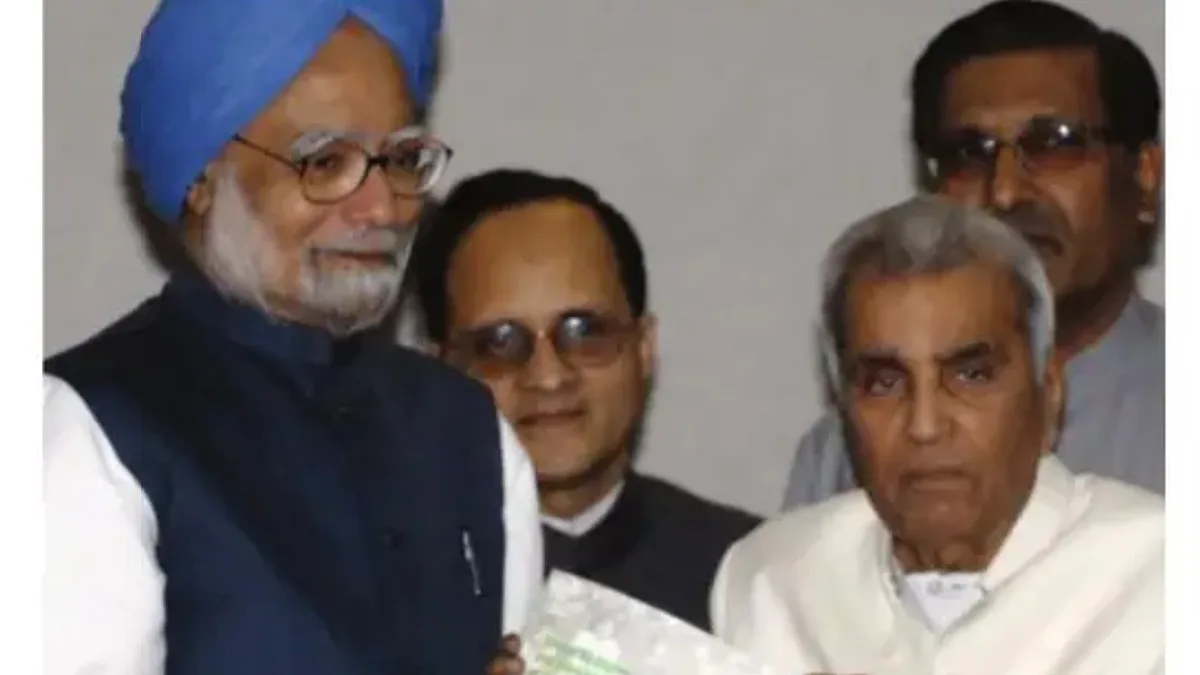
Photo:SNS
Bihar is the epicentre of political news today, sending shock waves day after day, with media groups trying hard to keep pace with speeches of political stalwarts and manifestos of innumerable parties. What has become even more intriguing and murky is the colossal face-off between Nitish Kumar’s JD (U) and the BJP on one hand, and the Mahagathbandhan (Grand Alliance) on the other, led by the RJD and Congress.
Political churning at the constituency and regional levels is seeing parties like Lok Janshakti Party (LJP), Hindustani Awam Morcha (Secular), Rashtriya Lok Morcha, Communist Party of India (M-L), CPI, AIMIM, Vikassheel Insaan Party, Jan Suraaj Party jostling for alliances and negotiations with their partners.
Advertisement
Not only is the electoral pie being sliced thin, but the caste and sub-caste arithmetic continues to dominate Bihar’s dusty heartlands. On this political chessboard, the Economically Backward Class (EBC) is now just a pawn, along with the Most Backward Class (MBC) and Other Backward Classes (OBC) being the other chess pieces moving across the board. When the BJP began its election outreach in 2024 with the Pasmanda Muslim community, the fight for political rights and entitlements became intense with promises for social justice, welfare, free rations, education for the girl-child, monthly pensions for women and the elderly being made.
Advertisement
Currently what is shocking, and equally surprising, is the complete silence by parties across the political spectrum in Bihar on the findings and recommendations of the Sachar Committee report which was released in 2006 and had been in preparation through 2004-05. Almost twenty years after the landmark report, officially titled: Social, Economic and Educational Status of Muslim Community of India was presented, this utter disregard, disdain and devaluation of the report is a telling commentary on our times. Drawing a fascinating time-line from 1949 to 2005 in the recently-released Empowering the Marginalised, senior journalist AU Asif, said “this period of approximately 55 years and 10 months, was very important and extraordinary for the second-largest community in the country.
It is evident that on May 11, 1949, under the leadership of Deputy Prime Minister Sardar Vallabhbhai Patel, who chaired the consultative sub-committee, the Muslim members of the sub-committee, guided by the first Education Minister, Maulana Abul Kalam Azad, chose to abandon the proposal for a separate and exclusive electorate for Muslims. In contrast, on March 9, 2005, the then Prime Minister of India, Dr Manmohan Singh formed a high-level committee, headed by the former Chief Justice of Delhi High Court Justice Rajinder Sachar ‘to study the social, economic and educational status of the Muslim community in India’.”
For readers who may not be aware, the Sachar Committee, comprising seven members, submitted a detailed 403-page report to the Prime Minister on 17 November 2006, which was later presented and approved by both Houses of Parliament. “It marked the beginning of the Muslim community’s inclusion in the country’s development initiatives. The historic report, which took about one and a half years to get compiled, is truly remarkable. It drew upon governmental and non-governmental researches spanning over 55 years and 10 months, involving esteemed institutions such as the National Sample Survey Organisation, Gopal Singh High Power Minority Panel, National Minorities Commission, Institute of Objective Studies (IOS), as well as other think tanks and organisations like OXFAM India’s reports,” said Asif, terming the Report as the first official document on the overall status of Indian Muslims post-Independence, after 59 years.
Prior to this, there were only indications of disempowerment of a population of 17.22 million (14.2 per cent) in various sectors including politics, economy, education, and society as per the Census of India, 2011. Turning the pages of Empowering the Marginalised is to witness the downward mobility of the Indian Muslims and their disempowerment on political, social and cultural fronts. After the Sachar Report came the formation of the Kundu Committee on 5 August 2013 to review the progress of the implementation of the Sachar Committee’s recommendations. However, despite the reports of both committees, no significant changes about the empowerment of Muslims can be reported, said Asif.
These documents are, no doubt, historical. Whenever the discussion would revolve around the inclusion of Muslims in the pursuit of progress, these documents will serve as the foundation. Justice Rajinder Sachar publicly stated: “there is a provision in the Constitution for positive action to uplift any community or group. Under this, SC and ST were given special quotas in 1949, while the Muslim and Sikh communities remained deprived of it, and they themselves decided to remain deprived at that time. If these communities had not refused to avail the quota facility at that time, today they would also have benefited from a special quota like SC and ST, being included in the race for progress.” According to Prof Kundu, “the Sachar Committee Report diagnosed the problems of Muslims, but neither the past governments nor the present one has taken adequate efforts to address them.
With this, it is also a reality that the Muslims too didn’t take any steps to remove their problems. Even today, there is an opportunity to make serious efforts in this regard.” While readers may keep the ongoing Bihar election campaigns in focus, Justice Sachar in an interview with Asif on 23 July 2016 said, “In my opinion, the common Muslim wants only basic facilities and nothing more. For example, in Delhi during the regime of the Chief Minister Sheila Dikshit, Urdu became a second official language along with Gurmukhi (Punjabi) in 2003, but still, there is no organised system of Urdu education in Delhi’s schools, and whatever little was there, is also disappearing.
The irony is that neither the Muslim community nor the political parties make issues out of it. It is also unfortunate that no concrete steps were taken to implement the Gujral Committee Report, specially prepared in 1975 to improve the status of Urdu. We suggested in our report that an Equal Opportunities Commission (EOC) be formed. Muslims generally complain of discrimination in government jobs. In this regard, my opinion is that they can go to High Courts and file a complaint. “Now, as for complaints of this nature in private jobs, an Equal Opportunities Commission can play an effective role because the National Commission for Minorities (NCM) has no teeth. But in fact, the National Human Rights Commission of India (NHRC) can definitely play a decisive role.
Unfortunately, the central government did not pay any attention to this side. In both terms of the UPA government, prominent Muslim leaders like Salman Khurshid and K Rahman Khan remained ministers of minority affairs, but they kept making hollow claims that actions were being taken on most points of the Sachar Committee Report, whereas neither anything happened during the UPA government nor is anything happening now.” Never afraid to mince his words, Justice Sachar commented that “The present government feels biased, so what can be said about it. But the question is for the UPA government, which, in eight years from 2006 to 2014, could not take any effective steps in light of the report.”
For the generation of public personalities like Justice Sachar it was very disheartening to see the lack of opportunities for the Muslim community. They were bent on pushing the government and standing firm on their Constitutional demands. Back in 2011, a young social activist Tanweer Alam wrote, “reservation to Muslims is not a new idea, nor is it unconstitutional. Its opponents are saying it is ultra-vires to the Constitution as no reservation is allowed on the basis of religion.
However, in the states where they have got reservation over the years, they have got it on the basis of socio-economic backwardness. Already there are various quanta of quota for backward Muslims in different states. In Kerala, it is 12 per cent; Tamil Nadu, 3.5 per cent; Karnataka, 4 per cent; Andhra Pradesh, 4 per cent; West Bengal, 10 per cent and Bihar 5 per cent.” He quoted Dr. Abusaleh Shariff, principal author of Sachar Report, who cited the Constitution to say: “There is no bar on state action to uplift the weak on the basis of religion.” Dr Mohd Manzoor Alam, chairman of Delhi-based Institute of Objective Studies, said Sardar Vallabhbhai Patel and Pandit Jawaharlal Nehru assured Muslims that their interests would be taken into account and accommodated in the days ahead.
“During the formative years of the Republic, when the wounds of Partition were still fresh, the two leaders had advised Indian Muslims to forgo reservation for some time, which the Muslims did,” says Dr Alam. “The two stalwarts had clearly assured our elders that they should trust the generosity of the Hindus and India,” to give them reservation when the moment came. In 2006, and even later, public intellectuals like Dr Alam felt “that moment has come.” With the ongoing Bihar election campaigns, party manifestos, public speeches making no reference to the landmark Sachar Report and its recommendations, Indian Muslims will have to wait longer for the historical moment.
(The writer is a researcher-author on history and heritage issues, and a former deputy curator of Pradhanmantri Sangrahalaya)
Advertisement