Bengal’s chance to plant a new tree
In O. Henry’s The Last Leaf, ailing Johnsy clings to life because one painted leaf refuses to fall. Such is the power of optimism; it does not need to be certain to be effective.
At 5 a.m., a vast segment of India’s workforce begins its day. There are no punch-ins, no holidays, no salary slips, and crucially no mention in the nation’s GDP figures.




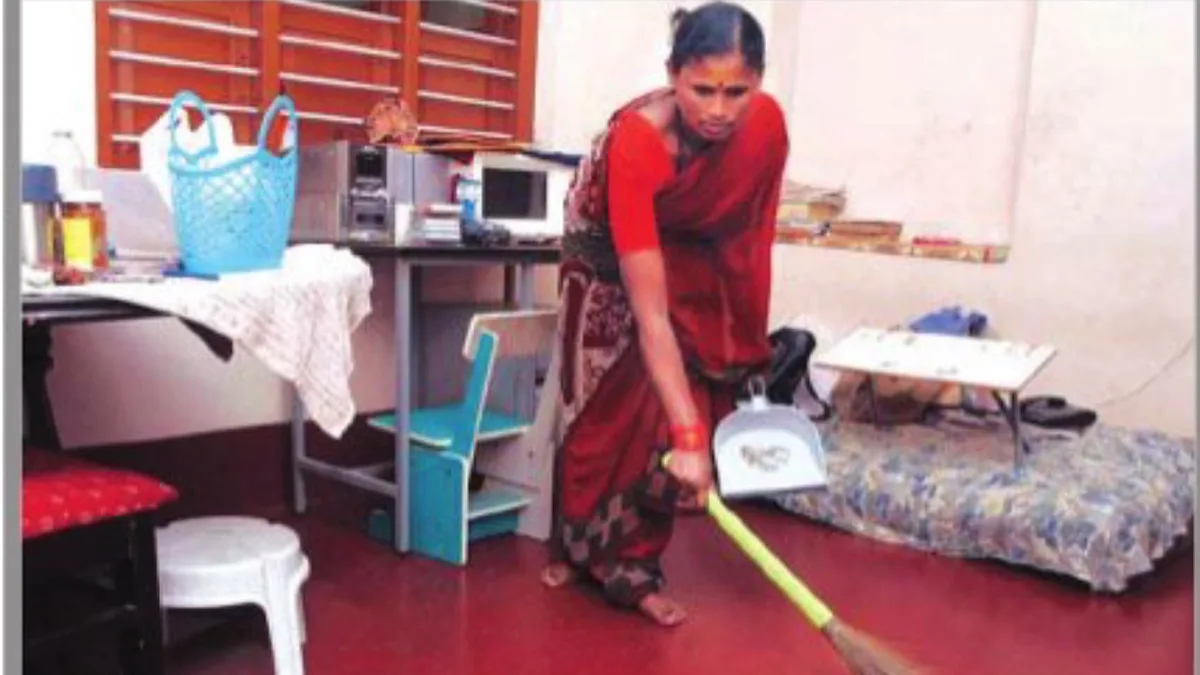
Photo:SNS
At 5 a.m., a vast segment of India’s workforce begins its day. There are no punch-ins, no holidays, no salary slips, and crucially no mention in the nation’s GDP figures. This is India’s “Care Economy,” powered by millions of women who perform unpaid labour tirelessly, day after day. This work, which involves cooking, cleaning, and caring for children and the elderly, is essential for the smooth functioning of households and the economy at large. However, a silent revolution is underway.
The Indian state has begun to recognise this labour, not just with rhetoric, but with hard cash. Currently, India is hosting the world’s largest social experiment in unconditional cash transfers. Across some 12 states, nearly 11.8 crore women receive monthly direct benefit transfers (DBT) ranging from Rs 1,000 to Rs 2,500. Critics often dismiss these schemeswhether it is Maharashtra’s Ladli Bahin, Madhya Pradesh’s Ladli Behna, or Tamil Nadu’s Kalaignar scheme – as “Revdi culture” or political freebies. But to view them solely through the lens of electoral bribery is to miss the profound sociological shift occurring in India’s hinterlands.
Advertisement
To understand the impact of Rs 1,000, one must look beyond the privileged perspective of metropolitan India. The Ministry of Statistics reveals a stark reality: the average Indian woman performs 5 hours of unpaid domestic work daily, while Indian men contribute barely 30 minutes. This unequal distribution of labour creates “Time Poverty,” preventing women from accessing formal employment and education, leaving them with empty pockets. An empty pocket is not just an economic condition; it is a political one within the household. It signifies a lack of decision-making power. In this context, unconditional cash transfers serve as a critical intervention. Unlike schemes in Brazil or Mexico, which often tie funds to conditions like school attendance or vaccination, India’s model sends a distinct message: this money is a right, acknowledging a woman’s social status independent of her maternal duties.
Advertisement
Data from various states suggests that this liquidity is doing more than just purchasing goods; it is altering the dynamics of relationships. In Maharashtra, a 2025 study revealed a staggering statistic: for 74 per cent of beneficiaries, this scheme provided the first money they could call their own in their entire lives. As one beneficiary noted, she no longer has to “spread her hand” before her husband for Rs 10 worth of turmeric. This shift from dependency to autonomy may no t b e life – changing in a macroeconomic sense, but it is certainly life-supporting. It makes a woman’s share in the household visible. In West Bengal, women are utilizing these small sums as seed capital.
Beneficiaries like Somada Das have used Rs 1,000 to buy clothes for resale, engaging in what economists term “micro-entrepreneurship”. Meanwhile, studies from Tamil Nadu, where the scheme is explicitly framed as an honorarium for unpaid care work, indicate a reduction in domestic crises and marital conflict. Financial security, however small, breeds mental peace and confidence. A pervasive patriarchal anxiety suggests that “free money” will discourage women from working. Data from Assam, Bihar, and Tamil Nadu proves the exact opposite. Women are not leaving the labour market; they are using these funds to pay for bus fares to find work, to learn new skills, and to negotiate better conditions. The cash does not make them lazy; it enables them.
It provides the financial cushion to say “no” to exploitative conditions, rather than withdrawing from work entirely. It is undeniable that these schemes are politically motivated. In elections from Bihar to Madhya Pradesh, women have emerged as “Queen Makers,” a constituency no party can afford to ignore. However, policy experts argue that if the state treasury opens up to women in exchange for votes, it is a net positive for democracy. It transforms women from a silent vote bank into an active political constituency with specific demands. Despite the optimism, we must remain critical.
Cash transfers alone cannot dismantle structural patriarchy. Receiving Rs 1,000 does not reduce the five hours of domestic drudgery, nor is it a substitute for a formal job paying Rs 10,000 or Rs 20,000. If we view cash transfers as the solution rather than a support, we risk ignoring the harder battles for equal pay, safe workplaces, and shared domestic responsibility. Unpaid care work, while recognized, still subsidizes the paid economy by providing free services that would otherwise cost trillions. Ultimately, these transfers are not the full price of freedom, but they are its first instalment. True empowerment will arrive not when a woman goes to the bank to withdraw this money, but when she goes to deposit her own earnings. Until then, recognizing her unpaid labour with cash is a necessary start to a long overdue conversation.
(The writer is Director – Strategic Partnerships, Mrikal (Data/AI Center) and a Young Alumni Member, Govt. Liaison Task Force, IITKharagpur.
Advertisement