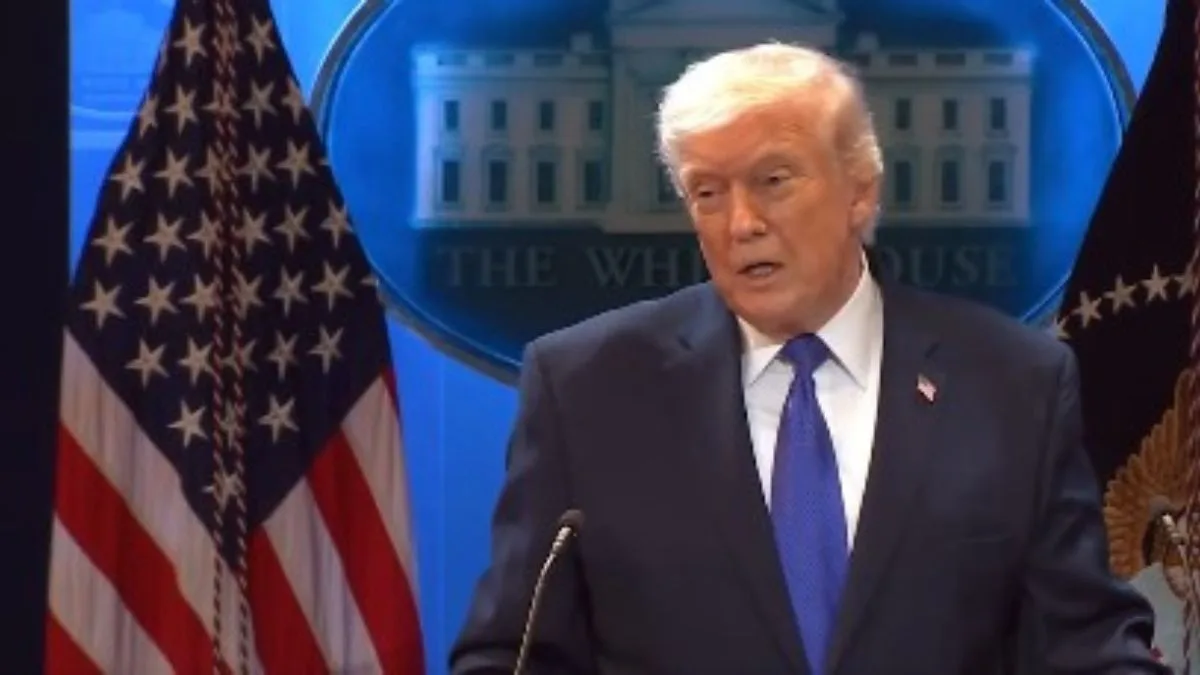
For a year, the argument over American trade policy sounded like a quarrel over numbers: 10 per cent, 15 per cent, 25 per cent. Then the Supreme Court stepped in and changed the subject. By ruling that President Donald Trump could not use the International Emergency Economic Powers Act of 1977 to impose sweeping import taxes, the court made it clear this was not a dispute about arithmetic. It was a reminder that tariffs must be law before they are leverage.
The American Constitution places the power to tax in Congress. Over decades, lawmakers have delegated pieces of that authority through narrow statutes. Some of those tools are old and familiar. Section 232 of the Trade Expansion Act of 1962 allows tariffs on national-security grounds after investigations; that is how the United States ended up with 25 per cent duties on steel and 10 per cent on aluminium, and why automobiles and other “strategic” sectors periodically find themselves under review. Section 301 of the Trade Act of 1974 authorises penalties after findings of unfair trade practices, a slower, more procedural route.
Advertisement
What the court rejected was something broader: the use of an emergency law designed for crises to run a near-permanent, across-the-board tariff regime. That distinction matters, because it forces the White House to swap scale for legal footing. Mr Trump’s response was immediate. He turned to Section 122 of the 1974 Trade Act, a rarely used provision that allows a temporary global tariff of up to 15 per ceent for 150 days unless Congress steps in. In other words, the new levy is wide but shallow ~ and on a clock. Set beside the older tools, the contrast is stark. The 15 per cent global tariff under Section 122 is time-limited and legally fragile.
The 25 per cent steel and 10 per cent aluminium duties under Section 232 are narrow but durable, anchored in investigations that make them harder to unwind. The administration has signalled it will combine these authorities to keep overall tariff pressure high. In courtroom terms, that may be defensible. In business terms, it is a recipe for uncertainty. Manufacturers do not build plants or rewire supply chains on 150-day horizons. A carmaker deciding where to assemble vehicles, or a chip firm choosing where to place new capacity, needs to know not just today’s rate but tomorrow’s rulebook. A trade regime that depends on rotating statutes ~ temporary global levies here, sectoral penalties there ~ turns planning into guesswork.
That uncertainty is a hidden tariff of its own. None of this is an argument against industrial policy or supply-chain security. It is an argument for honesty about the instrument. If Washington believes a permanent tariff wall is necessary, it should legislate one, debate it, and accept the consequences. The Supreme Court has closed one shortcut. The rush to find another only highlights the real problem: a trade strategy built on workarounds is not a strategy ~ it is a holding pattern with a stopwatch.