Should Be a Core Subject in India’s Classrooms
Every generation prepares its children for the world they are likely to inherit.
As Artificial Intelligence redefines every sector of the global economy, the challenge facing today’s institutions is not simply how to adapt to new technologies, but how to reimagine the very nature of work, talent, and leadership.





Photo:SNS
As Artificial Intelligence redefines every sector of the global economy, the challenge facing today’s institutions is not simply how to adapt to new technologies, but how to reimagine the very nature of work, talent, and leadership. Across industries, the traditional “education-job-retirement” trajectory is crumbling, replaced by a demand for continuous, adaptive learning and flexible capability ecosystems. And in India, one of the boldest and most comprehensive responses to this upheaval is unfolding quietly within the country’s civil service – Mission Karmayogi. In many ways, the talent disruption wrought by AI presents a paradox.
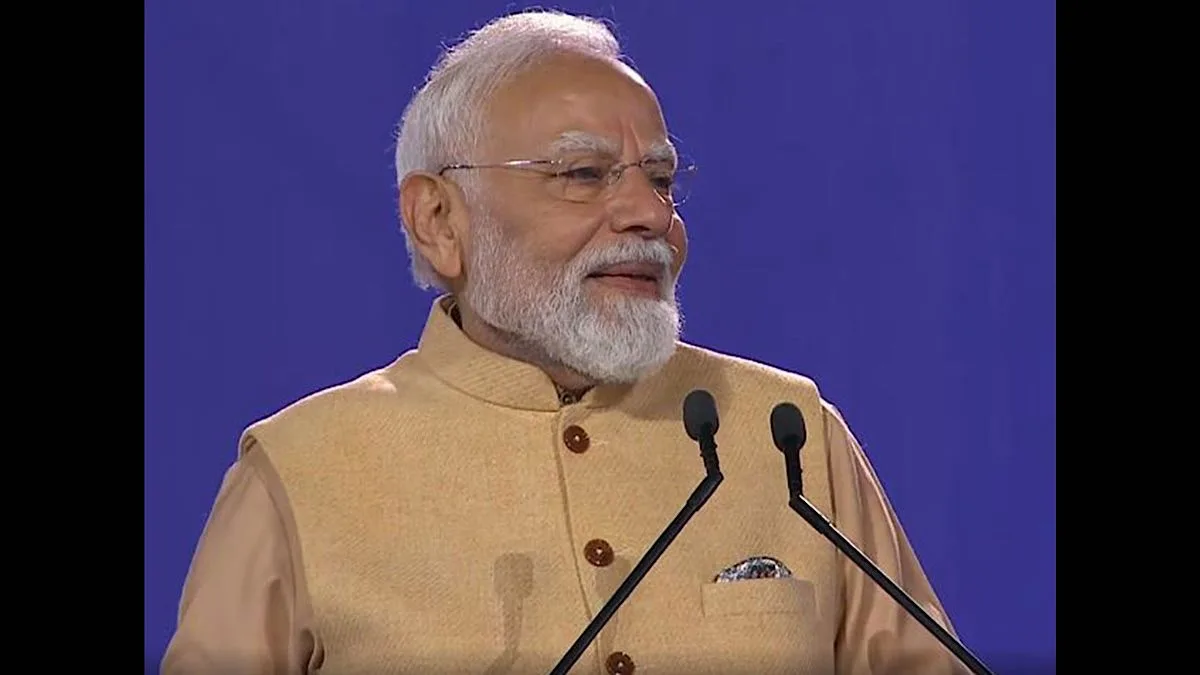
Machines now excel at routine, repeatable tasks. But the future belongs not to the most automated organizations, but to the most human ones. Critical thinking, emotional intelligence, ethical judgment, and the ability to collaborate across complex systems are the new core competencies. Talent strategies must pivot from static job descriptions to fluid, role based capability architectures. Mission Karmayogi exemplifies this paradigm shift within the machinery of government itself. Conceived and launched by Prime Minister Modi in September 2020, Mission Karmayogi is a sweeping transformation of the public administration ecosystem. Its ambition is not just to reskill civil servants, but to completely rewire how government understands talent. Instead of defining roles by rigid rules, the programme emphasizes dynamic capability maps that align people with roles based on their evolving skills and performance.
Advertisement
This is precisely the kind of role-based approach that modern HR leaders across industries now champion. But Mission Karmayogi goes deeper. It seeks to transform the identity of the civil servant from ‘Karmachari’ – one who performs duties as a job – to a ‘Karmayogi’ – one who sees public service as a calling. This is more than semantics. It reflects a shift toward values-driven, human-centered institutions that echo the broader call across sectors to move from compliance cultures to ethical, conscience-led organizations. In the AI age, where decisions can be automated but not morally reasoned, such humanisation is not optional. It is strategic.
Advertisement
The digital backbone of this reform is the GOT-Karmayogi platform – a sophisticated, anytime-anywhere learning ecosystem offering more than 3,000 self-paced courses, peer learning modules, case studies and global best practices contextualized for Indian realities. The platform supports more than just skilling. It links learning directly to HR functions such as competency assessments, career planning, and mentorship opportunities, embodying the modern shift from performance monitoring to human potential enablement. Similar transitions are unfolding across the private sector. The binary of ‘employer-employee’ is dissolving. Work is no longer confined to office spaces or even to one’s own organization. Talent flows across gig platforms, project based teams, and global networks. HR leaders now manage ecosystems, not just hierarchies. Mission Karmayogi mirrors this approach by decentralizing learning and development and working towards desiloising Government. Each ministry is empowered to design its own Domain Competencies and Capacity building plans, ensuring that the capacity-building reflects the specific challenges of each sector and is demand driven.
This distributed model is a deliberate design for a workforce that must be both cohesive and context aware. Crucially, the mission’s foundation is not just technological or managerial. It is deeply philosophical. Drawing from Indian civilizational wisdom, Mission Karmayogi integrates ancient virtues into modern administration. Its four guiding pledges – Vikas (Development), Garv (Pride), Kartavya (Duty), and Ekta (Unity) – and core personal virtues (Gunas) for civil servants like Svadhyay (self-reflection), Sahakaryata (collaboration), Rajyakarma (Statecraft) and Svadharma (citizen centric purpose) serve as ethical anchors in an age of rapid automation. The behavioural and functional competencies required for each person draw inspiration from this. Far from being anachronistic, these values answer some of the AI era’s thorniest questions – how do we ensure equity, empathy, and dignity in a machine learning ecosystem?
This ethos has yielded real outcomes. Over 600,000 officials trained in modules related to the Bharatiya Nyaya Sanhita 2023 helped in the smooth transition from the era of IPC and CrPC. More than 70,000 police personnel trained in citizen interaction have improved public satisfaction in regions like Puducherry and other UTs including Delhi. More than 400,000 civil servants have received certification in technologies like AI and IoT. Over two million people are now able to manage their work stress and have learnt how to do yoga at the workplace. These are not just statistics. Janseva programme – a large-scale behavioural change intervention is currently being implemented to enable Seva Bhaav in more than 700,000 citizen-facing civil servants across India.
They represent a culture shift, where learning is continuous, local relevance is respected, and citizen impact is the ultimate metric. This focus on public impact aligns with the evolving understanding in HR strategy – that performance is no longer just about output, but about outcomes that matter to people. Institutions must ask not just what their employees are doing, but what they are becoming. Leadership development in the AI era, therefore, must expand to include digital discernment, techno-ethics, and systems thinking – areas where Mission Karmayogi is already embedding competencies in millions of civil servants across the country. And the mission does not shy away from the practical challenges.
Bureaucratic inertia, the need for constant content updates, and the difficulty of engaging remote or lower-tier employees are acknowledged and addressed with deliberate mechanisms for monitoring and evaluation. The model recognizes that transformation is not a sprint but a marathon, requiring sustained political will, cultural change, and infrastructure investment. Here again, it reflects a best-practice approach in modern HR – combining vision with operational rigor. Ultimately, Mission Karma yogi offers a powerful case study in the evolving talent landscape of the AI era. It shows that governments can be agile. That large bureaucracies can adopt startup mindsets. And that even the oldest institutions can be reimagined through values, vision, and verve. It affirms what many in the HR world are coming to realize.
That in an age defined by artificial intelligence, the ultimate differentiator is human intelligence – in all its ethical, emotional, and experiential richness. India’s civil service reform may appear culturally specific, rooted as it is in its philosophical traditions. But its lessons are globally relevant. As organizations everywhere grapple with AI’s disruptions, Mission Karmayogi reminds us that technology must be embedded in humanity. That lifelong learning must be a lived experience. And that the true future of work is not just about what we do, but about who we are becoming. In a time of uncertainty, this clarity of purpose is rare. And in a world of algorithms, India’s bet on ethics, empathy, and adaptability might just be its smartest investment yet.
(The writer is a development scholar, public policy advocate, and leadership educator with over four decades of grassroots experience. He currently serves as Member-HR in the Capacity Building Commission of the Government of India. Views expressed are personal.)
Advertisement