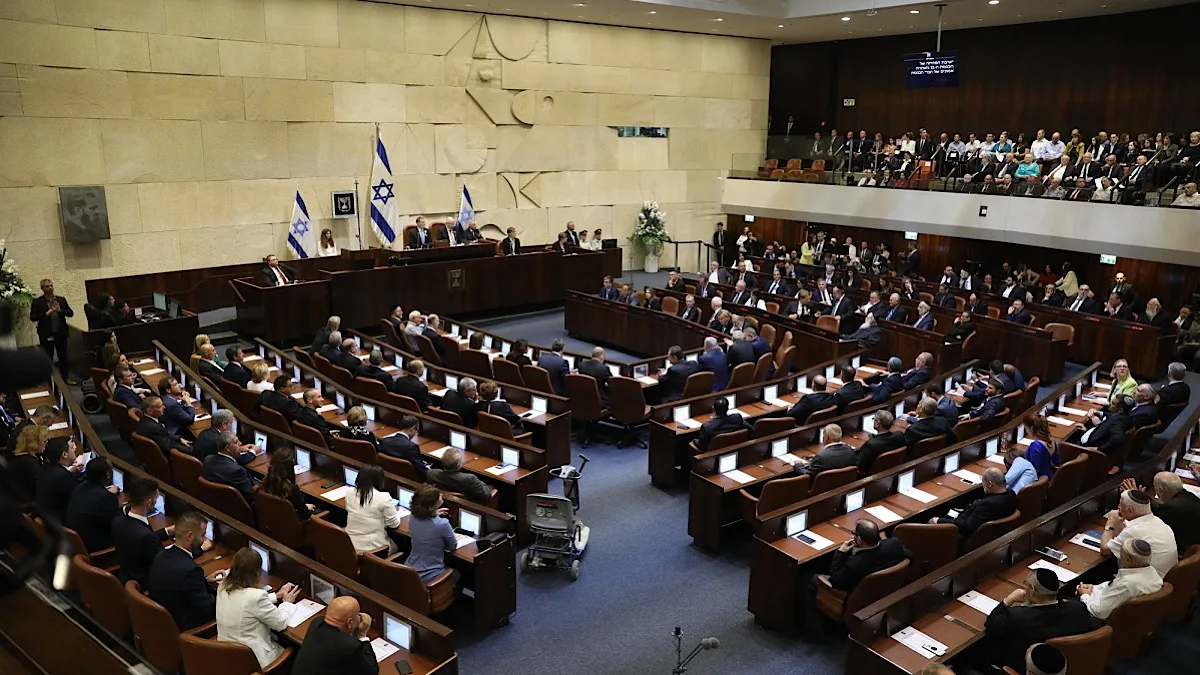
The latest attempt by far-right lawmakers in Israel’s parliament to push a bill applying Israeli law to the occupied West Bank was, by all measures, a symbolic gesture. Yet symbols in West Asia rarely exist in isolation ~ they echo across fault lines of politics, identity, and diplomacy. The vote, narrowly passed in its preliminary reading, has rekindled an old tension: the domestic pull of annexationist politics versus the external pressure of maintaining fragile international alliances.
Israel’s governing coalition was quick to disown the move. The Prime Minister described it as a deliberate provocation by political opponents seeking to embarrass the government. Only one member of his own party voted for the bill, and officials were quick to assure allies that it had no real legislative path forward. Still, the gesture was loaded with intent. It signalled that even as Israel treads cautiously on the international stage, the idea of permanent control over the West Bank continues to simmer in its internal political discourse. The American reaction was swift and unusually direct.
Advertisement
Visiting US Vice President J.D. Vance called the vote a “very stupid political stunt,” reaffirming that Washington’s policy opposes annexation in any form. The US concern is less about the bill itself, which is unlikely to become law, and more about the signal it sends at a time when the region is struggling to sustain a tenuous peace. The United States has invested heavily in restoring calm after years of war and displacement in Gaza, and any hint of annexation risks collapsing that diplomatic scaffolding. The political calculus is therefore unmistakable. Washington views stability as a prerequisite for rebuilding its credibility in the region. For Arab states that have normalised relations with Israel, annexation would be an act of betrayal, undercutting years of delicate engagement. For Israel, it would risk isolation from its closest ally and the unravelling of partnerships that have brought both economic and security benefits.
A short but telling moment in this episode was the American insistence that Israel would “lose all of its support” if annexation were pursued. It was a warning rarely issued in such stark terms, suggesting that even within a friendly administration, patience has limits. In truth, this episode exposes a deeper struggle within Israel – between those who see its long-term future in coexistence and those who believe the territory is theirs by historic right. The former relies on diplomacy, the latter on defiance. The persistence of such symbolic gestures reflects a deeper anxiety within Israel’s political right, a fear that compromise, even rhetorical, might be mistaken for surrender. Ultimately, the West Bank vote will fade as a legislative footnote. But its symbolism endures, reminding both Israelis and their allies that political theatrics in Jerusalem can ripple far beyond the chamber, unsettling the delicate balance on which regional peace now precariously rests.