A democracy does not teach civics by reciting hymns. It teaches by showing how power is meant to work ~ and how it sometimes fails. That is why the recent decision by India’s Supreme Court to halt the publication of a school textbook chapter that mentioned corruption and delays in the judiciary deserves more scrutiny than applause. The court’s concern is easy to understand. Judges do not command armies or budgets; they rely on public trust.
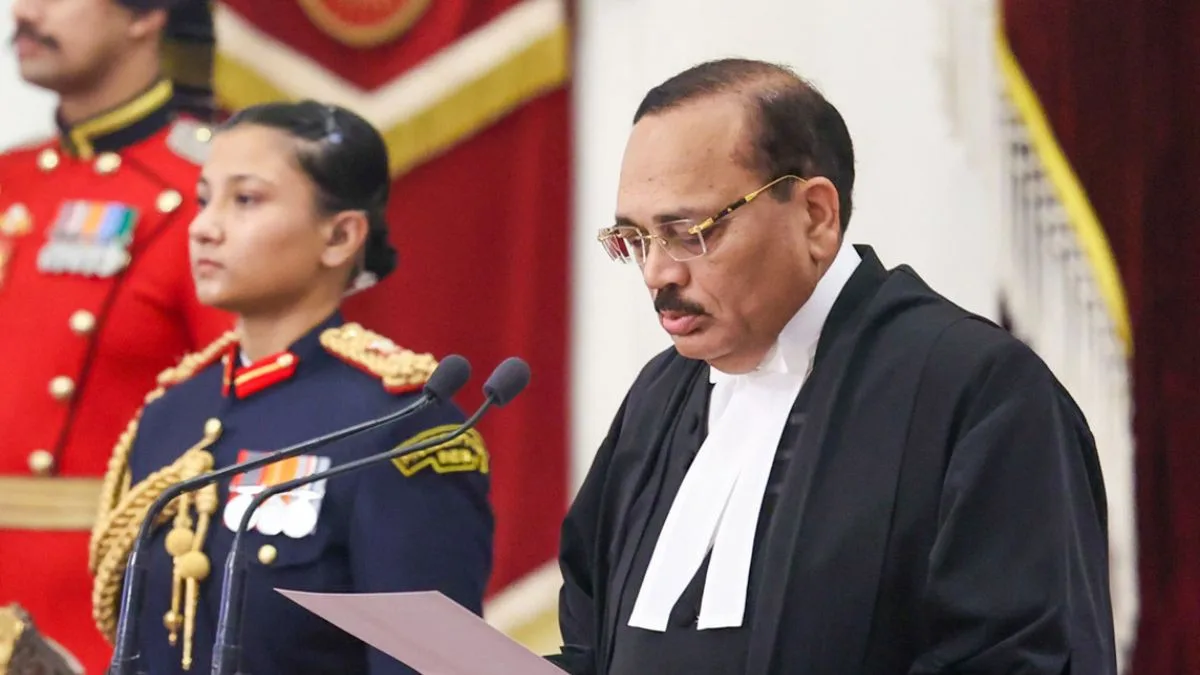
When Chief Justice Surya Kant warns that careless language can tarnish an entire institution, he is defending something real and fragile. Courts live or die by credibility. But credibility is not porcelain. It is not preserved by locking it in a cabinet and asking citizens, or students, to admire it from a distance. The chapter in question was prepared under the aegis of the National Council of Educational Research and Training, a body that shapes what millions of children learn about how their country works. It pointed to problems that are not exactly whispered secrets: a crushing backlog of cases, shortages of judges, uneven infrastructure, and yes, allegations of corruption at different levels.
Advertisement
These are not fantasies invented in a classroom. They are part of the daily experience of litigants who wait years for a hearing and of lawyers who navigate a system stretched close to breaking. By invoking contempt and ordering a blanket ban on the book, the court has chosen to treat this discomfort as defamation rather than diagnosis. That choice carries a cost. It teaches students that institutions are to be protected from scrutiny, not strengthened by it. It replaces civic education with civic etiquette. There is a difference between accusing a court and describing a system. A thirteen-year-old who learns that India’s courts are overburdened is not being trained to sneer at judges; she is being introduced to the idea that institutions are human creations, shaped by policy, resources, and incentives.
If she also learns that reforms ~ more judges, better procedures, better technology ~ can change outcomes, she is learning something far more democratic: that systems can be fixed. The irony is that the judiciary has often been one of India’s loudest critics of executive failure and legislative drift. To suggest that the same principle cannot apply, even in measured form, to the courts themselves is to carve out an exception that sits uneasily with constitutional culture. Respect is not built by insisting on silence. It is built when institutions show they can face uncomfortable facts without flinching.
A student who is taught that courts are perfect will eventually discover they are not ~ and the disillusionment will be sharper for having been postponed. A student who is taught that courts are vital, powerful, and imperfect is more likely to grow into a citizen who demands both accountability and reform. If the judiciary wants to protect its standing, the more durable strategy is not to ban a textbook, but to outgrow it.