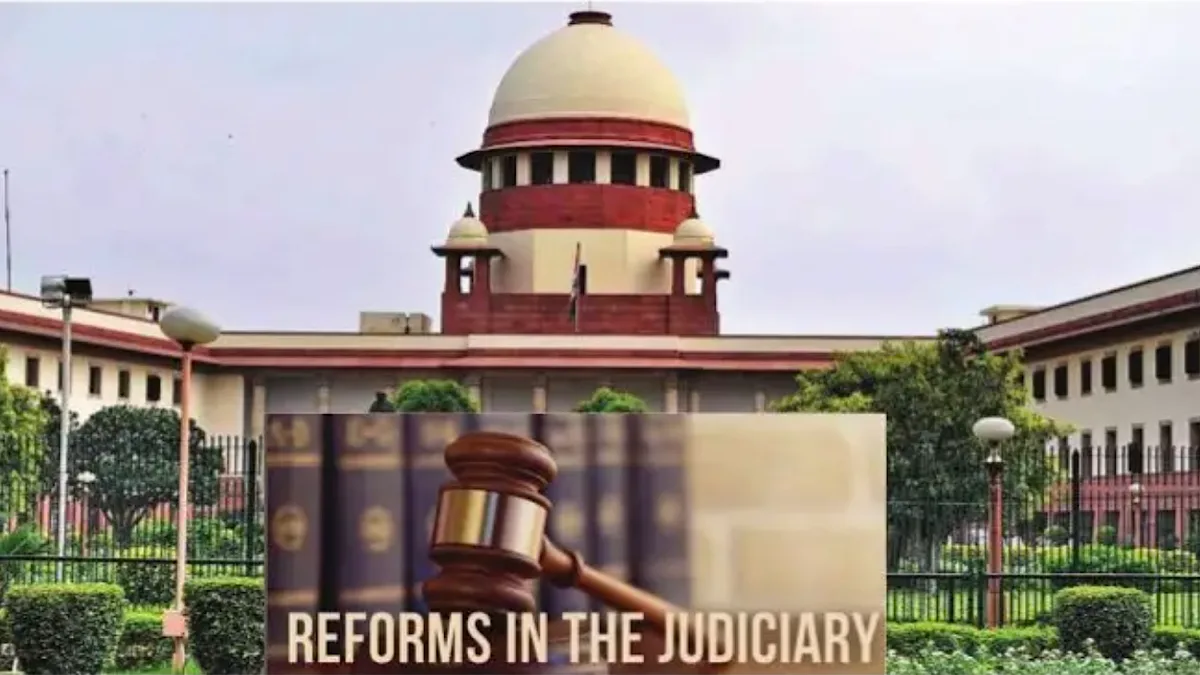
The first hearing in any rights dispute is the one the public never sees: who gets to become a judge. In India, judicial appointments are often discussed as an internal tussle ~ court versus government, collegium versus executive, transparency versus independence. But that framing misses the point. Judicial selection is not a technocratic HR process. It is human rights infrastructure. It decides whose liberty is protected, whose protest is restrained, whose land is taken, whose equality is affirmed, whose dignity is recognised, and whose suffering is ignored.
When appointments are opaque, delayed, or shaped by hidden vetoes, the damage is not abstract because it is borne by undertrials, by survivors of violence waiting for a trial date, by communities challenging discrimination, and by citizens seeking constitutional remedies. This matters now because international standards increasingly emphasise that judicial selection must be transparent, merit-based, independent, and nondiscriminatory. The UN Basic Principles on the Independence of the Judiciary stress selection on “integrity and ability” and the duty of states to provide adequate resources for courts to function. The UN Human Rights Committee has also linked fair trial guarantees to the reality ~ not just the form ~ of an independent and impartial tribunal.
Advertisement
As the UN Special Rapporteur prepares a thematic report on principles of judicial appointments for the Human Rights Council’s 62nd session (June 2026), India has an opportunity: to show that independence and accountability are not enemies, and that transparency can strengthen ~ not weaken ~ judicial legitimacy. India’s higher judiciary appointments operate through the collegium system, a judge-made framework that evolved through landmark Supreme Court decisions and later survived the failed National Judicial Appointments Commission (NJAC) experiment. The result is a paradox: a system meant to protect courts from executive capture, but which often remains internally closed and socially narrow ~ while still being vulnerable to informal executive veto through delay, selective vetting, and control of timelines.
On paper, procedural timelines exist. The Department of Justice itself notes that High Court proposals should be initiated six months before vacancies arise. Yet in practice, delay has become a feature, not a bug ~ reallocating power away from open, reasoned decision-making and toward whoever can stall the process without accountability. When that happens, independence becomes a slogan, not a lived reality. The most measurable symptom is vacancies. Official government data shows that as on 24 December 2025, High Courts had a sanctioned strength of 1122 judges, but a working strength of 821 – leaving 301 vacancies.
The Supreme Court had a sanctioned strength of 34, with 33 working and 1 vacancy. Those are not just numbers; they are the architecture of delay. Fewer judges mean longer cause lists, more adjournments, and slower constitutional review. The backlog becomes self-perpetuating: judges are overworked, time for detailed hearings shrinks, and courts increasingly manage crises rather than resolve them. And the crisis is even starker below. The National Judicial Data Grid (NJDG) shows hundreds of millions of cases pending across the system (with a large share older than a year).
A recent report citing the government in Parliament put vacancies in district and subordinate courts at 4,855 out of a sanctioned strength of 25,886, alongside over 4.8 crore pending cases as of 1 December 2025. It is hard to speak credibly about “access to justice” when the system is structurally short-staffed. The second symptom is opacity, especially around “adverse material” and intelligence inputs. A striking public illustration is the Supreme Court collegium’s statement of 18 January 2023 concerning the reconsideration of the proposal to appoint advocate Saurabh Kirpal as a judge of the Delhi High Court. The collegium noted the recommendation had been pending for over five years, and recorded objections reportedly raised through intelligence and executive communications ~ ranging from the nationality of the candidate’s partner to the fact that the candidate was open about his sexual orientation.
The collegium rejected those objections and reiterated the recommendation, emphasising constitutional principles of dignity and equality and urging expeditious processing. Whether or not one agrees with every individual appointment, the structural issue is unmistakable: when the state can introduce opaque objections without an accountable process, the appointment system becomes vulnerable to discrimination and politicisation ~ precisely what independence is supposed to prevent. A rights-respecting appointments process cannot treat secret allegations, or the candidate’s identity, as decisive inputs without due process.
If national security concerns are genuine, they must be tested through fair procedure. If they are not genuine, secrecy becomes a convenient instrument for exclusion. Appointments are not only about constitutional courts. In modern governance, tribunals decide vital questions about employment, taxation, environment, corporate insolvency, public procurement, and regulatory rights. Their independence is also not optional but essential. In Madras Bar Association v Union of India (judgment dated 19 November 2025), the Supreme Court reiterated core principles aimed at insulating tribunals from executive dominance in appointments and service conditions.
Among other things, it underscored that the executive should have no discretion once a properly constituted selection committee recommends names, and that the “parent” or “sponsoring” department should not control selection decisions – at most serving in a convener role without a vote. The judgment also discussed the need for a more independent institutional framework, referring to a National Tribunals Commission and interim arrangements “till” such a commission is constituted. This is a reminder that the appointment problem is systemic: if independence is compromised in tribunals, the rights impact can be as severe as in High Courts. India does not need reform that swaps one opaque gatekeeper for another.
It needs a system that protects independence and earns legitimacy. That requires redesigning appointments around a few basic, rights-consistent principles: * Publish criteria that are more than slogans: If “merit” is the standard, the public deserves to know what merit means: integrity benchmarks, competence indicators, judgments/pleadings quality (as relevant), temperament, commitment to constitutional values, and professional diversity. The Supreme Court’s current practice of publishing collegium resolutions is a start ~ but outcomes without process are not transparency.
* Build due process into vetting: Where adverse inputs exist, provide the candidate a meaningful opportunity to respond ~ at least through a structured summary of allegations, a chance to submit clarifications, and a recorded decision on why objections are accepted or rejected. This protects both the institution and the individual from arbitrary exclusion.
* Make delay costly ~ procedurally, not politically: Timelines already exist in principle. The missing piece is enforceability: a public tracking mechanism (like a dashboard), clear time limits for each step, and a presumption that reiterations are processed without indefinite stalling.
* Treat diversity as constitutional capacity, not charity: An independent judiciary cannot be socially narrow. Diversity ~ gender, caste, religion, region, disability, professional background ~ improves legitimacy and broadens judicial understanding of lived realities. The collegium itself has publicly recognised inclusion and diversity as a value in appointments. But without goals and disclosure, diversity remains aspirational.
* Implement tribunal independence in letter and spirit: The Supreme Court has repeatedly set guardrails: selection committees must be judiciary-led, the executive’s discretion must be limited, and institutional structures must reduce dependence on sponsoring ministries. Tribunals decide rights; they must not feel like extensions of the departments they review.
* Fix the pipeline, not just the pinnacle: Vacancies in district courts and delays in recruitment cripple the justice system at scale. Any serious appointments reform must include predictable recruitment calendars, adequate training, and retention planning – because justice delayed in the trial courts is justice denied for most Indians. Judicial independence is not the privilege of judges. It is the right of citizens to have disputes resolved by decision-makers who are free from improper pressure and chosen through fair, non-discriminatory processes.
India can keep the core insight behind the collegium ~ insulating courts from executive capture ~ while finally confronting the other half of the problem: opacity, delay, and unaccountable gatekeeping. If we treat appointments as human rights infrastructure, the question stops being “who controls the process?” and becomes “how do we design a process worthy of constitutional democracy?” That is the reform India needs ~ before vacancies deepen, tribunals drift further into executive orbit, and public trust erodes beyond repair.
(The writer is Advocate, Supreme Court of India, Adjunct Faculty, National University of Juridical Sciences, Kolkata and Professor of Practice, BITS Law School, Mumbai)