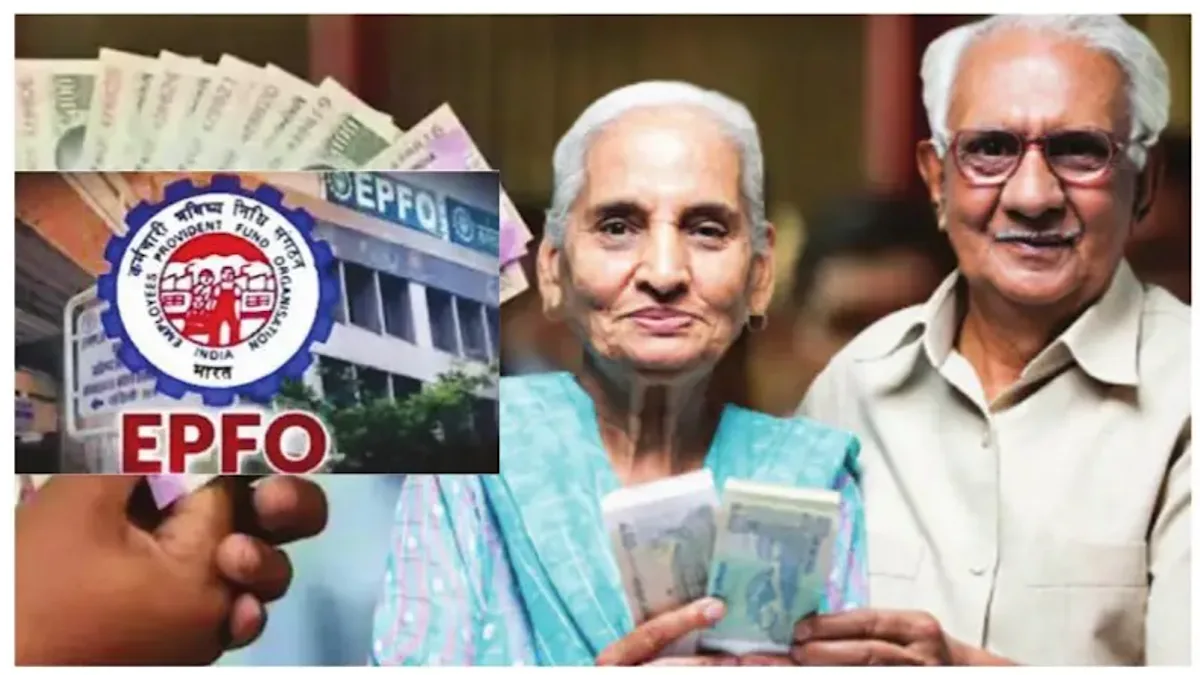
Rs. 1,000 and less! Some 37 lakh senior citizens and their dependents survive on this monthly pittance called pension from the Employees’ Pension Scheme 1995 of the EPF Act 1952. They have to manage their food, clothing, medicine, and all other geriatric care needs within this provision. They deserve a higher minimum pension, not simply because the amount is so paltry and they are senior citizens.
No, they are entitled to it because they have toiled all their productive lives for the creation of wealth and have sacrificed a part of the employer’s share of PF contribution to build a robust pension fund. Without any of these ~ contribution or work – many of the poor in the country get much bigger support during their old age. For instance, the A.P. and Telangana governments give a welfare pension of Rs 4,000; still more in certain cases in these states.
Advertisement
Similarly, the state and Central government employees get a good amount of pension. The MPs and MLAs, too, get a pension; some of them who functioned in both roles at different times get two pensions. All their pension schemes have much bigger minimum provisions than the EPF minimum. So, it is the EPF pensioners’ right to get an adequate pension, not some charity demand out of anybody’s compassion. No argument against the claim is tenable and just. Funds’ shortage and non-viability of the scheme and similar claims for not raising EPF minimum pension, concerning 5.39 crore members under the EPF Pension Scheme and more than 81 lac pensioners at present, therefore, are absolutely wrong and untenable. The government takes shelter under its inability, usually based on three impediments. The EPF pension scheme is based on the defined contribution and defined benefit.
In other words, it is predetermined as to how much contribution is to be pooled in the fund and how much pension is to be paid out of it. So, no scope for an increase; this is the first and foremost objection. The second ground is based on an actuarial evaluation. The fund is periodically evaluated as per para 32 of EPS 1995 to determine if the present corpus and future accumulation are sufficient to meet the continued pension payment obligation. The claim is that there was an actuarial deficit as of 31.03.2019. The third observation: the pension scheme, though not declared as such, appears to be of the Pay-As-You-Go (PAYG) type.
Under PAYG, the current employees contribute to the pension fund while retired persons receive the pension; the cycle goes on without needing any additional help. But the government fears that it may not work without external support. Looking at these three premises objectively, and adding to it the governmental responsibility in a welfare state to provide for old age social security, the payment of an adequate sum like half the salary as a pension to all the EPF members, and raising their minimum pension to a decent level is not only not impossible but an inescapable obligation.
Look at these hard facts. The total investment corpus in the employees’ pension scheme by 31 March 2025, as Ms Shobha Karandlaje, minister of state in the labour ministry, revealed in parliament, was Rs. 9,92,689.56 crore. The pension outflow every year is minimal compared to the corpus. For instance, in 2023-24, the pension paid was Rs 23,027.93 crore, equal to 2.59 per cent of the corpus that year of Rs 8,88,269.01 crore. Let alone the corpus comparison, the interest earned on it in one year, 2023-24, was Rs 58,668.73 crore, more than double the pension.
The number of present pensioners (81 lakh) in the total number of members in the scheme (5.39 crore) constitutes about just 15 per cent. True, more pensioners are added every year, increasing the pension payment burden, so will there be the increased volume of funds, with more and more persons joining the labour force in an expanding economy. The contribution in a given year will be more than the pension outgo. The pension accumulation last year was Rs 71,780.41 crore against pension payment of Rs 23,410.17 crore, which means a Rs 48,370.24 crore accretion to the pension fund.
Then, where is the actuarial deficit? Why can’t PAYG work? Where are the non-viability signs? Even if these things happen at any time, a hypothetical situation now, the government should come forward to meet its social responsibility to protect the interests of senior citizens. Is it not undemocratic and arbitrary to single out EPF pensioners in fixing such a small amount as a Rs 1,000 minimum on baseless fears, while providing a higher amount to government employees and legislators, who execute and make policies for the citizens? Also, the financial burden as a result of increasing the minimum is not going to be too big, as is being made out by the government.
At present, more than 78 lakh of the total 81 lakh pensioners get less than Rs 5,000 a month, while 58 lakh get less than Rs 2,000. To raise the minimum to Rs 5,000 from the present Rs 1,000, it would require Rs 46,918 crore; net of the present payment of total pension of Rs 14,329 crore, it would need a still lesser sum, Rs 32,589 crore. Around double this money is needed to raise the minimum to a reasonable Rs 10,000 a month. These are not unsustainably big sums given the fund’s position and of course, the government’s will. If the government doesn’t agree with these facts, it may appoint a Commission under the chairpersonship of a Judge who can examine the pension systems under EPS of EPF and decide its overall restructuring to guarantee post-retirement income security for retired employees covered and required to be covered under this scheme.
The commission may take into account all the factors, including fund viability, and the government’s increasing social responsibility in the context of demographic changes. It may be stated here that 104 million, that is, 8.6 per cent of the population, were above 60 years as per the 2011 census. Their number is expected to increase to 347 million, 20.8 per cent of the population, by 2050. An equally important fact: all the private sector employees are under the EPF fold, and the government has the responsibility to protect their interest on equal footing with its own employees.
Therefore, this is an appeal to the government to hike the minimum pension adequately and increase the pension to half the last salary while universally covering all EPF members without any wage ceiling. Since it is contributory, please revise the pension fund shares of employers and the government with your actuarial assistance. You can do it. You have the capacity. What you need is the will to do it. We hope you will do it soon because it pertains to senior citizens, and you have the primary responsibility to ensure their social security.
PSM RAO
The writer is a development economist and commentator on economic and social affairs