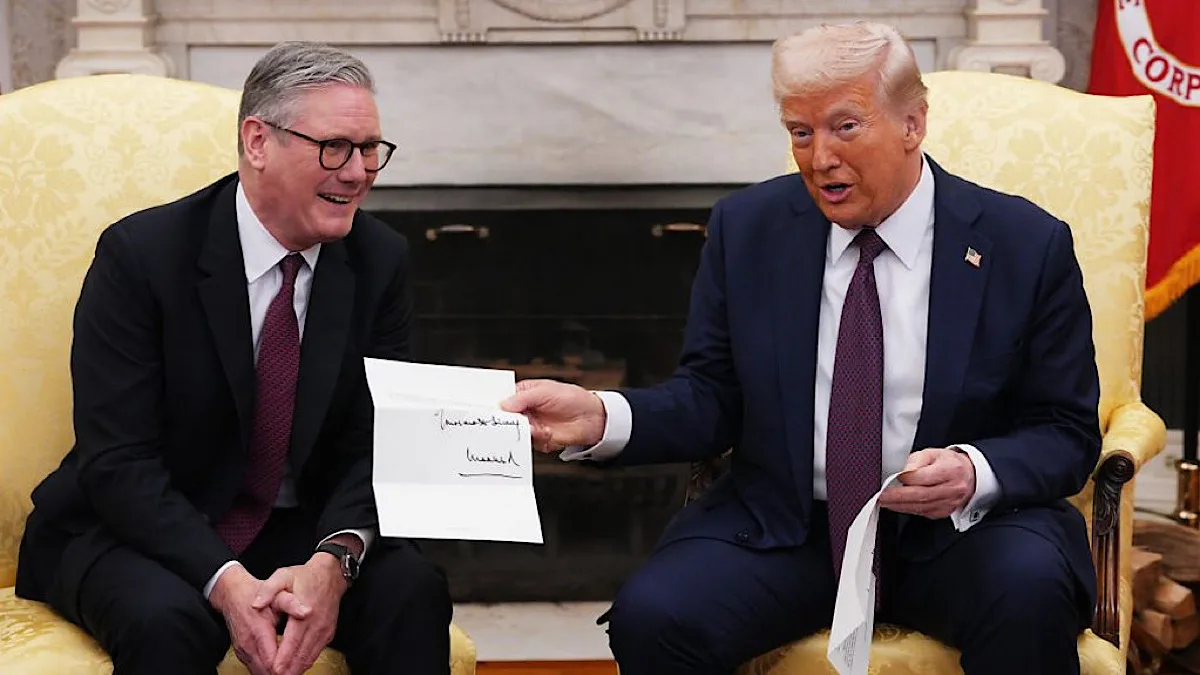
US President Donald Trump’s second state visit to Britain unfolded as a masterclass in spectacle. Royal banquets, military fly-pasts and carefully choreographed fashion moments offered a dazzling distraction from the political storms both sides of the Atlantic are facing. For Prime Minister Keir Starmer, still smarting from the uproar over a controversial ambassadorial appointment, the visit provided precisely the breathing space he needed. For Trump, it delivered the validation he thrives on: the pomp of monarchy, global headlines and the glow of a country willing to roll out its most elaborate welcome. The chemistry between the two leaders was on full display.
Smiles, backslaps and warm words dominated their joint appearance, even as they skirted issues that could have caused sparks. On the United Kingdom’s impending recognition of a Palestinian state, Mr Trump limited himself to a mild “disagreement.” On illegal migration, he recommended tough measures but avoided a public clash. Even the uncomfortable shadow of Jeffrey Epstein ~ linked to a dismissed British envoy and once to Mr Trump ~ was smothered with practiced vagueness. It was diplomacy by stagecraft: polite nods to difference, no risks taken. The Windsor ceremonies also highlight how modern diplomacy increasingly relies on optics to reassure domestic audiences.
Advertisement
Lavish welcomes and glittering photographs can create the impression of progress even when negotiations remain frozen, buying leaders precious political capital at home without requiring the concessions or compromises that genuine policy breakthroughs demand. Yet, beneath the glitter lay the limits of Britain’s leverage. Despite the meticulous hospitality, Mr Trump showed no sign of shifting his positions on trade, tariffs or global conflicts. His team admitted as much, noting that no amount of royal pageantry would influence his core policies. Mr Starmer’s reward for his careful choreography was not a breakthrough on steel tariffs or West Asia strategy, but a cordial relationship that allows for disagreement without retaliation. In today’s geopolitical climate, even that modest outcome counts as an achievement. This visit underscores a hard truth about modern alliances. Symbolic gestures can build rapport and defuse tension, but they rarely alter strategic calculations.
Britain demonstrated that it can host an unpredictable American President without incident, and Mr Starmer proved adept at keeping Mr Trump engaged while avoiding provocation. Yet when Air Force One departed, the underlying realities remained intact. US trade policy, military priorities and West Asia calculations will continue to be shaped in Washington, not Windsor. Still, symbolism matters. In an era of fractious politics and eroding norms, the ability to maintain a functional relationship with a mercurial superpower leader is valuable in itself. Mr Starmer’s balancing act ~ firm on principle, generous in ceremony ~ earned Britain a measure of goodwill and a temporary respite from domestic turmoil. But pageantry, however dazzling, is not power. The lesson of this visit is that even the grandest banquet cannot substitute for the hard currency of influence.