Punjab govt rolls out VB-G RAM G to strengthen rural employment guarantee
The Minister said that while MGNREGA remained operational till June 30, 2026, the VB G RAM G scheme came into effect from July 1.
In the vast expanse of India’s rural heartland, where the rhythm of life still pulses to the beat of monsoons and harvests, a seismic policy shift is underway.




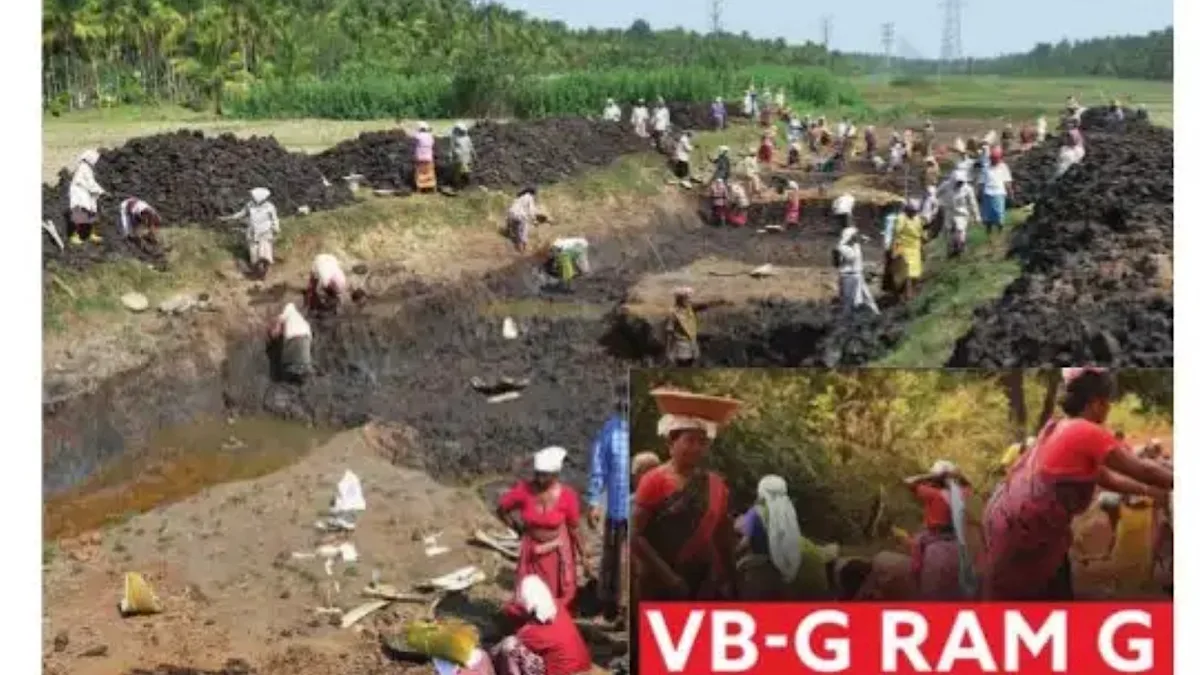
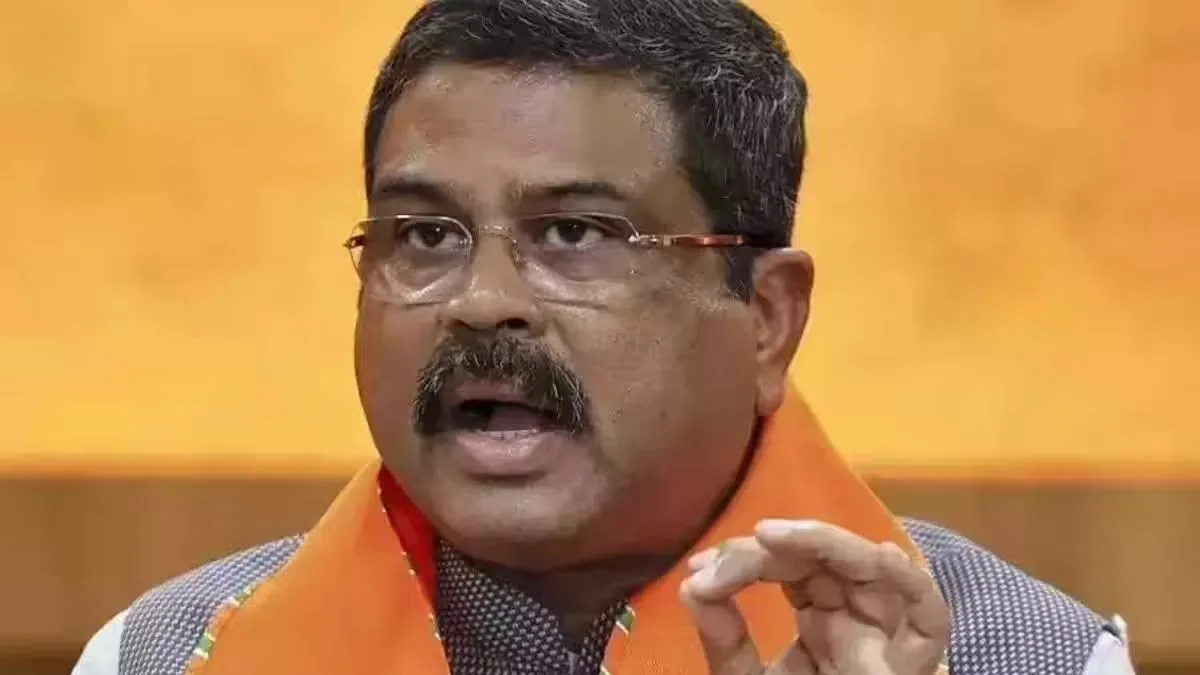
Photo:SNS
In the vast expanse of India’s rural heartland, where the rhythm of life still pulses to the beat of monsoons and harvests, a seismic policy shift is underway. For two decades, the Mahatma Gandhi National Rural Employment Guarantee Act (MGNREGA) stood as a beacon of hope for millions, enshrining the right to work as a fundamental entitlement. It was more than a programme; it was a lifeline, guaranteeing 100 days of unskilled manual labor to any rural household that demanded it, backed by the threat of unemployment allowances if the state failed to deliver.
Now, with the advent of the Viksit Bharat-Guarantee for Rozgar and Ajeevika Mission (Gramin) or VB-G RAM G, the government has boldly repealed MGNREGA, signaling a departure from a reactive safety net to a proactive engine of development. This transition, hailed by proponents as a modernization drive aligned with India’s ambitions for a ‘Viksit Bharat’ by 2047, has sparked intense debate. At its core lies a tension between empowering the rural poor through immediate relief and channeling their labour toward enduring national infrastructure. As we dissect this pivot, it becomes clear that while the new scheme offers tantalizing upgrades, it risks unraveling the very fabric of rural security if not navigated with caution.
Advertisement
To grasp the magnitude of this change, one must juxtapose the foundational architectures of MGNREGA and VB-G RAM G. MGNREGA, enacted in 2005, was revolutionary in its demand-driven ethos. It operated on a simple, enforceable principle: rural workers could request employment at their local panchayat and the state had to provide it within 15 days or compensate them for the delay. Funding was overwhelmingly central, with the Union government covering 100 per cent of unskilled wages and a significant portion of materials, ensuring that the scheme could expand organically with need.
Advertisement
This bottom-up model targeted the poorest. Most desperate households naturally sought it out, turning it into a counter-cyclical buffer against economic shocks like droughts or recessions. Over the years, it employed over 50 million households annually, creating assets like wells and roads while injecting wages directly into impoverished economies. VB-G RAM G, in stark contrast, reorients this framework toward a supply-driven paradigm, reclassifying it as a Centrally Sponsored Scheme (CSS) with a 60:40 funding split between the Centre and states (90:10 for special category states like those in the Northeast).
Gone is the open-ended budgeting; in its place are ‘normative allocations,’ where funds are capped based on predefined metrics such as population, poverty levels and past utilization. This caps the fiscal unpredictability that sometimes ballooned MGNREGA’s costs but also introduces rigidity. Proponents argue this fosters fiscal discipline and accountability, compelling states to co-invest and curb inefficiencies like ghost workers through AI-driven monitoring and real-time digital audits. The enhancements in VB-G RAM G are undeniably ambitious. The guaranteed workdays jump from 100 to 125, a 25 per cent boost that could translate to higher household incomes, addressing criticisms that MGNREGA’s limit often became a de facto ceiling.
Quality takes centre stage too: while MGNREGA’s assets were frequently derided as makeshift earthen dams eroding in rains or paths vanishing under floods, the new mission mandates focus on four strategic pillars: water security, core rural infrastructure, livelihood assets and disaster mitigation. These are to be woven into a ‘National Rural Infrastructure Stack,’ synchronized with the PM Gati-Shakti plan for seamless national connectivity. Imagine a village pond not as an isolated project but as part of a mapped watershed system, leveraging satellite data and GIS for longevity.
This shift aims to transform wage labour from mere survival work into a catalyst for sustainable growth, potentially building climate-resilient villages amid rising environmental threats. Another innovative feature is the ‘Agricultural Pause’ clause, allowing states to halt public works for up to 60 days during peak farming seasons. This addresses a long-standing grievance: MGNREGA’s pull often inflated rural wages, drawing labourers away from private farms and exacerbating shortages during sowing or harvesting. By syncing with agricultural cycles, VB-G RAM G seeks to harmonize public employment with private needs, preventing wage distortions and ensuring food security. Moreover, the emphasis on ‘cooperative federalism’ through shared funding is touted as a mature step; states with ‘skin in the game’ are incentivized to plug leakages, bolstered by tech tools that promise transparency in an era of digital India.
Yet, this glossy narrative masks profound risks, particularly for India’s poorer states, where rural distress is most acute. States like Bihar, Odisha, Uttar Pradesh and Jharkhand which are home to vast labour surpluses and high poverty rates, already grapple with strained budgets, burdened by debt and limited revenue streams. Under MGNREGA, the central funding shield allowed these regions to scale up during crises without fiscal collapse; now, the 40 per cent state contribution could prove crippling. Consider Bihar, where per capita income lags far behind the national average and fiscal deficits hover around 3-4 per cent of GSDP. If such states falter in meeting their share, the 125-day guarantee morphs into a mirage, leaving landless laborers, women and the elderly, who comprised over half of MGNREGA’s workforce vulnerable to hunger and migration.
Critics, including global economists like Joseph Stiglitz and Thomas Piketty, warn that this dilution of demand-driven rights could exacerbate inequality, turning a universal entitlement into a lottery dependent on state coffers. The future impact on these poor states could be dire. In a post-pandemic world, where rural unemployment remains stubbornly high at around 7-8 per cent, capping budgets risks underserving demand spikes from events like crop failures or economic slowdowns. The top-down planning, while efficient for large-scale infrastructure, might sideline hyper-local needs, a village desperate for a simple footbridge could be forced into a grander, less immediate project to fit the national stack. This could alienate the most marginalized, prioritizing durable, machinery-intensive works over labour-absorbing tasks suited to the unskilled or disabled.
Moreover, the symbolic erasure of ‘Mahatma Gandhi’ from the name evokes unease, suggesting a drift from Gandhian ideals of decentralized, village-led development towards a centralized, technocratic vision that may overlook cultural and ecological nuances in diverse states. The ‘Agricultural Pause,’ while pragmatic, poses another hazard in poor states reliant on migrant labour or with fragmented landholdings. For landless families, those 60 days without public work could mean destitution, especially if private opportunities are scarce. Data from MGNREGA’s heyday shows it reduced distress migration by 20-30 per cent in states like Odisha; disrupting this could reverse gains, swelling urban slums and straining city infrastructures.
International observers, including Jean Drèze and Jayati Ghosh, fear this shift could erode India’s global standing as a pioneer in rights-based welfare, potentially increasing social unrest in regions already simmering with agrarian discontent. As India charts this bold course, a suggestive path forward emerges: VB-G RAM G must evolve, not just replace. To safeguard poor states, the government should adopt a tiered funding model, where the Centre absorbs 80-90 per cent of costs for high-poverty regions based on real-time poverty indices, ensuring the guarantee remains ironclad. The agricultural pause should be optional and data-driven, with compensatory allowances for affected workers.
Strengthening panchayat-level input in project selection would blend top-down efficiency with bottom-up relevance, honouring Gram Swaraj while harnessing technology. Ultimately, success hinges not on dashboards or stacks, but on tangible outcomes: resilient assets that withstand monsoons and wages that reach the needy without fail. If VB-G RAM G delivers this, it could propel rural India toward true development; if not, it risks betraying the legacy of a scheme that lifted millions from despair. In the end, the measure of progress will be simple ~ whether a rural woman, in the shadow of poverty, can still claim her right to work and dignity.
(The writer is a former College Principal and founder of the NGO ~ Supporting Shoulders)
Advertisement