One Battle After Another with 13 Oscar nods probes rage and revenge
It indeed is. Leonardo DiCaprio and Sean Penn are just captivating in Paul Thomas Anderson's magical imagination of an America that has turned into a dictatorial State.
When the film industry gathers for its annual night of self-congratulation, the ceremony is usually remembered for glamour, spectacle and predictable triumphs. Yet the latest Academy Awards told a different story.




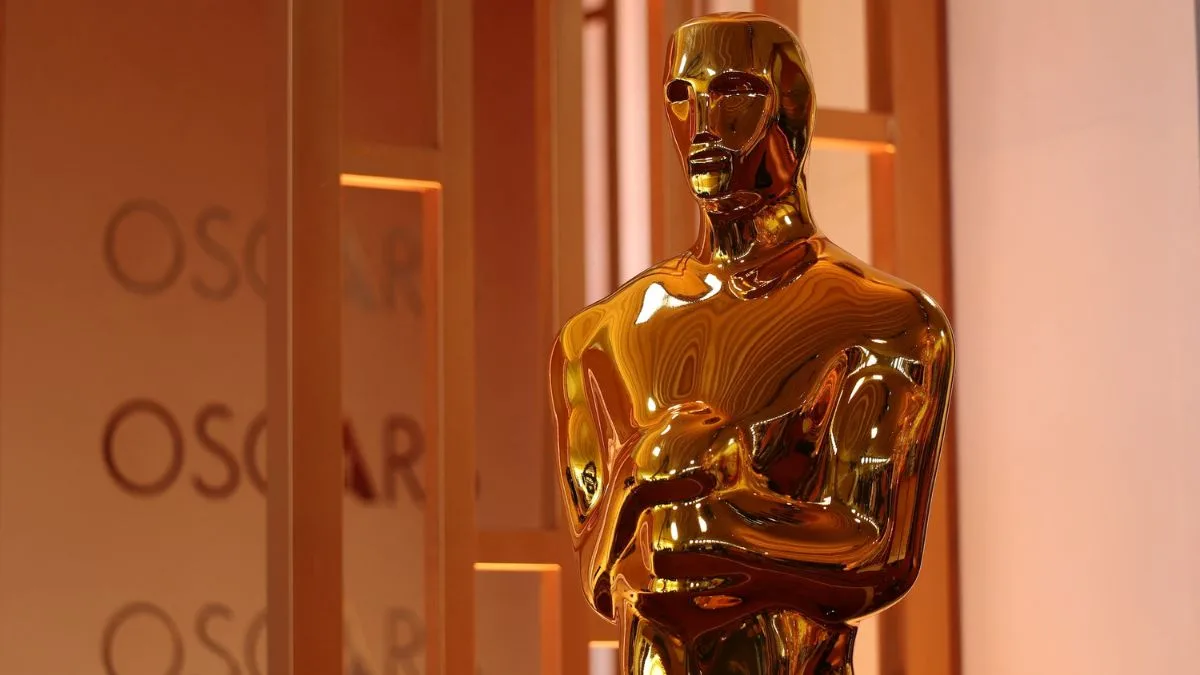
Image Source: Academy Awards
When the film industry gathers for its annual night of self-congratulation, the ceremony is usually remembered for glamour, spectacle and predictable triumphs. Yet the latest Academy Awards told a different story. The victories of filmmakers such as Paul Thomas Anderson and Ryan Coogler signaled not merely a celebration of cinema, but a subtle shift in Hollywood’s cultural mood. For decades, Anderson was regarded as one of America’s most respected directors without an Oscar to his name.
From Boogie Nights to The Master, his films were admired by critics but rarely rewarded by the Academy. His eventual sweep with One Battle After Another therefore carried symbolic weight. It was less about a single film’s triumph than about an institution finally acknowledging the endurance of a filmmaker who had quietly shaped modern American cinema. A similar sense of overdue recognition marked the awards given to Coogler and actor Michael B. Jordan for Sinners. Coogler had already proven his cultural reach through films like Fruitvale Station and Black Panther. Jordan had built a career that straddled independent drama and blockbuster franchises.
Advertisement
Their success suggested that Hollywood’s gatekeepers are gradually catching up with a generation of artists who had already won the audience long ago. But the significance of the ceremony extended beyond individual careers. The evening unfolded against a turbulent backdrop: wars dominating international headlines, renewed debates over immigration in the United States, and an entertainment industry wrestling with the disruptive power of artificial intelligence. The Oscars stage has always doubled as a platform for cultural commentary, and this year was no exception. References to war, political leadership and the moral responsibility of artists surfaced repeatedly in acceptance speeches and presentations.
Advertisement
In that sense, the awards functioned as a snapshot of Hollywood’s anxieties. The film industry remains a global cultural force, yet it is increasingly aware of the fragility of its own ecosystem. Writers, actors and technicians have spent the past two years debating how algorithms and generative AI might reshape creative labour. When presenters emphasised that animation and filmmaking are human crafts rather than “prompts,” the message was unmistakable: Hollywood is defending the value of human creativity at a moment when technology threatens to commodify it.
There was another layer to the ceremony’s symbolism. Alongside the emergence of new winners came tributes to older legends such as Robert Redford and Diane Keaton. The contrast felt deliberate. One generation of storytellers is leaving the stage while another steps forward, carrying the industry’s evolving values with it. Taken together, the night suggested that Hollywood is entering a transitional era. The Academy is recognising voices it once overlooked, confronting technological uncertainty, and responding to a world whose political tensions increasingly seep into art. For an institution long accused of living in its own bubble, that may be the most meaningful change of all.
Advertisement