Bengaluru: Chit fund dispute, failed relationship emerge as motives in law student’s murder case
Surya is the younger brother of Dhanush, who was reportedly in a relationship with Amrutha for nearly four years.
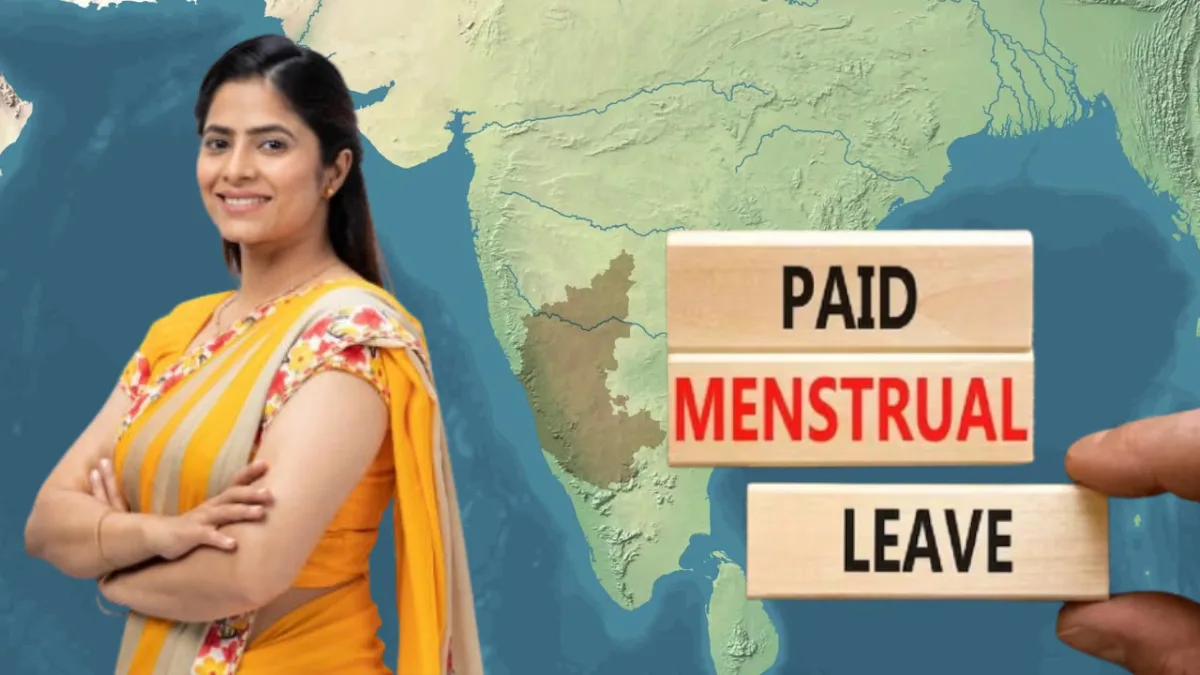
Karnataka’s new policy granting one day of paid menstrual leave every month to all women employed in the formal sector is, on the surface, a modest administrative step.




File Photo
Karnataka’s new policy granting one day of paid menstrual leave every month to all women employed in the formal sector is, on the surface, a modest administrative step. Yet it has landed with the weight of a cultural intervention. In a country where menstruation remains shrouded in silence ~ and often wrapped discreetly in old newspaper sheets ~ any policy that names the subject openly challenges a generations-old discomfort. By extending the provision to private companies and all categories of formal work, Karnataka has done what no Indian state has attempted before: universalise menstrual leave within the organised economy.
It is neither tokenism nor a symbolic gesture. For lakhs of women, especially those in garment factories and other labour-intensive sectors with limited leave entitlements, this small allowance could mean the difference between working through severe pain or taking a sanctioned day off without fear of wage loss. But the applause must be tempered with realism. India’s workforce is overwhelmingly informal, and the policy’s exclusion of domestic workers, gig workers, and daily-wage earners highlights a persistent structural divide. For these women, monthly cycles are endured within the constraints of precarious employment, where “leave” is a luxury tied directly to daily income. A truly inclusive vision must consider how state support – whether through subsidised leave, health benefits, or employer incentives ~ can extend to this vast and invisible workforce.
Advertisement
Critics worry about reinforcing gender stereotypes or creating new biases in hiring decisions. Those concerns are not unfounded. For decades, women have navigated workplaces by downplaying biological discomfort, fearing that any acknowledgment would be used to question their competence. Some women still feel that explicitly seeking menstrual leave might inadvertently expose them to scrutiny rather than support. The policy’s success, therefore, depends not only on its availability but on whether workplaces evolve into spaces where asking for such leave feels normal rather than confessional. Yet, dismissing the policy on these grounds misses a deeper point. Equality does not require women to pretend their bodies function identically to men’s. It requires designing systems that recognise biological realities without penalising them.
Advertisement
One day of leave will not alter gender equations overnight, but it challenges the longstanding expectation that women must silently endure. Perhaps the most powerful outcome of Karnataka’s move is the cultural signal it sends. By officially naming menstrual leave, the state forces the issue out of whispered corners into the vocabulary of public policy. That alone chips away at the stigma. A progressive law can open the door, but walking through it will require societal change ~ at home, in workplaces, and in the informal economy. Karnataka has taken the first step. The rest of the country must decide whether it will continue to treat menstruation as a private burden or finally accept it as a public reality that deserves dignity, understanding, and institutional support.
Advertisement